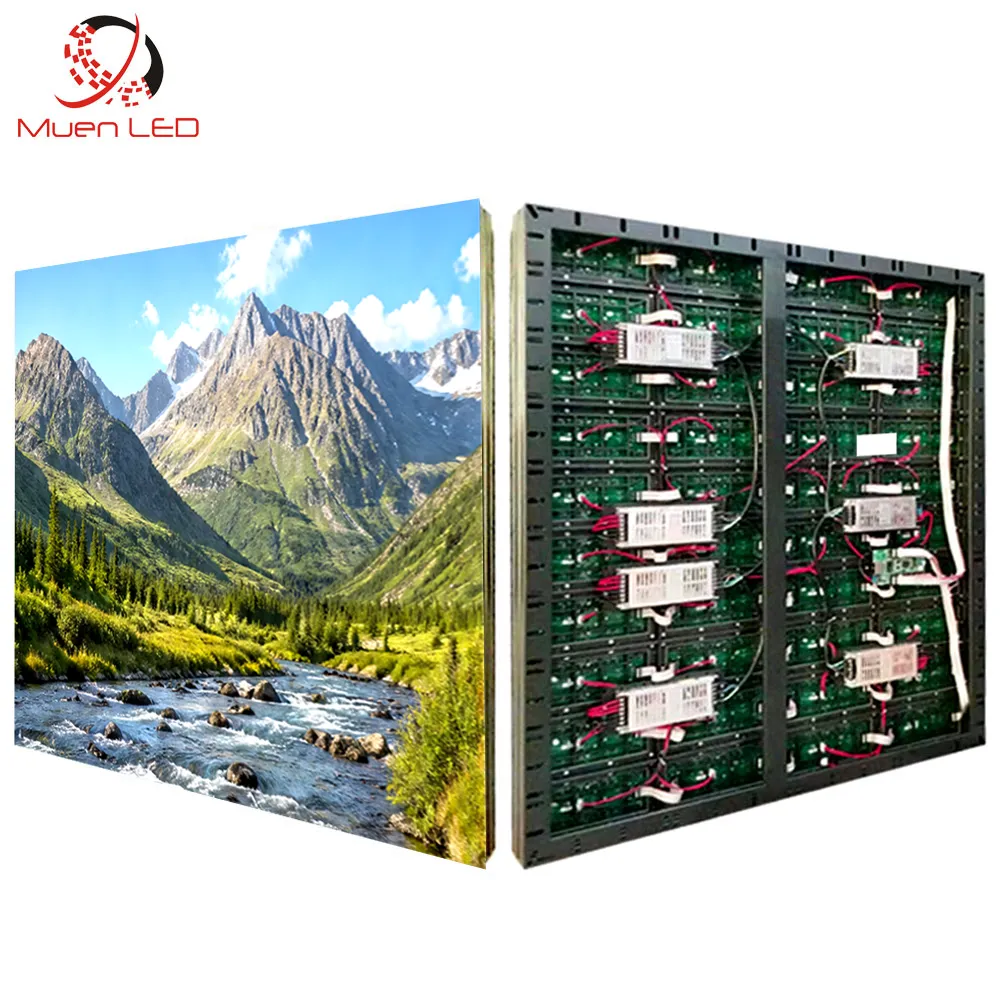
Inside an Outdoor LED Display: Brightness, Refresh Rate and Scan Design
A screen is a chain of physical decisions — the LED, the drive circuit, the power supply, the cabinet, the control system. Each one sets a limit the others must live within. This article opens up the ASE8 outdoor LED display and explains what each design choice does for the person standing in front of it.
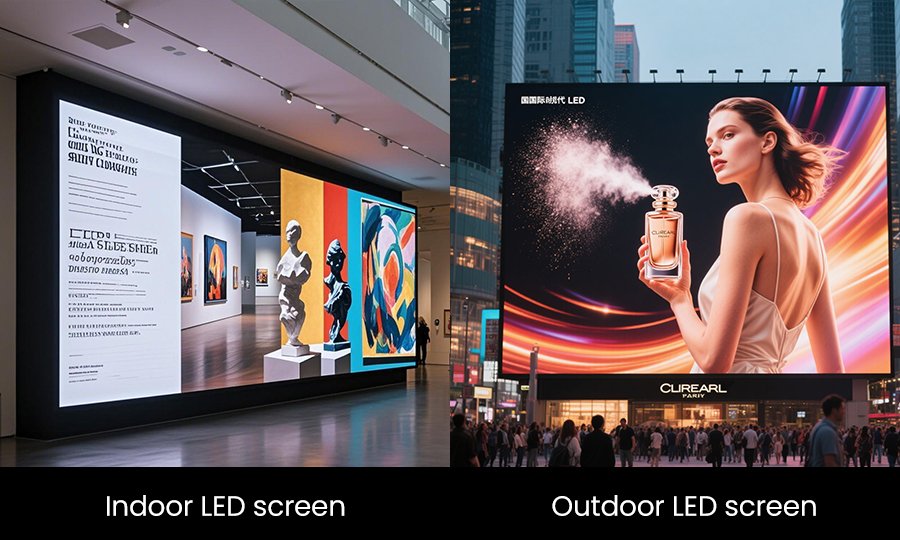
Brightness: Winning the Daylight Argument
Outdoor ambient light can exceed 100,000 lux at noon. To stay readable, a screen must out-emit the reflected light on its own surface and keep enough contrast in the dark areas.
The ASE8 is rated >5000 nits. That margin matters because brightness degrades over years: an LED wall loses output gradually as diodes age and optics collect dust. A screen specified at exactly the minimum has no headroom left by year four; one with 5000+ nits stays readable well past its warranty.
Equally important is what happens at night. Through the Novastar control system, the ASE8 dims automatically to a comfortable level — avoiding the glare complaints that get signs switched off by local authorities.
Refresh Rate: Designed for the Camera Age
Refresh rate is how many times per second the screen redraws. At 1920Hz, the ASE8 sits comfortably above the 960Hz legacy commercial baseline.
| Situation | What refresh rate decides |
|---|---|
| Walking past | Motion looks continuous, no judder |
| Phone photo | No dark scan-line bands across the image |
| Video recording | Stable footage, safe for broadcast and social |
| Live streaming | No flicker beating against camera shutter |
This is not a luxury spec. Every modern screen is photographed thousands of times a year by passers-by — and those photos are free advertising or free damage, depending on whether the wall flickered.
Scan Design: The Quiet Longevity Factor
Inside the cabinet, LEDs are driven in banks. The ASE8 uses 1/5 scan — one bank energized at a time, cycling fast enough that the eye sees a continuous image.
The consequences are practical:
- Lower peak current per LED → slower brightness decay over the years
- Less heat inside a sealed 100mm cabinet → power supplies run cooler and last longer
- Predictable power draw → easier circuit planning and lower operating cost

The Cabinet: Where Depth Becomes Budget
At 960×960×100mm, the ASE8’s die-cast aluminum cabinet is notably shallow for an outdoor product. Three practical outcomes:
- Facade retrofits need less standoff — often no structural modification at all
- Lower wind load on rooftop and pylon structures, reducing steel and ballast
- More cabinets per truck — measurable freight savings on large orders
Standard 960×960 modules also mean any screen size is a whole number of cabinets, so there is no custom cutting and no bespoke spare parts.
The Control Layer: Novastar
Every parameter above is managed through Novastar, the industry’s most widely deployed LED control platform. For the owner this means:
- Per-cabinet brightness and color calibration from a single interface
- Scheduled playlists and day/night dimming built in
- A technician pool in virtually every city — no proprietary lock-in
- Mature diagnostics that identify a failing module before it goes dark
What It Adds Up To
Read the datasheet in this order: pitch sets the audience, brightness sets the daylight, refresh sets the camera, scan sets the lifespan, and the control system sets how easily all of it is maintained.
The ASE8’s specification — 8mm, >5000 nits, 1920Hz, 1/5 scan, Novastar — is a coherent answer to all five. Full technical detail, cabinet drawings and configuration options are available on the ASE8 outdoor LED display product page.