Key Factors to Evaluate LED Displays for Your Advertising Investment Plan

LED display advertising is eye-catching and attention-grabbing, but is it truly suitable for your advertising plan?
While large screens are visually appealing, how do you determine if they can truly deliver value?
This article will guide you through the advantages of LED advertising, suitability assessment, common misconceptions, and success stories to help you understand the investment prospects and make each campaign more confident.

1) Strong Visual Impact
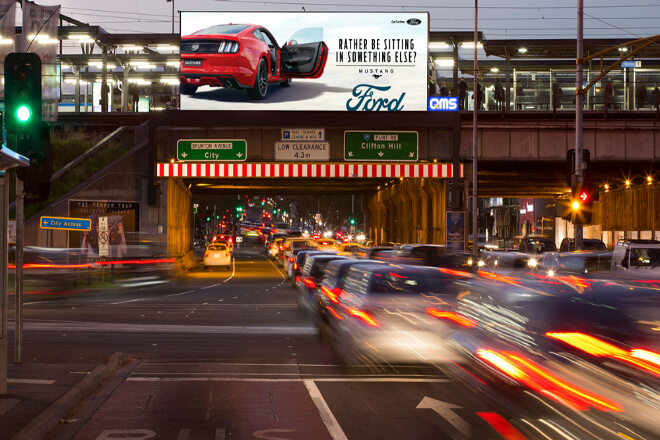
LED displays, with their huge screens, high brightness, and high-definition image quality, deliver a strong visual impact.
Whether it’s dazzling colors or vivid image details, they can grab the attention of passersby immediately.
Even in direct sunlight or heavy traffic, advertisements remain clearly visible, allowing the brand image to instantly resonate and leave a lasting impression.
2) Flexible and Efficient Content Updates
Advertising content is no longer constrained by the replacement cycles of print or traditional media.
Through a backend system, LED displays can be updated remotely and in real-time, allowing for adjustments at any time, whether for new product launches, promotional activities, or holiday themes.
Flexible and efficient content management enables more precise and market-responsive advertising, keeping brands vibrant and fresh.
3) Precise Targeting and Interactive Potential
LED displays are not only platforms for display but also interactive media.
Combining big data analytics, positioning technology, and interactive features, advertisements can precisely reach the target audience.
Simultaneously, through interactive formats such as QR codes, touchscreens, and AR, viewers can participate.
Brands are no longer just “seen,” but rather actively experienced by the audience, improving advertising conversion and user favorability.
4) Long-Term Usability and Continuous Brand Exposure
LED displays are durable and operate around the clock, providing brands with long-term, high-frequency exposure.
Whether day or night, advertisements are consistently displayed, continuously reinforcing the brand image.
Compared to short-term traditional advertising, LED displays ensure the brand’s voice remains constantly in the audience’s view, helping businesses build long-term market awareness and brand influence.
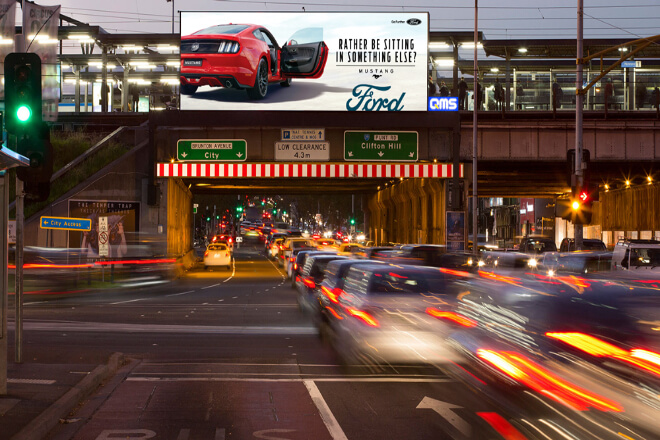
Before launching LED display advertising, businesses need to carefully assess its suitability to ensure that every investment delivers ideal exposure and brand value. This process can be considered from several key dimensions.
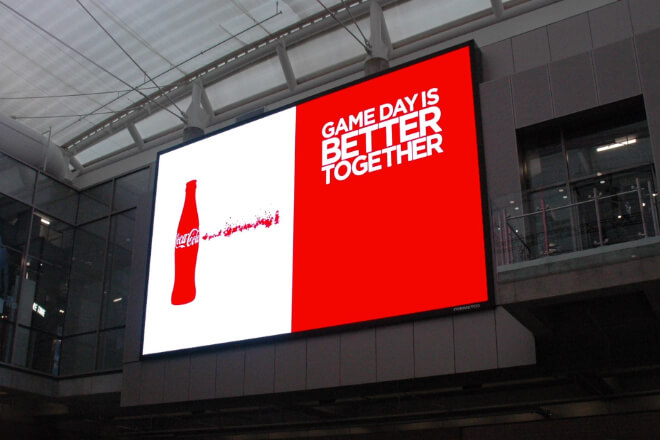
Many companies easily fall into some common pitfalls when deploying LED display advertising, which can not only waste investment but also affect advertising effectiveness. Understanding these pitfalls helps in making more informed decisions.
1) Focusing solely on screen size while neglecting audience viewing distance and scene adaptation
Many companies focus only on screen size when choosing LED screens, believing that bigger is better, but ignoring the audience’s viewing distance and viewing angle.
For example, installing a giant LED screen on a street corner might not be effective if the screen angle is too high or the audience is too far away.
Passersby might have difficulty seeing the advertising content, rendering the screen’s size ineffective.
Therefore, when selecting a screen, it’s crucial to consider the actual scene, the audience’s viewing range, and dwell time to ensure the advertisement is truly “visible and understandable.”
2) Ignoring content production costs and update frequency
The advantage of LED screens lies in their dynamic visuals and interactive features, but producing high-quality videos, animations, or interactive content often requires additional costs.
If companies only focus on hardware investment and neglect content production and regular updates, the screen may end up displaying monotonous or low-quality content for extended periods, negatively impacting brand image.
For example, a retail brand that only uploads static images without updating with promotional or interactive content, even with a high-end screen, will struggle to attract viewers.
Therefore, before launching an advertising campaign, a content production budget should be estimated.
And a content update plan should be developed to ensure the advertisement remains vibrant and attractive.
3) Simply pursuing low prices while neglecting screen brightness, resolution, and stability
To reduce costs, some companies choose low-priced LED screens, but these screens often have shortcomings in brightness, resolution, and stability.
For example, when playing advertisements outdoors in sunlight, insufficient screen brightness will result in a dim or even illegible image; low resolution will lead to blurry text, affecting information delivery.
Unstable equipment may experience frequent malfunctions, increasing maintenance costs.
When choosing a screen, technical parameters and long-term value should be considered comprehensively, not just price.