Fleet Strategy: Where a 2.6 mm Wall Earns Its Premium Beside 3.9 mm Inventory
Fleet Strategy: Where a 2.6 mm Wall Earns Its Premium Beside 3.9 mm Inventory
Most rental companies do not buy one screen; they build a fleet. And the most expensive mistake in fleet building is not buying the wrong product — it is buying products that cannot work together. Two walls in different cabinet sizes share nothing: different cases, different frames, different rigging, different spares, different crew habits.
Two walls in the same 500 x 1000 mm cabinet at different pitches share almost everything except the modules. That is the basis of a workable two-tier fleet, and it is worth understanding precisely what is shared, what is not, and which job goes to which screen.
What two pitches in one cabinet size actually share
| Shared | Not shared |
|---|---|
| Cabinet shell and dimensions (500 x 1000 x 65 mm) | LED modules and their pixel pitch |
| Rigging points and clamp positions | Receiving card configuration (mapping differs) |
| Flight case footprint and stacking | Spare module pool |
| Frame and ground support hardware | Native resolution and content canvas |
| Processor platform (Novastar) | Brightness class |
| Crew procedure and build sequence | Rate card |
That list is the commercial argument. You are not buying two unrelated products; you are buying one mechanical platform with two imaging tiers. Cases stack together, frames interchange, one crew can build both, and the processor is the same platform across the fleet.
The technical limit you must design around
Different pitches cannot be combined into one continuous image. A 2.604 mm cabinet and a 3.91 mm cabinet both measure 500 x 1000 mm, but they carry 192 x 384 pixels and 128 x 256 pixels respectively. Put them side by side in one canvas and the pixel grid will not align — the image breaks at the boundary.
What you can do:
- Run them as independent screens with separate content, side by side or on different sides of a stage.
- Use them as separate zones of one show — a dense wall for the hero image, a coarser wall for sponsor loops or IMAG.
- Feed them from one processor with two mapped outputs, if the processor has the capacity.
What you cannot do is sell a client “one 6 m wall” made of mixed pitches. Plan the build as separate surfaces and quote it that way.
Routing jobs to the right wall
This is the operational core of a two-tier fleet: a clear rule for which screen goes on which job.
| Job | Route to | Reason |
|---|---|---|
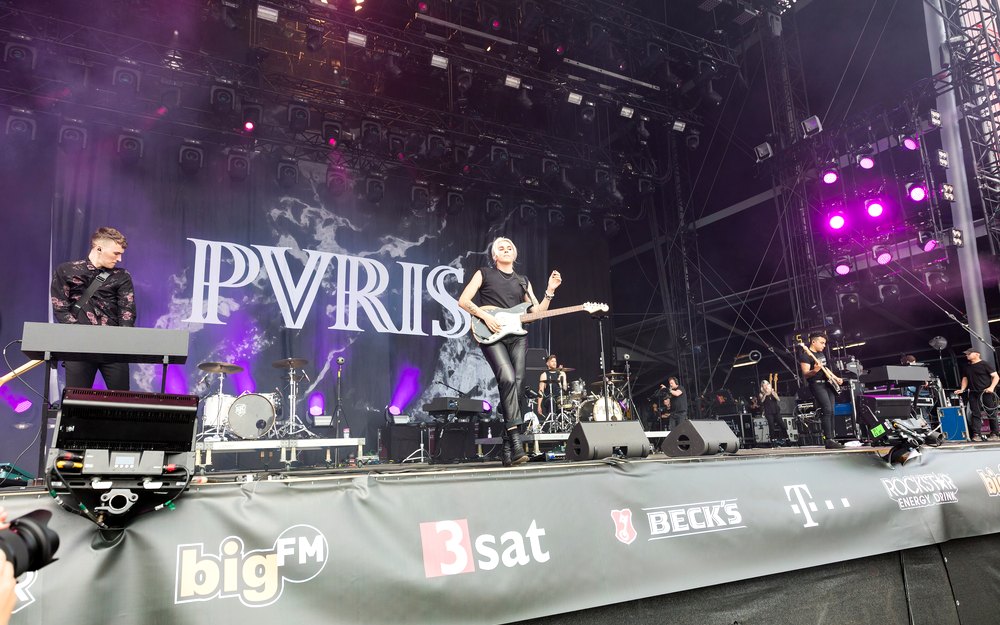
| Festival main stage, audience 15 m+ | 3.9 mm | Density invisible at distance; spend on area |
| Outdoor brand activation, foot traffic within 3 m | 2.6 mm | Close viewing, photographed constantly |
| Corporate conference, text-heavy slides | 2.6 mm | Legibility at 5–10 m for small type |
| Wedding, daylight ceremony | 2.6 mm | Close guests, photographs, 4,000+ nits |
| Church / worship, lyrics at 8 m | 2.6 mm | Readable type at moderate distance |
| Cross-rental to other AV companies | 3.9 mm | Competes on price, not density |
| Large backdrop on a fixed budget | 3.9 mm | Coverage per dollar |
| Sports bar / fan zone, 20 m+ | 3.9 mm | Distance, and brightness matters more than pitch |
| Awards dinner with name graphics | 2.6 mm | Text and photography at close range |
Two rules of thumb that make routing fast:
- If the closest viewer is under 4 m, send the dense wall.
- If the client is paying for area rather than image quality, send the coarse wall.
Everything else is a judgment call, and the judgment gets easier once both walls exist, because you can price the upgrade instead of losing the job.
Pricing in two tiers
A two-tier fleet lets you quote the same footprint at two prices, which is a sales advantage rather than a cost.
- Standard tier (3.9 mm): the volume product. Priced to win festival, outdoor and cross-rental work. Margin comes from utilization, not rate.
- Premium tier (2.6 mm): priced for close-range and camera-heavy work — weddings, launches, galas, corporate. Margin comes from rate, because the client is buying an image quality they cannot get from a commodity screen.
The trap is discounting the premium wall to win a job that the standard wall would have served. That trains the market to expect dense-screen quality at coarse-screen prices and destroys the tier you paid to build. If a client wants the premium wall, the price is the premium price; if they want the budget, they get the standard wall and the honest viewing distance that comes with it.
The investment order
Which comes first depends on where your enquiries already come from, not on which product is more impressive.
Buy the standard pitch first if: you are building from zero, your work is mostly outdoor festivals and brand events, and you compete on availability and price. The coarse wall books more often and pays for itself sooner.
Buy the dense pitch first if: you already have an event or wedding business, your clients ask whether text will be readable in photos, or you are losing corporate work to companies with finer screens. In that case the dense wall is not an upgrade, it is the entry ticket.
Buy them in the same cabinet size either way. A fleet of one 3.9 mm wall and one 2.6 mm wall in 500 x 1000 mm cabinets covers both tiers with one set of cases, frames and crew knowledge. A fleet of a 3.9 mm 500 x 1000 wall and a 2.6 mm 640 x 960 wall covers the same tiers with two of everything.
Operational discipline for a mixed fleet
A two-pitch fleet fails operationally before it fails commercially. Three habits prevent it:
- Label everything by pitch. Cases, spare modules, receiving cards, even the cable trunks. A 3.9 mm module fitted into a 2.6 mm cabinet is a service call, not a repair.
- Keep separate spare pools. Module spares are not interchangeable across pitches. Budget spares per pitch, not per fleet.
- Store the mapping files by pitch. Processor configurations differ. A saved configuration applied to the wrong wall produces a scrambled image, usually at load-in.
And one training note: because both walls use the same Novastar platform and the same build sequence, crew can move between them without retraining. That is a genuine cost saving — and it disappears the moment the cabinet sizes diverge.
When to stop adding pitches
Two tiers is a strategy. Four is a catalogue. Each additional pitch adds a spare pool, a content canvas, a rate card and a training burden, and the marginal job it wins gets smaller. Most rental companies are best served by:
- One or two pitches in one cabinet size,
- Plus a different form factor only when a specific market demands it (floor tiles, transparent, fine-pitch indoor).
If a job genuinely needs something you do not own, cross-rent it and keep the client. Do not buy a fourth pitch to serve one booking a year.
The specification behind the tiers
Cabinet dimensions, native resolution, brightness, scan and refresh for the dense tier are on the ARC2.604 3x2M outdoor rental LED display set page. Compare it against your existing inventory on three numbers only: pixels per cabinet, brightness, and cabinet weight. If those three line up with a gap you can price, you have a tier. If they do not, you have a duplicate.
Figure 1 — Far-field festival work belongs to the volume tier: area beats density.

Figure 2 — One cabinet size, two imaging tiers: cases, frames and crew are shared.

Figure 3 — Premium events pay for image quality at close range, which is the tier worth protecting.
The short version
A two-tier fleet works when both walls share a cabinet size. Then cases, frames, rigging and crew are shared, and the only difference is modules and canvas. Route jobs by viewing distance: under 4 m goes dense, pay-for-area goes coarse. Never mix pitches in one canvas. Price the tiers honestly, keep separate spare pools and mapping files, and stop adding pitches once the marginal job stops paying for the complexity.
For the dense-tier specification, see the product page.