Civic, Worship and Community Events: The Quiet Volume Market
Civic, Worship and Community Events: The Quiet Volume Market
Ask a rental company where its steadiest bookings come from and the answer is rarely a festival. It is the church anniversary, the town’s national day, the school prize-giving, the community sports final, the outdoor memorial service — events with modest budgets, fixed dates, and an organiser who has never hired an LED screen before.
These jobs are not glamorous, but they are predictable, repeatable and usually within an hour’s drive. They are also the natural home of a coarse-pitch 3 x 2 m wall: bright enough for daylight, light enough for a two-person crew, and simple enough that a volunteer can be shown how to plug it in.
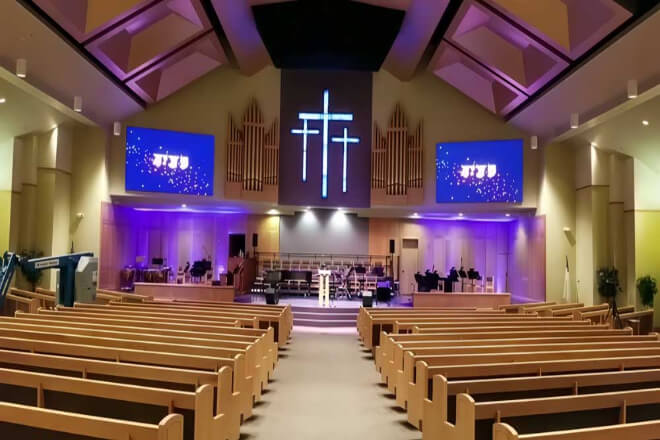
Worship and civic events reward preparation more than spectacle.
What this market actually asks for
The requirements differ from a concert in almost every dimension except brightness.
| Requirement | Festival | Civic / worship |
|---|---|---|
| Screen size | 20–80 m² | 6–12 m² |
| Viewing distance | 15–90 m | 8–30 m |
| Content | Fast cuts, IMAG | Text, hymns, names, slides |
| Crew | 6–20 | 2–4 |
| Build time | Overnight | 2–3 hours, same day |
| Failure tolerance | Low | Zero — there is no second show |
That last row is the defining constraint. A civic event has one chance. If the screen boots to a black field at 09:55 for a 10:00 service, there is no tomorrow.
Why readability beats resolution here
The content in this market is overwhelmingly text: hymn numbers, scripture references, names of the deceased, the order of service, a sponsor’s name, a school’s crest. Text is exactly the content class where pixel density feels most tempting — and exactly the content class where good design beats extra pixels.
At 4.81 mm on a 3 x 2 m wall, the canvas is 624 x 416. A 120 px cap height reads cleanly at 25 m. That is a headline occupying under a third of the screen height, which is plenty for a name or a line of a hymn. The trick is discipline: one line at a time, high contrast, no decorative fonts, no thin serif.
Two rules cover 90% of this market’s content problems:
- Never more than six lines on screen. If the order of service needs more, split it across slides with a slow transition.
- Dark ground, light text, no pure white. A white field at >4000 nits is painful in a dim church and blows out every phone photo of the event.
The build: two people, three hours
A 3 x 2 m wall is twelve 500 x 1000 mm cabinets at 15 kg each, ninety-six 250 x 250 mm modules, and a control rack small enough to carry in one hand — the 3 x 2 m outdoor set is dimensioned for exactly this kind of two-person deployment.
A realistic same-day build:
- T-1 day: power check, content load, full playback test on the actual controller
- T-3 h: ground support or frame assembly, level the base
- T-2 h: hang cabinets bottom row first, latch upward, check every seam
- T-1 h: data and power runs, addressing check, all-white and all-red test patterns
- T-30 min: playback run-through with the organiser, brightness set to the room
- T-5 min: a single static holding slide, controller locked, cables taped
The two failure points are always the same: a data cable that was fine yesterday, and a power circuit shared with a catering urn. Test with the actual load and the actual circuit.
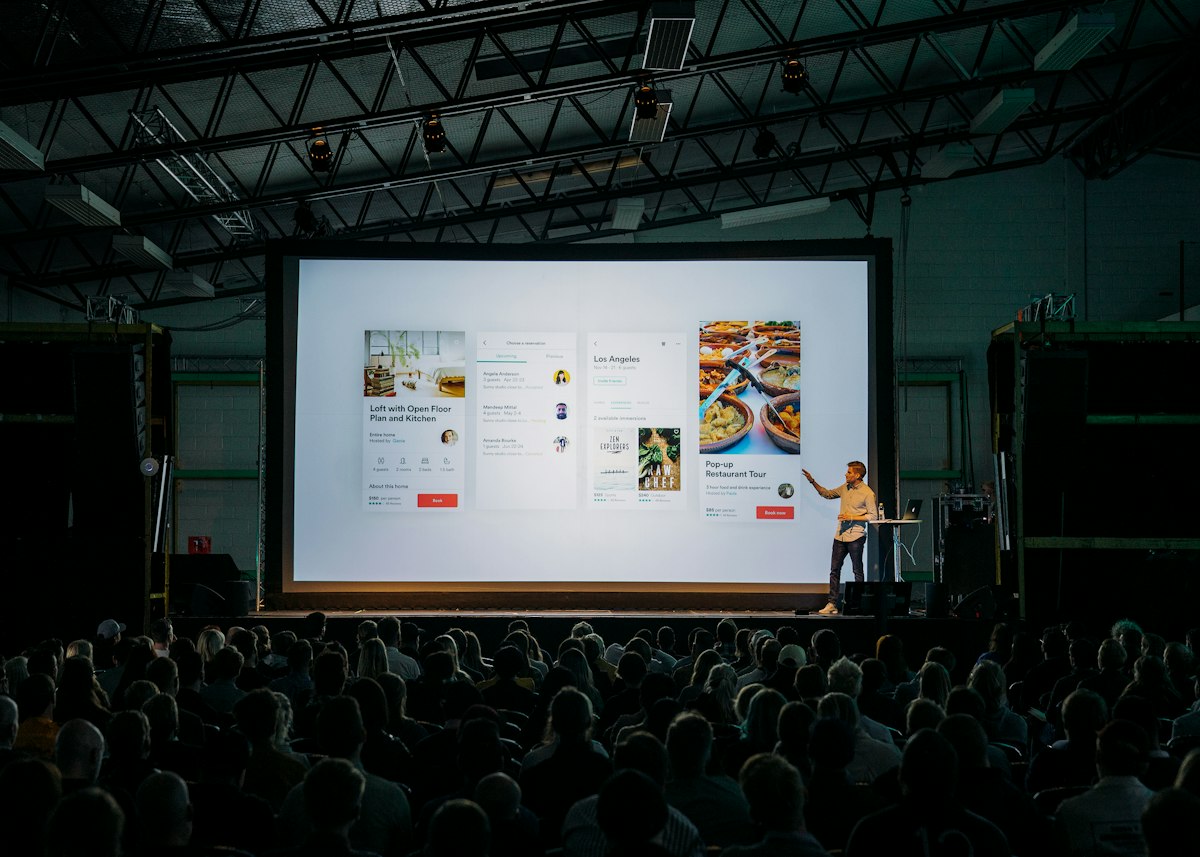
Civic and worship events run on text, timing and one chance to get it right.
Working with volunteer crews
Most of these events have a volunteer on the ground who will be asked to switch the screen on, change a slide, or hold a laptop. Give them three things and the event runs itself:
A single switch. One labelled breaker or one power distribution unit with a master switch. Not a rack of individually switched supplies.
A printed run sheet. Time, what should be on screen, which file, which key. Laminated, taped to the control position, in the organiser’s language.
A five-minute handover. Show them the play button, the blackout key, and how to reach you. Then watch them do it once.
This is also the strongest commercial argument in the market. Clients rebook the supplier who made the volunteer feel capable, not the one with the most impressive panel specification.
Pricing this work honestly
Civic and worship budgets are real but finite. The work quotes best as a fixed package: screen, control, delivery, build, operator for the day, and a content-formatting service. Itemising crew hours invites comparison shopping; packaging invites a decision.
The economics work because the equipment is the cheap part. A coarse-pitch set with a low capital cost, a 180 kg total weight that fits a van, and a two-person build has a cost base that a dense panel cannot match — which is precisely why this market is served by volume-pitch inventory rather than premium walls.
Weather and the outdoor service
Many of these events happen outdoors in uncertain weather. IP65 covers rain jets and dust; it does not cover a wall standing in a puddle or a connector lying face-up. Raise the bottom row, drip-loop every cable, and agree in writing with the organiser what conditions trigger a shutdown. Having that conversation before the day is what separates a professional supplier from an optimistic one.
Why the 3 x 2 m format fits
Six square metres is the sweet spot for this work: big enough to be seen from the back of a congregation or a village square, small enough for two people and a van, and divisible into the 500 x 1000 mm cabinet grid that every rental warehouse already understands.
Specifications for the 3 x 2 m set — 4.81 mm pitch, >4000 nits, IP65, 15 kg cabinets, rear service access — are on the product page. If you serve this market regularly, tell us the typical venue and we will quote a package with spares sized for it.