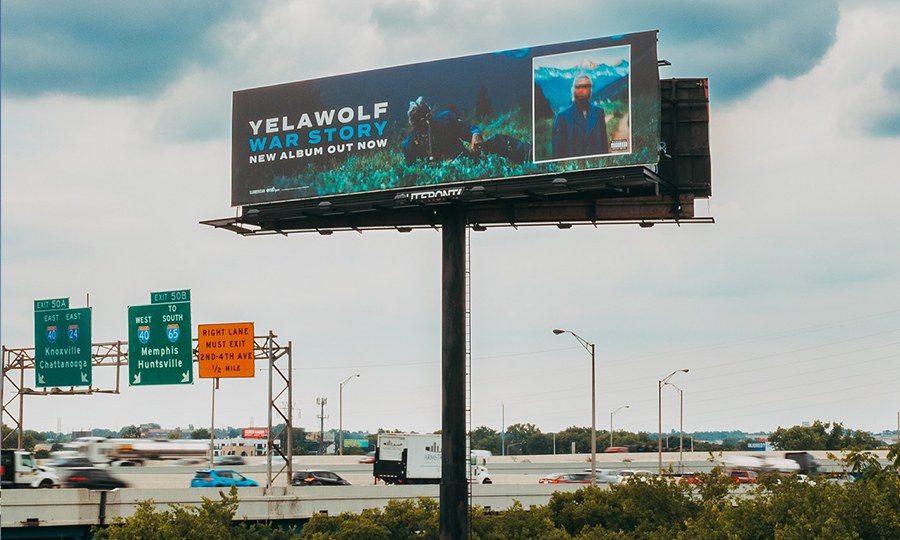
Criteria for Selecting the Best Outdoor LED Display for Highway Advertising
Introduction
Have you ever noticed that highway advertising screens are large and bright, yet they don’t dazzle drivers? It’s not as simple as just hanging any screen.
Size, brightness, pixel density, installation angle, and even wind and sun resistance all need careful consideration.
What key techniques are needed to choose an LED screen that is both eye-catching and safe?
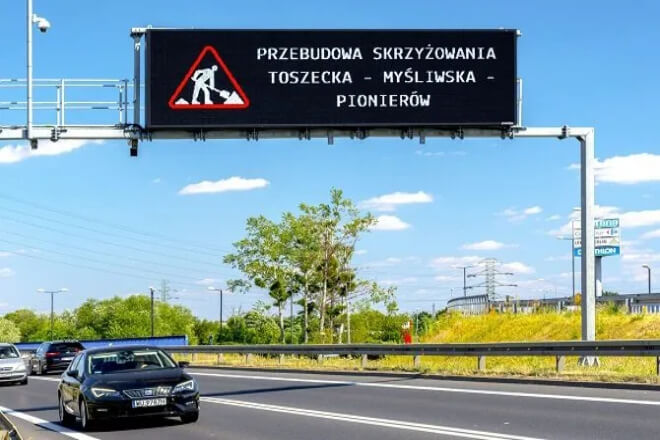
Placing ads on highways is not as straightforward as it seems.
The 1 major challenge is the high speed itself. Drivers pass by advertising screens for very short periods.
Usually only a few seconds, so the advertising content must be concise, clear, and easily recognizable.
Long texts or complex patterns simply cannot be read in time, the information will be missed.
The 2 challenge is viewing from a distance. Highway advertising screens are usually far from drivers, which places demands on the screen size and pixel density.
If the screen is too small and the pixel pitch is too large, the image will be blurry, and the text information may even be completely illegible.
Therefore, choosing the right screen is crucial to ensuring that the advertising content is clearly visible from a distance.
The 3 challenge is varying lighting conditions. With strong sunlight during the day and insufficient light at night.
Highway LED advertising screens must be high-brightness and automatically adjust to remain clearly readable under any lighting conditions.
Imagine an advertisement that’s unclear under direct sunlight—the investment would be wasted.
The 4 challenge is safety regulations. Highway advertising screens cannot distract drivers, so brightness, dynamic effects, and flicker frequency are strictly limited.
Advertisements must be attractive without causing accidents due to drivers staring at the screen; this requires a more sophisticated design than ordinary commercial advertising.
In summary, highway advertising screens face several major challenges: short display time, long distance, significant lighting variations, and controlled safety.
The placement design must be both intelligent and efficient; otherwise, “even the most visually appealing advertisement will go unnoticed.”
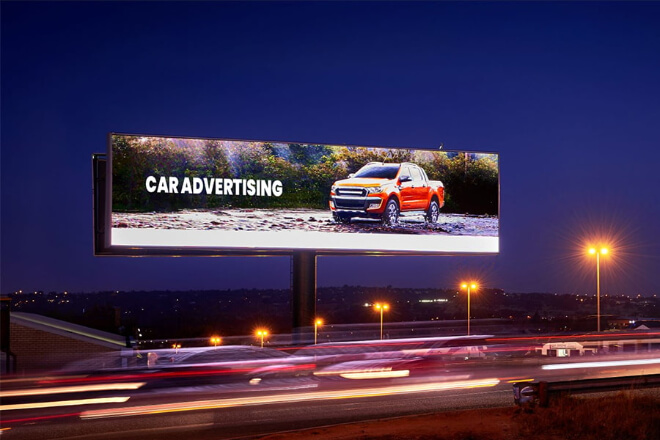
Choosing the right LED screen technical parameters is crucial for advertising on highways; otherwise, even the most beautiful advertisement may go unnoticed.
The first thing to consider is pixel pitch. Because vehicles travel at high speeds, drivers are typically far from the advertising screen, so a larger pixel pitch is acceptable.
For example, P8, P10, or P16. This ensures clear readability at long distances while controlling costs. Simply put, the farther away the driver is.
The more spaced the pixels on the screen can be, yet the image remains clearly visible.
Secondly, brightness is crucial. On highways, direct sunlight during the day can obscure the advertising image if the LED screen is insufficiently bright.
A brightness of 6000 to 10000 nits is generally recommended, with automatic adjustment to ensure clear visibility regardless of whether it’s sunny or cloudy, guaranteeing all-day visibility.
Refresh rate is equally important. At high speeds, a low refresh rate can cause flickering or stripes, especially when playing dynamic ads or being filmed by passing vehicles.
Drivers may not have enough time to recognize the advertising information.
A high refresh rate ensures a smooth and stable image, making efficient use of every second of exposure.
Finally, contrast and color accuracy are also factors that cannot be ignored. High contrast, combined with moderately vibrant colors, helps drivers grasp the key points of an advertisement within seconds.
Imagine if the advertisement’s colors were dull and the image flat; drivers would quickly glance at it and easily miss the information.
In summary, highway LED advertising screens require careful consideration of pixel pitch, brightness, refresh rate, and color contrast.
Choosing the right parameters ensures that the advertisement is not only clearly presented but also captures the driver’s attention within seconds.
Effectively conveying the information rather than being “passed by on the highway.”
 100vw, 660px” /></p>
<p class=) 1) Vehicle speed determines screen size and content volume.
1) Vehicle speed determines screen size and content volume.
On highways, drivers have very limited time to see advertising screens, perhaps only a few seconds.
If the LED display is too small or the information is too complex, drivers simply won’t have time to read it all.
The ideal approach is a large screen with concise content, allowing drivers to “understand at a glance.”
Imagine this as opening a “window of instant understanding” for highway drivers, grabbing their attention in seconds and quickly conveying the advertising information.
2) The height and tilt angle of the LED display screen are crucial.
If the screen is too low, it will be easily blocked by guardrails, greenery, or other facilities.
If it’s too high, drivers will have to strain their necks to look up; and if the angle is incorrect, the content may be difficult to see.
The correct approach is to place the screen within the driver’s natural line of sight, ensuring both clarity and comfort.
You can think of it as a courteous roadside assistant—bright and eye-catching, but not disruptive to the driver.
3) The placement of the screen requires strategic placement at the “golden spots.”
You can’t just place an LED advertising screen anywhere on the highway.
Highway entrances, toll booths, ramps, long straight sections of road, or near traffic hubs are the “golden spots” for maximum exposure.
Choosing the right location allows the advertisement to be quickly remembered by the driver within a few seconds of their gaze, which is far more efficient than random placement.
A reasonable location maximizes every second of the advertisement, which is vital for effective information delivery.
4) Safety first, avoid overly elaborate animations.
Highway LED displays are not stage light shows; animation effects should not be too complex, and the brightness should be moderate.
The screen’s purpose is to deliver information, allowing drivers to quickly access content, not to distract or strain their eyes.
A truly qualified highway advertising screen design should feature a simple, brightly colored display that doesn’t interfere with driving safety.
In general, the design of LED displays on highways must consider viewing time, viewing distance, screen angle, optimal location, and safety.
A good screen not only presents advertisements in a large and eye-catching manner but also allows drivers to receive the information completely within a few seconds.
While speeding at high speeds, ensuring safe driving and making the advertisement both effective and non-disruptive.
 100vw, 660px” /></p>
</div>
</div>
<div class=)
 100vw, 660px” /></p>
<p class=) Highway LED advertising screens look cool, but investment and operation are not simply a matter of hanging up a screen.
Highway LED advertising screens look cool, but investment and operation are not simply a matter of hanging up a screen.
First, construction costs must be considered. The screen itself is not cheap, and the sturdy steel structure, power supply system, and control system are all essential core expenditures.
Imagine the screen as the “star stage,” while the supporting system behind the scenes is the true “unsung hero.”
Then consider power consumption. LED screens consume a significant amount of power, and keeping them lit for extended periods results in substantial electricity bills.
Many high-speed screens now incorporate energy-saving solutions, such as automatic brightness adjustment—increasing brightness during strong sunlight and automatically decreasing it at night or on cloudy days.
This not only ensures clear visibility of advertisements but also subtly saves on electricity bills, making them true “energy-saving experts.”
The advertising space rental model is also crucial. Highway LED screens can be rented on a periodic or time-based basis.
Prices are naturally higher during peak hours, while they can be flexibly rented to short-term clients during quieter nighttime hours.
Proper planning allows each screen to “earn more money,” maximizing its value.
Finally, there’s the investment payback period. This is related to traffic volume, advertising prices, the number of screens, and rental strategies.
More traffic, higher prices, and more screens result in a shorter payback period.
Conversely, less traffic means a slower payback period. Good investment planning considers not only initial construction costs but also long-term returns.
Ensuring that LED screens are not only aesthetically pleasing but also generate clear and transparent profits.