
The Premium Event Playbook: Weddings, Galas and Launches on a 3x2M HD Outdoor Wall
The Premium Event Playbook: Weddings, Galas and Launches on a 3x2M HD Outdoor Wall
There is a category of event where the screen is not the show — it is part of the decoration, and it is photographed from two meters away all night. Weddings, galas, product launches, award dinners. These jobs do not need the biggest screen in the warehouse. They need the screen that survives a close-up.
A 3 x 2 m wall at 2.604 mm pitch, rated above 4,000 nits and IP65-sealed, is built for exactly this: dense enough to hold up in photographs, bright enough for a daylight ceremony, and sealed enough to live outdoors all evening. This is how to run it.
Why pitch matters more than size at a premium event
At a festival, the audience is 20 m away and the screen is scenery. At a wedding, the closest guest is 3 m away and the screen is in every photograph on the couple’s phone.
At 3 m, a 3.91 mm wall shows visible pixel structure on flat color fields. A 2.604 mm wall at the same distance holds the image together. That difference shows up in the photographs — and photographs are the deliverable at a premium event, not the live view.
Add brightness: above 4,000 nits means the image still reads in open shade at 4 p.m., under a marquee, or behind a couple standing in a sunlit garden. A 3,000-nit wall in the same position looks grey by comparison.
The four premium use cases
| Event | Typical setup | What the screen must do |
|---|---|---|
| Outdoor daylight wedding | 3 x 2 m behind the ceremony arch, 0.8–1.2 m off the ground | Readable in sun, invisible seams, no visible fans or cables |
| Evening reception / gala | 3 x 2 m flanking or behind the band, dimmed to 800–1,200 nits | Deep blacks, accurate skin tones, silent operation |
| Product launch | 3 x 2 m as the hero backdrop, often with a plinth in front | Precise color match to brand guidelines, sharp logo edges |
| Award dinner | 3 x 2 m with live name graphics and sponsor loop | Instant content switching, readable text at 8–15 m |
Each has a different failure mode. The wedding fails on seams and daylight brightness. The gala fails on skin tones and noise. The launch fails on brand color. The awards dinner fails on slow content switching. None of them fail on resolution once you are at 1,152 x 768.
Setting up for a wedding
Height. The bottom edge should sit at 0.8–1.2 m. Lower and the front row blocks it in photographs; higher and it dominates the ceremony. Check the sightline from the back row of chairs, not from standing height.
Dressing. A bare rental wall looks industrial in a wedding photograph. Frame it — a fabric surround, a floral edge, a timber surround. The screen is 65 mm deep, so a surround adds depth without pushing the wall into the aisle.
Cabling. Every cable should be dressed and taped before guests arrive. This is the single biggest visual difference between a professional install and a hired screen.
Seams. Walk the wall at 1 m and look along the surface. Any cabinet sitting proud by a millimeter will show as a shadow line in raking light. Re-seat it before the ceremony, not after.
Daylight: the honest limits
A 4,000-nit wall is not a match for direct sunlight on a white dress. What it does well:
- Open shade: excellent. Under a tree, a marquee, or a stage roof, the image holds full contrast.
- Overcast daylight: very good. Diffuse light is the friendliest condition for any LED wall.
- Late afternoon side light: good, provided the wall is not facing the sun.
- Direct sun on the face: readable but washed out. If the ceremony is at noon in full sun, orient the wall away from the sun or plan for a shaded position. No LED wall wins this; plan the layout instead of buying more brightness.
A practical trick: raise brightness in steps as the afternoon progresses rather than setting it once. Start at 50% for the ceremony, go to 70% for golden hour, drop to 30–40% after dark.
Content that photographs well
Wedding and gala content fails in three predictable ways: too much motion, too much text, and colors that fight the room.
Do:
- Use large, centered compositions with generous margins. A monogram, a date, a single portrait.
- Keep type above 90 px cap height on a 1,152 x 768 canvas. If it needs to be read from the back row at 20 m, go to 140 px.
- Match the room’s palette. Warm whites and muted tones photograph beautifully; saturated cyan and magenta fight skin tones.
- Use slow fades (1.5–2 s) instead of cuts. A hard cut in a photograph looks like a mistake.
- Hold a still image during the ceremony itself. Movement distracts from the event.
Don’t:
- Scroll text across the screen. It is unreadable in a still photo and looks like a stock ticker.
- Use pure white (#FFFFFF) at full brightness after dark. It blows out and ruins camera exposure. Use 90% white.
- Put a photo slideshow with mixed aspect ratios on a 3:2 canvas without cropping. The letterboxing looks unfinished.
- Run sponsor logos at different sizes. Normalize them to a consistent optical weight.
Working with the photographer
Give the photographer two things before the event: the wall’s refresh characteristics and the brightness level you will run.
- At 1,920 Hz refresh and 1/50 or 1/60 shutter, the wall photographs cleanly. Tell them so, and ask them not to shoot above 1/200 near the screen.
- At night, run the wall at 30–40% brightness so the photographer can expose for the couple and the screen at the same time. A wall at full output after dark forces them to choose.
- Ask for one test frame at the start of the evening. Fixing exposure at 6 p.m. is easy; fixing it in the edit is not.
A run sheet that prevents the usual problems
| Time | Task |
|---|---|
| T-7 days | Confirm content in 1,152 x 768, 3:2; get sign-off on type sizes and colors |
| T-2 days | Test full playlist on the actual wall; check every transition |
| T-1 day | Site check: power, ground, sun path, sightlines, cable routes |
| T-4 hours | Build, level, dress cables, run white/red/green/blue test |
| T-1 hour | Set brightness for the light conditions; photograph the wall |
| During event | One operator on content, one on brightness as light changes |
| T+1 hour | Power down, dry if damp, case, log any dead pixels |
The most common premium-event failure is not technical. It is content delivered at 16:9 the night before, stretched to fit at 6 a.m. Locking the canvas a week ahead removes that risk entirely.
What to charge for
Premium work is not a screen rental; it is a screen, an operator, content preparation, and a dressed install. Quote them separately:
- Screen and processor rental
- Delivery, build and strike
- Operator on site for the duration
- Content formatting and playlist assembly
- Surround/dressing (or coordinate with the florist and charge coordination)
- Contingency for weather
Companies that quote only the screen win the job and lose the margin. The dressing and the operator are what the client is actually paying for, whether they know it or not.
The specification behind the look
Cabinet size, native resolution, brightness, scan mode, refresh rate and sealing for this wall are listed on the ARC2.604 3x2M outdoor rental LED display set page.
Figure 1 — At a wedding, the closest guest is three meters away: density is what survives the photograph.
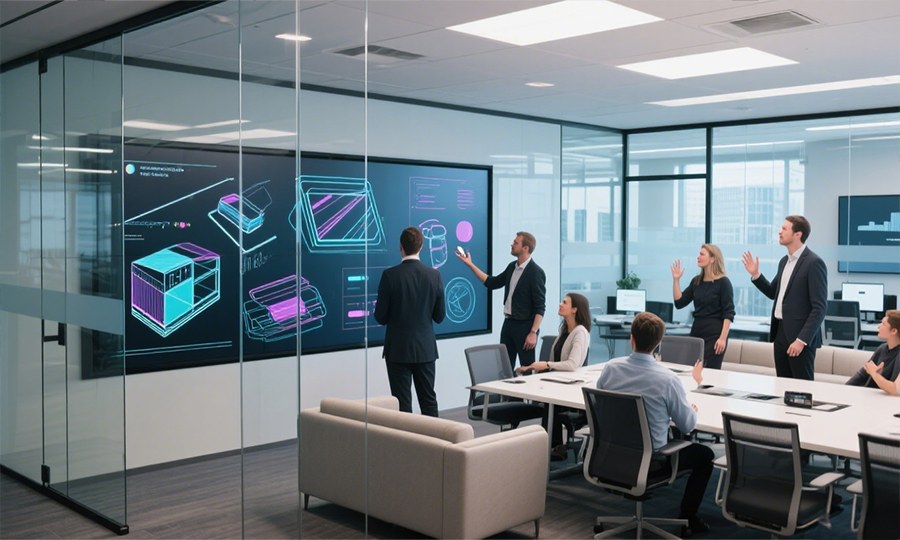
Figure 2 — Launch and conference work is text-heavy, which is exactly where a dense wall earns its rate.
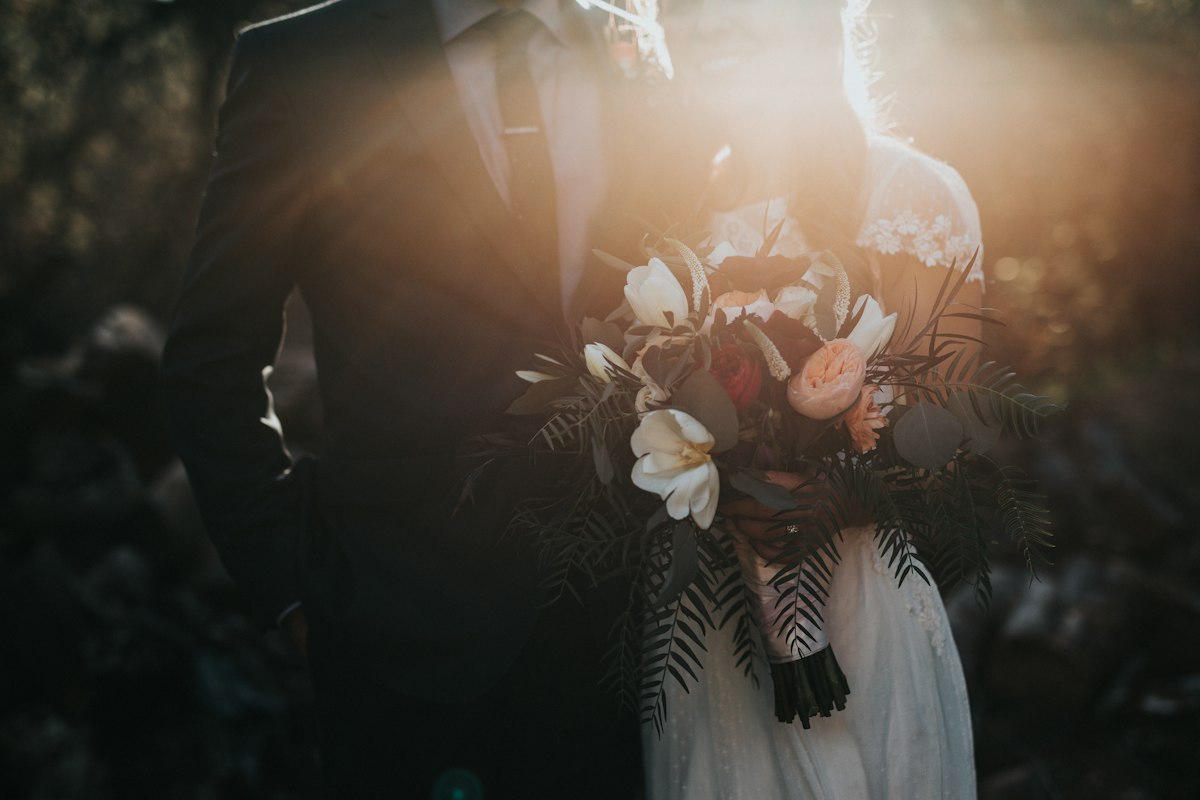
Figure 3 — Warm tones and soft light: the palette that photographs best on a wall behind the couple.
The short version
Premium events are won on closeness, not size. A 3 x 2 m wall at 2.6 mm pitch holds up at 3 m and in photographs, exceeds 4,000 nits for daylight ceremonies, and seals to IP65 for an evening outdoors. Set the height properly, dress the cables, hold still images during the ceremony, match the room’s palette, and brief the photographer on shutter speed and brightness. Charge for the operator and the content, not just the screen.
For the full specification and cabinet options, see the product page.