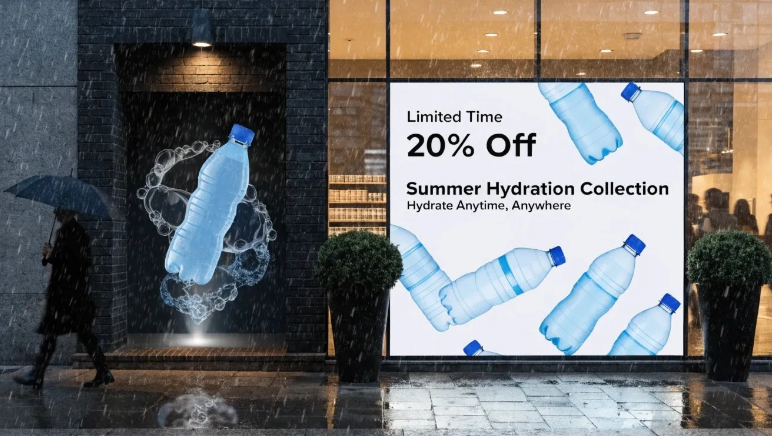
ransparent LED Screens vs. Holographic 3D Projection: Full Comparison
You are exploring the difference between holographic 3D projection and transparent LED screens.
Many companies face confusion when choosing between these two display technologies. Holographic 3D projection promises a futuristic, floating visual effect, while transparent LED screens ensure high visibility and reliability in commercial spaces. Selecting the wrong technology can lead to poor ROI, unsatisfactory visual impact, and operational challenges.
This guide will clarify the differences, highlight use cases, and provide actionable advice. You will learn how to choose the right display for your project based on performance, environment, and long-term investment.

What Is Holographic 3D Projection?
Holographic 3D projection creates the illusion of floating images using light reflection, projection, or rotating LED fans. Unlike true volumetric 3D displays, these systems simulate depth and motion using optical illusions.
In practice, holographic projection is ideal for attention-grabbing displays in controlled environments but has limitations in bright or complex spaces.
How holographic projection works in simple terms
Holographic systems often use the Pepper’s Ghost illusion, a technique documented by Wikipedia. Light is reflected onto transparent surfaces, creating a floating visual effect.
For instance, a projection on acrylic or glass can appear three-dimensional. The viewer sees a “hologram,” but the content is not physically volumetric.
This method works best in dark or dim environments. In brightly lit areas, the effect diminishes significantly.
Key features and visual characteristics
Holographic displays offer:
• Eye-catching floating visuals
• Depth illusion without glasses
• High perceived novelty
• Limited brightness and narrow viewing angles
Key insight: Holographic projection prioritizes immersive appearance over operational reliability.
Common types of holographic display solutions
- Holographic fan displays – Rotating LED blades create 3D illusions.
- Holographic projection films – Applied to glass or acrylic surfaces.
- Pepper’s Ghost boxes – Stage or showcase setups for exhibitions.
Holographic fans are popular for retail demos, but brightness, durability, and content complexity can be challenging for long-term installations.
Limitations in real-world commercial use
Holographic projection is visually impressive but limited commercially:
• Dependent on low-light or controlled lighting conditions
• Reduced visibility outdoors or in bright indoor spaces
• High content creation complexity
• Limited scalability for larger installations
According to U.S. Department of Energy, brightness and energy efficiency are crucial for commercial displays—areas where projection-based systems often underperform.

What Is a Transparent LED Screen?
A transparent LED screen is a display that shows dynamic content while allowing light to pass through its surface. Unlike holographic projection, it emits its own light, ensuring visibility even in bright environments.
This technology balances eye-catching visuals with operational reliability, making it ideal for commercial installations.
How transparent LED technology works
Transparent LED screens consist of LED strips embedded in a grid, leaving gaps that allow background visibility.
- LEDs emit light directly for bright and clear visuals.
• The spacing between LEDs provides transparency, often ranging from 50% to 90%.
• Modular panels can be combined for larger installations.
In essence, it works like a digital window that displays content without obstructing views behind it.
Key features and performance advantages
Transparent LED screens offer significant benefits for businesses:
- High brightness (4,000–6,000 nits), suitable for daylight
• Adjustable transparency for aesthetic integration
• Lightweight and modular, easy to install and scale
• Energy-efficient compared to traditional display technologies
According to International Energy Agency, LED-based displays provide superior energy performance, making them cost-effective over time.
Transparent LED screens combine high visibility, reliability, and scalability, which is why they dominate retail, showrooms, and corporate spaces.
Different types of transparent LED displays
There are several variants for different applications:
- Glass LED displays – Integrated into building facades or windows
• LED film screens – Thin and flexible, ideal for curved surfaces
• Curtain LED displays – Large-scale, lightweight facades for advertising
Each type provides varying transparency, flexibility, and installation requirements.
Why it is widely used in commercial projects
Transparent LED screens are practical and versatile:
- Maintain storefront visibility while delivering advertising content
• Ensure clear visuals under bright lighting
• Enable large-scale installations without compromising aesthetics
• Require less maintenance than holographic solutions
For commercial use, transparent LED screens offer a reliable combination of visibility, durability, and ROI.

Holographic 3D Projection vs Transparent LED Screen: Key Differences
When comparing holographic 3D projection and transparent LED screens, several key factors determine which technology is suitable for your project. Brightness, visibility, cost, and scalability are the primary differentiators.
Choosing without understanding these differences can lead to unsatisfactory results or wasted investment.
Quick comparison table (features, cost, performance)
The table below summarizes the main differences:
| Feature | Holographic 3D Projection | Transparent LED Screen |
| Display Principle | Light reflection or projection illusion | Direct LED light emission |
| Brightness | Low to medium, best in dark environments | High, visible in daylight |
| Transparency | High (illusionary) | Adjustable (50%–90%) |
| Viewing Angle | Limited | Wide, consistent from multiple angles |
| Installation | Complex, environment-sensitive | Modular, flexible |
| Scalability | Limited | Highly scalable |
| Content Requirements | Specialized 3D content | Standard video and graphics |
| Maintenance | Frequent and technical | Low, with replaceable modules |
| Lifespan | Shorter (approx. 10,000–20,000 hours) | Long (50,000+ hours typical) |
| Cost | Medium upfront, high content cost | Medium–high upfront, lower content cost |
Transparent LED screens provide more practical, scalable, and durable solutions for commercial use, while holographic displays excel in novelty and engagement in controlled environments.
Differences in visual effect and user experience
Holographic 3D projection:
- Creates a “floating” 3D illusion
• Ideal for immersive or attention-grabbing campaigns
• Requires controlled lighting and dark environments
Transparent LED screens:
- Displays bright and clear visuals under all lighting conditions
• Maintains consistent clarity across different angles
• Can integrate with glass or other surfaces without blocking view
Holographic = novelty and immersion, LED = practical visibility and reliability.
Cost and return on investment comparison
Cost is a critical factor for commercial buyers. Consider initial investment, content production, and operational expenses:
| Cost Component | Holographic Projection | Transparent LED Screen |
| Hardware | Medium | Medium–High |
| Installation | High | Moderate |
| Content Creation | High (specialized) | Lower (standard formats) |
| Maintenance | Frequent | Low |
| Operational Lifespan | Shorter | Longer (50,000+ hours) |
According to industry lifecycle cost studies (U.S. General Services Administration), long-term operational efficiency often determines ROI more than initial hardware cost.
Transparent LED screens generally deliver better ROI for long-term projects.
Installation, scalability, and maintenance differences
Holographic displays:
- Sensitive to lighting conditions
• Require precise positioning and alignment
• Difficult to scale for large projects
Transparent LED screens:
- Modular panels enable easy expansion
• Flexible mounting on glass, frames, or curtain walls
• Low-maintenance design with replaceable modules
For large-scale or permanent commercial projects, transparent LED screens provide unmatched scalability and maintenance efficiency.

Application Scenarios: Which One Fits Your Project?
Choosing the right display depends heavily on the project type, location, and target audience. Both technologies have strengths, but their suitability varies by scenario.
Understanding real-world applications helps you make informed decisions and avoid costly mistakes.
Retail stores and shopping mall displays
Holographic 3D projection can create eye-catching product demonstrations or seasonal campaigns. Its novelty attracts attention but may require controlled lighting.
Transparent LED screens, however, allow:
• Consistent visibility in bright indoor lighting
• Integration into storefront windows without blocking products
• Flexible content updates for promotions
Exhibitions and short-term event marketing
Holographic displays shine in exhibitions, trade shows, and brand activations. Their immersive 3D effect draws crowds and enhances engagement.
Key advantages:
• High novelty factor generates social media interest
• Portable setups possible with fan-based or film-based systems
• Short-term installations reduce exposure to environmental limitations
Transparent LED screens can work for events but are less attention-grabbing in immersive ways.
Outdoor advertising and large-scale media
Transparent LED screens are ideal for outdoor advertising. Their brightness ensures visibility even in daylight, and large modular panels allow massive displays.
Holographic projection is largely unsuitable outdoors due to:
• Low brightness in sunlight
• Environmental sensitivity (wind, dust, humidity)
Showrooms and brand experience spaces
Both technologies can enhance showrooms, but with different goals:
- Holographic displays: Highlight innovation, create “wow” factor for visitors
• Transparent LED screens: Provide clear, consistent product information, interactive content, and seamless integration into glass walls
When Should You Choose Holographic 3D Projection?
Holographic 3D projection is best for projects where visual impact and audience engagement outweigh operational constraints.
Understanding its ideal use cases ensures you leverage its strengths without risking poor ROI.
Best-fit scenarios and use cases
- Trade shows and exhibitions requiring immersive visuals
• Product launches seeking maximum attention
• Marketing campaigns in controlled lighting environments
• Temporary installations for events or promotions
Holographic displays excel when the primary goal is captivating audiences, not continuous information delivery.
Advantages for creative and immersive campaigns
Holographic 3D projection offers:
- Floating, lifelike visuals that attract attention instantly
• Unique storytelling opportunities for brands
• Enhanced social media engagement due to “wow” factor
• Flexibility to create thematic or seasonal effects
According to industry research (Digital Signage Federation), immersive displays can increase audience recall by up to 30–40% compared to static visuals.
Situations where holographic solutions may fail
- Outdoor or high-brightness environments
• Long-term installations requiring continuous operation
• Projects with tight budgets for content production
• Areas demanding high scalability or modularity
Use holographic projection selectively for short-term, high-impact displays. For permanent or outdoor applications, transparent LED screens are usually a better choice.

Hidden Factors Most Buyers Ignore
- Content production complexity
Holographic displays require specialized 3D content, higher cost and complexity; LED uses standard video, easier and cheaper. - Environmental limitations
Holographic screens are sensitive to light and reflections; transparent LED performs well in both indoor and outdoor environments. - Maintenance and durability
Holographic systems need frequent calibration; LED panels are modular, longer-lasting, and easier to maintain. - System integration
Holographic solutions may use complex proprietary systems; LED screens are more compatible with standard control and CMS platforms.
Common Mistakes to Avoid
- Choosing based only on visual effect
Focusing on “wow factor” may lead to poor practicality; holographic looks impressive but struggles in bright or large spaces. - Ignoring installation environment
Lighting and space matter—holographic displays perform poorly in sunlight, while transparent LED works in most conditions. - Underestimating long-term costs
Holographic systems need higher maintenance and content costs; LED may cost more upfront but is cheaper over time. - Not considering scalability
Holographic setups are hard to expand; transparent LED supports modular growth and future upgrades.

Conclusion
Choosing between holographic 3D projection and transparent LED screens depends on your project goals, environment, and budget. Holographic displays excel at short-term, immersive campaigns, while transparent LED screens provide long-term visibility, scalability, and durability.
Understanding the differences in content requirements, installation complexity, and maintenance helps you make informed decisions and avoid costly mistakes.
For professional guidance and tailored solutions, consult our experts at MuenLED. We can help you select the right display technology, optimize installation, and maximize ROI for your commercial projects.