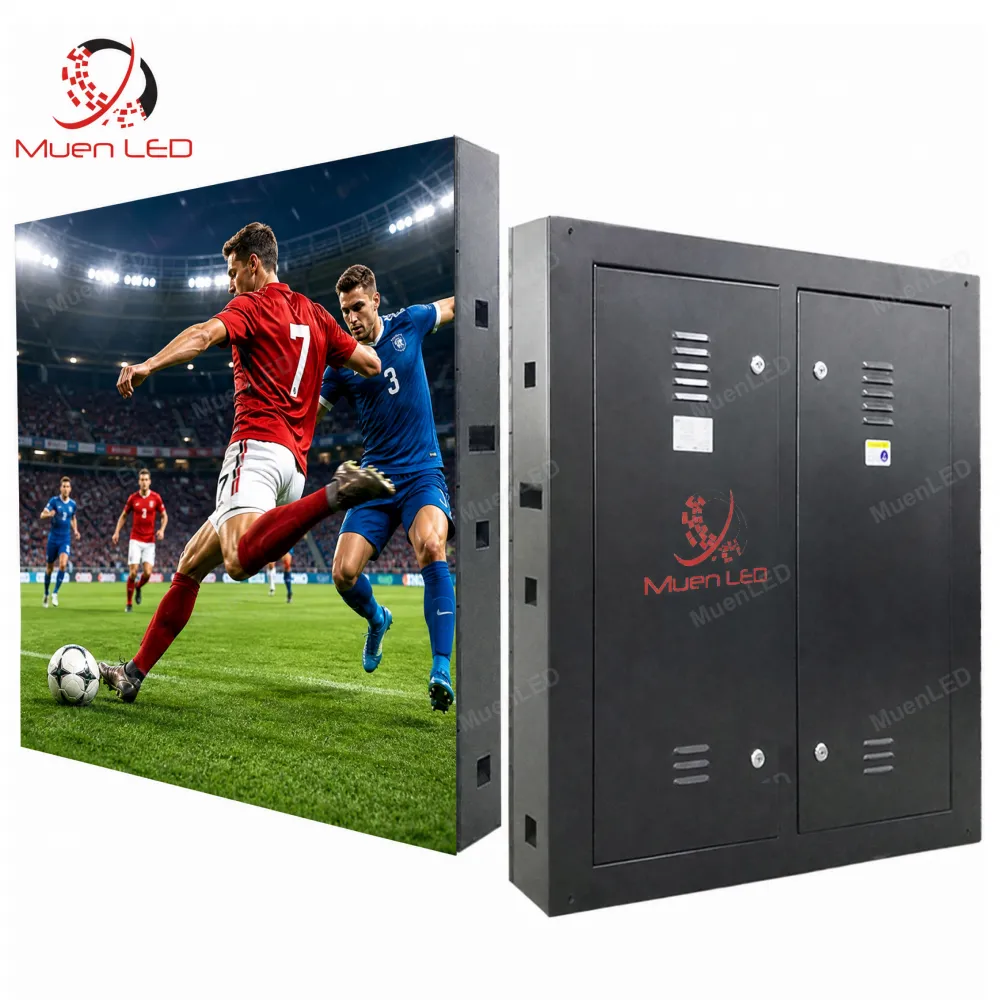
AS3.076 LED Display: The Standardized Choice for Venues, Worship and Transit
Not every project needs a 7680Hz studio wall or an 8000-nit billboard. A very large share of real installations — houses of worship, airport halls, auditoriums, exhibition centers — need a display that is sharp at five meters, dependable for a decade, and sensibly priced. That is the brief the AS3.076 outdoor LED display was written for.

Standardized Cabinets, Standardized Costs
The AS3.076 uses the same 960×960mm die-cast aluminum cabinet as the rest of the AS family, at 140mm depth. For integrators this consistency is worth real money: one mounting system, one spare-parts pool, one training program across every AS-series project in a portfolio.
| Parameter | AS3.076 Performance |
|---|---|
| Pixel pitch | 3.076 mm |
| Pixel density | 97,344 px/m² |
| Brightness | >4000 nits |
| Refresh rate | 1920 Hz |
| Scan mode | 1/13 scan |
| Cabinet size | 960×960×140 mm |
At 97,344 pixels per square meter, text remains crisp for audiences seated 4–5 meters back — the geometry of nearly every sanctuary, lecture hall, and terminal concourse.
Houses of Worship: The Reference Use Case

Sanctuaries demand three things simultaneously: readable lyrics and scripture from the back pew, gentle color rendering for broadcast volunteers, and quiet operation behind a thin wall. The AS3.076’s 1/13 scan design keeps the cabinet cool and power draw moderate for multi-hour services, while >4000 nits gives volunteers headroom to balance stage lighting without driving the wall to its limit.
Airports and Transit: Brightness Without Drama

Terminal environments mix daylight from curtain walls with 24/7 duty cycles. Here the AS3.076’s >4000-nit output and industrial-grade cabinet sealing deliver legibility by day and a comfortable, non-glaring presentation at night — with the 1920Hz refresh handling the occasional broadcast camera without issue.
The Procurement Perspective
Projects that standardize on the AS3.076 typically do so for reasons that never make the datasheet headline: predictability. Known cabinet weight, known power envelope, known spare-part compatibility. When a facilities team manages multiple sites, that predictability compounds — and it is why this model keeps winning tenders that are decided on total cost of ownership rather than headline specifications.