Standard LED Panel Size Guide
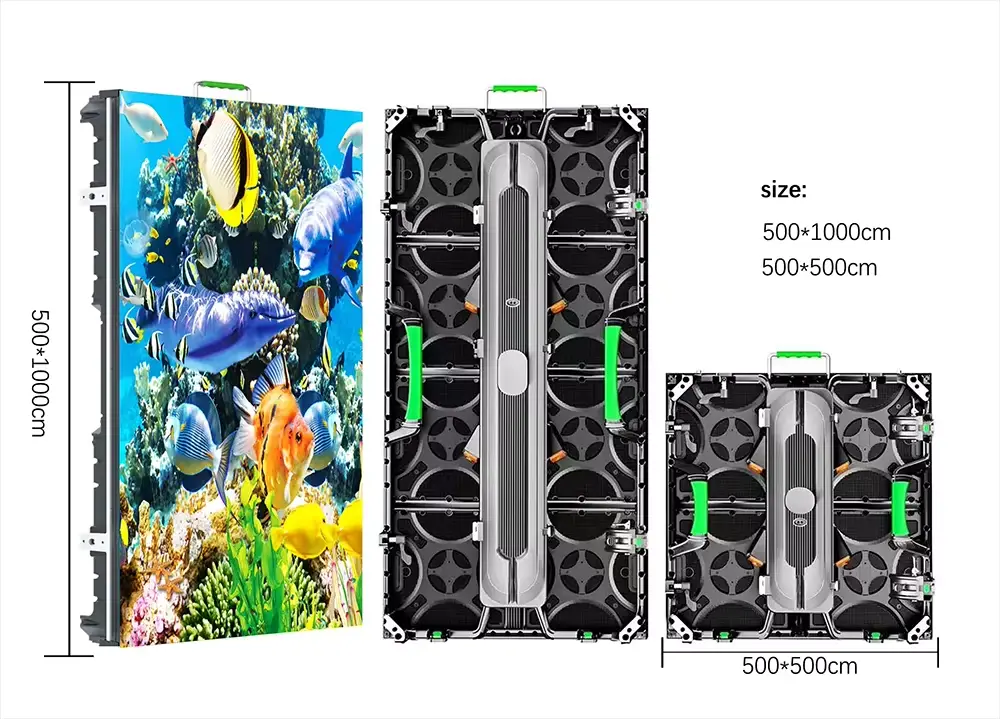
LED Panel Sizes refer to the industry-standardized dimensions of LED cabinets and modules used to construct scalable video walls. The most universally accepted cabinet dimensions are 500×500 mm and 500×1000 mm for rental applications, and 640×480 mm or 960×960 mm for fixed installations. Adhering to these standards ensures cross-batch compatibility, streamlines maintenance, and maximizes the structural integrity of your display across indoor, outdoor, and commercial environments.
Why LED Panel Sizes Directly Affect Your Profit
Adopting standard LED screen sizes available in the global market reduces your installation time, simplifies your inventory of spare parts, and lowers your long-term service costs. Faster deployment means more rentable days for your gear. This guide delivers the clear standards and decision logic you need to protect your investment.
What “Standard LED Panel Sizes” Really Mean in the LED Industry
To make smarter purchasing decisions, you must distinguish between two critical components: the module and the cabinet.
LED Module Size vs. LED Cabinet Size
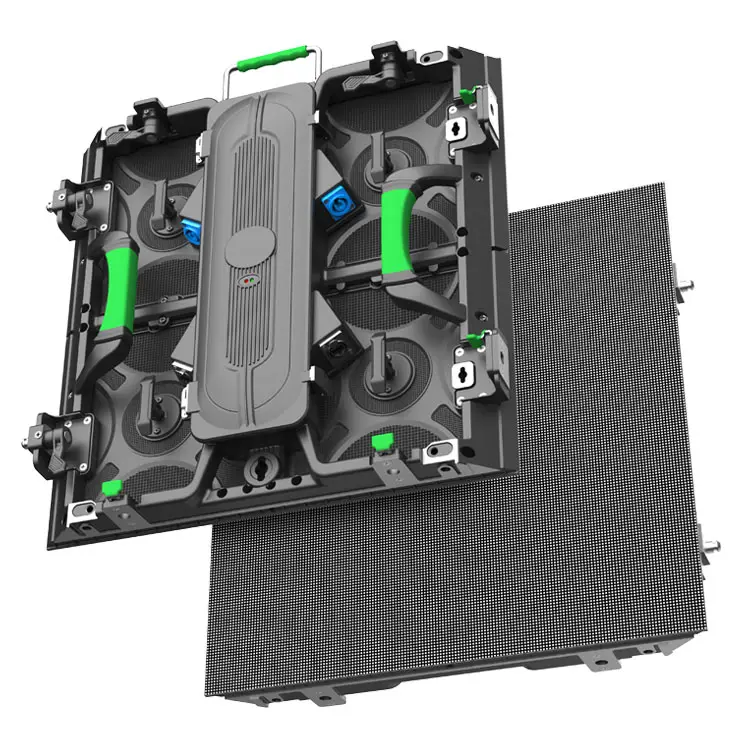
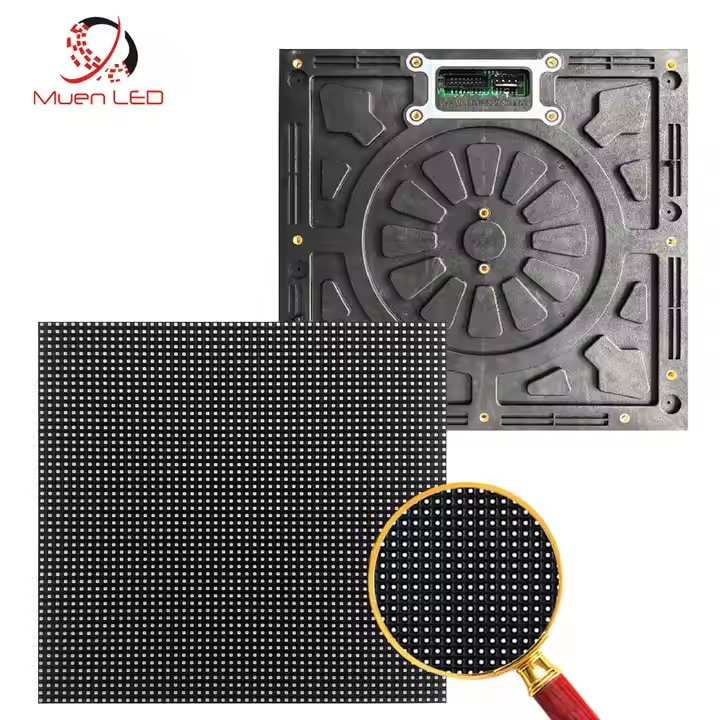
The LED module is the smaller, individual circuit board containing the pixels. The LED cabinet is the structural frame that holds several modules, the power supply, and the receiving card. The Module: The pixel foundation. Common sizes include 250×250 mm or 320×160 mm. The Cabinet: This is what your technicians actually lift and install. Standardization creates modular scalability. If you need to build a large LED display screen for a concert, you connect standardized cabinets to achieve the exact width and height required. If one cabinet fails, you swap it out without re-engineering the entire wall.
The Modular Foundation of LED Displays
LED Modules
The geometry of the module dictates the cabinet architecture. For example, a 500×500 mm cabinet typically houses four 250×250 mm modules or two 250×500 mm modules. Common Module Sizes: 320×160 mm, 250×250 mm, 192×192 mm. These dimensions impact your pixel pitch flexibility. You could theoretically swap a P3.9 module for a P2.6 module within the same cabinet frame, provided the mounting points align.
LED Cabinets
The cabinet is the structural and electrical backbone of your system. When a screen malfunctions during a live event, you swap the cabinet — not individual pixels. If your LED wall screen size relies on a standard 500×500 mm cabinet, you can pull a spare from your inventory instantly. Custom sizes may lead to weeks of downtime.
Application of Standard LED Panel Sizes
Indoor Fixed Installation
For corporate lobbies, control rooms, and broadcast studios, the priority is often achieving a perfect 16:9 aspect ratio. 640×480 mm: A classic 4:3 standard often used in industrial or budget-conscious fixed installs. Unlike LCD screen sizes such as 55-inch or 65-inch panels, LED displays create a seamless canvas without visible bezels.
Rental & Event
Speed is the currency of the rental market. 500×500 mm (19.68×19.68 inches): The industry standard for rental — lightweight, easy to handle, and fast to deploy. 500×1000 mm: Preferred for building tall walls quickly, reducing cabling and locking time. Rental companies favor these sizes because they fit standard road cases and maximize truck loading efficiency.
Outdoor & Advertising
Permanent outdoor billboards and stadium façades demand size and durability. 960×960 mm: Heavy-duty cabinets designed for wind loads and harsh environments. Custom giants: Used in architectural landmarks to minimize steel structure costs.
How to Match Size to Viewing Distance
Why Panel Size Alone Is Not Enough
Cabinet size combined with pixel pitch determines resolution. Choosing large cabinets with low resolution for close viewing causes visible pixelation.
Practical Matching Guide
Close-View (Indoor): 500×500 mm cabinets with P1.9 – P2.9.
Mid-Range (Events): 500×500 mm or 500×1000 mm with P3.9.
Long-Distance (Outdoor): 960×960 mm cabinets with P6 – P10.
Installation & Labor Cost Impact
Faster Assembly
Standard sizes allow technicians to build faster with fewer errors.
Transportation, Storage & Warehouse Efficiency
Flight-case optimization: 500mm cabinets fit 6–8 per case.
Truck loading: Standard cases eliminate wasted space.
How the Right LED Panel Sizes Increase Your Returns
Rental Business ROI
Utilization rate: Standard panels stay rented year-round.
Cross-rental: Easily borrow matching stock from local partners.
Fixed Installation ROI
Reduced downtime: Generic replacement parts available.
Future expansion: Add more panels without replacing original systems.
How to Choose the Right LED Panel Sizes
Questions Your Business Should Answer First
- Is speed or resolution the priority?
- Who maintains the screen?
- What is the lifecycle?
Size Selection Scenarios
- Event Rental Companies: 500×500 mm
- Digital Signage Networks: 960×960 mm
- Sports Venues: Heavy-duty outdoor cabinets
Conclusion
Choosing the right LED panel sizes is a strategic decision impacting profitability, scalability, and reliability. Efficiency: Lower labor and logistics costs.
Scalability: Modular expansion.
Safety: Industry-certified standards. Evaluate your system today and upgrade your visual strategy with standardized, high-performance LED panels backed by U.S. support.