The Payback Math Behind a 3x2M Rental LED Set
The Payback Math Behind a 3x2M Rental LED Set
Every rental company asks the same question before buying a wall: how many jobs does it take to pay for itself? The honest answer is that it depends on four numbers — what you can charge per show, how many shows a year the screen actually goes out, what each deployment costs you, and what you spend on the parts that are not the screen.
This article works through that model with a 3 m x 2 m outdoor rental set, using clearly stated assumptions you can replace with your own rates. The point is not the exact payback month. It is knowing which lever moves it.
What a 3 x 2 m wall can realistically earn
A 3 x 2 m outdoor rental wall typically rents as a package: the screen, the processor, the rigging, delivery and a technician. Rates vary enormously by market and by what is bundled, but the structure is consistent:
- Single-day or weekend event rental: the highest rate per day, because the client is paying for convenience and the wall is probably the focal point of the stage.
- Weekly or multi-day festival rental: a lower daily rate but far less handling per revenue dollar, because the wall goes up once.
- Long-term or dry hire: the lowest rate, with the client taking on labor and risk.
- Add-on revenue: operator time, content playback, camera-feed integration, and spare modules rented as insurance.
The mistake most spreadsheets make is treating the screen as the only product. In practice a 3 x 2 m wall is usually sold with a technician and a processor, and that bundled service is often 30–40% of the invoice.
Utilization is the lever that decides everything
Two companies can buy the same screen and get completely different returns, because the difference is not the product — it is the booking calendar.
A wall that goes out 12 times a year is a hobby. A wall that goes out 30 times a year is a business. The screen itself does not care; the payback curve does.
Useful benchmark: count the weekends in your season, subtract the ones already committed to bigger builds, and assume you will fill roughly half of what is left with this screen. That is your realistic utilization, not your optimistic one.
A simple break-even model
Here is the model with three scenarios. All figures are illustrative and in USD; replace the rates with your own market.
| Scenario | Shows / year | Avg. rate per show | Gross revenue | Direct cost (≈40%) | Overhead allocation (≈20%) | Net contribution | Payback on ≈,200 invested |
|---|---|---|---|---|---|---|---|
| Conservative | 15 | 50 | ,250 | ,300 | ,650 | ,300 | ~19 months |
| Base case | 25 | 50 | 6,250 | ,500 | ,250 | ,500 | ~10 months |
| Busy fleet | 40 | 00 | 8,000 | 1,200 | ,600 | 1,200 | ~6 months |
The ,200 figure is deliberately not just the screen. It includes the cabinets, the flight cases, a realistic spare-module ratio and a spare receiving card. Companies that buy only the screen and then discover they need cases and spares typically spend the same money three weeks later, at a worse price, in a hurry.
Two things stand out in that table. First, the jump from 15 to 25 shows cuts payback roughly in half — utilization dominates every other variable. Second, raising the rate from 50 to 00 matters less than adding ten bookings. Sell the calendar first.
The costs the spreadsheet usually misses
These are the line items that quietly turn a good model into a bad year:
- Labor and truck time. A 3 x 2 m wall is a two-person build, but it still consumes a van slot, a load-in window and a return trip. If you are not charging for delivery, you are subsidizing the rental.
- Dead pixels and module attrition. Outdoor rental panels take impact, heat cycling and road vibration. Budget 3–5% of revenue for module replacement and repair over a season.
- Damage and insurance. Outdoor work means rain, wind, cable trips and enthusiastic crowds. Insurance is a real per-show cost, and deductibles are real money.
- Storage. Twelve cabinets and their cases occupy real floor space. If you rent a warehouse, that space has a price.
- Idle season. Outdoor rental is seasonal in most markets. The screen earns nothing for months, but depreciation and storage continue.
- Consumables. Cables, clamps, gaffer, zip ties, spare latches. Small per show, significant per year.
- Content and prep time. Reformatting client content to 768 x 512 is billable work that many companies forget to bill.
Why 3.91 mm protects your rate card
Pitch choice is a pricing decision as much as a technical one. A 3.91 mm wall sits in a useful middle band:
- Close enough for camera work. At 3 m x 2 m and 768 x 512 pixels, the wall holds up on phone video and on a broadcast wide shot from a few meters back. Clients notice, and clients who notice pay more.
- Coarse enough to be affordable. It does not carry the price premium of a 2.6 mm product, so your capital cost per square meter stays accessible.
- Usable indoors and outdoors. One product covers stage backdrops, conference walls, wedding installations and brand activations. A screen that only works outdoors sits idle in winter; this one does not.
- Large enough to matter, small enough to move. It is a one-van product, which means it can be quoted on jobs that a 6 x 3 m build cannot economically serve.
The rate card argument is simple: a wall that can serve four event types can be priced against four different market benchmarks, and can be booked in the shoulder seasons that outdoor-only inventory cannot fill.
The second set is cheaper than the first
Fleet economics change after the first purchase, and this is where cabinet geometry pays off:
- Spares are shared. One pool of modules and receiving cards covers every matching cabinet in the fleet.
- Kits combine. Twice the cabinets means 6 x 2 m or 3 x 4 m builds from the same inventory, which lets you quote bigger stages without buying a bigger product.
- Cross-rental becomes possible. Companies with matching cabinets can sub-rent to each other, which turns idle inventory into revenue instead of a competitor’s booking.
- Crew knowledge compounds. Same rigging, same processor, same service procedure. Training cost per show falls.
This is why rental fleets standardize on one cabinet size and one pitch where possible. Variety looks flexible on paper and expensive in practice.
What to put in the quote so the margin survives
Whatever rate you set, quote the package honestly:
| Line item | Quote it? | Why |
|---|---|---|
| Screen and processor | Yes | The core product |
| Delivery and collection | Yes | Never absorb truck time |
| Technician / operator | Yes | The most commonly given-away margin |
| Rigging and ground support | Yes | Hardware is not free and clients assume it is included |
| Spare modules on site | Optional add-on | Sells easily as insurance before a live show |
| Content reformatting | Yes | Real labor, real value |
| Weather contingency | In contract | Protects you when the client wants to run through rain |
The numbers behind the product
Configuration detail — cabinet count, module count, native resolution, control system and power specification — is on the outdoor rental LED display product page. Run your own rates through the table above before you decide: the product is fixed, but utilization and rate are yours to set.
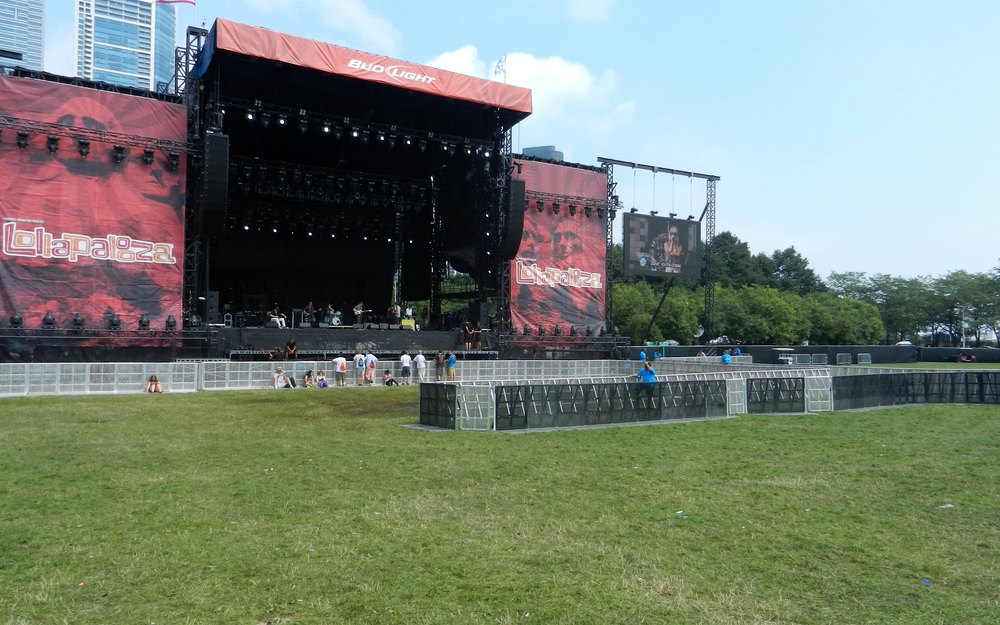
Figure 1 — Festival work rewards screens that go up fast and come down faster.

Figure 2 — One cabinet size, many builds: the fleet strategy that keeps utilization high.

Figure 3 — High-value night shows are where pitch and brightness convert directly into rate.
The short version
Payback is a function of bookings, not specifications. A 3 x 2 m outdoor set with roughly ,200 all-in — screen, cases and spares — reaches break-even in about ten months at 25 paid shows a year, and in about six months at 40. The screen earns nothing while it sits in the warehouse, so the first job of the purchase is to fill the calendar, and the second is to price delivery, labor and content honestly instead of giving them away.
For the full specification and cabinet options, see the product page.