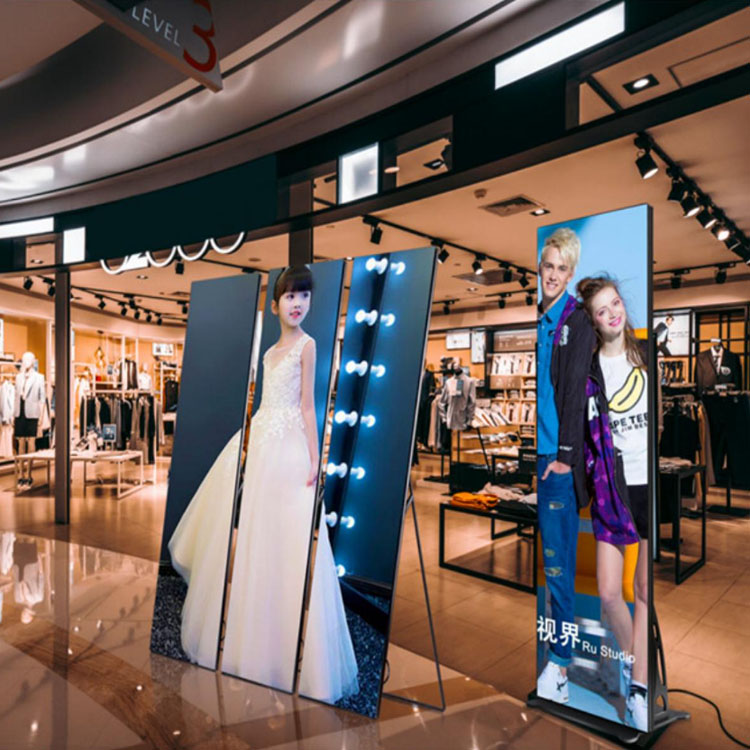
How does an LED poster display work?
LED posters are advertising tools based on LED display technology. They not only deliver the visual impact of traditional posters but also dynamically display images and videos, offering greater visual appeal and interactivity. This article provides an brief explanation of how LED posters function, helping you gain a comprehensive understanding of this advertising equipment.

Basic Components of LED Posters
LED posters primarily consist of the following parts:
LED Display Screen
As the core component of LED posters, the display screen comprises thousands of LED light beads (Light-Emitting Diodes). These beads are individually controlled by a system to illuminate or extinguish, displaying various images, text, and video content. Depending on design requirements, LED posters can be monochrome, dual-color, or full-color.
Control System
The control system serves as the “brain” of the LED poster, receiving and processing input signals (such as video, images, or text) and converting them into content displayable on the LED screen. It includes hardware (e.g., control cards, processors) and software (e.g., playback software or content management platforms).
Power Supply Module
The power supply module provides stable current and voltage to the LED display, ensuring proper operation of the LED chips. Given the high power consumption of LED displays, this module must deliver efficient and consistent power delivery.
Housing and Mounting Bracket
The housing and mounting bracket protect internal components and ensure safe operation in diverse environments. The housing typically uses durable aluminum alloy or plastic materials, while the bracket design allows flexible adjustment to accommodate installation requirements.
How LED Posters Work
The working principle of LED posters can be explained through the following key components:
1. Display Principle: LED Light Emission
The display effect of LED posters relies on the light-emitting properties of LED diodes. Each LED diode consists of a semiconductor material that emits light when an electric current passes through it. Each LED has a specific color (red, green, blue) and brightness level. By adjusting the brightness of different colored LEDs, the full spectrum of colors we perceive is created.
Full-Color Display:
- LED posters typically use RGB (red, green, blue) LEDs. By adjusting the brightness of these three colors, they blend to form images and videos in any color. Each pixel point consists of three LED chips. By precisely controlling their brightness, rich colors are displayed.

2. Control System Operation
The control system is the core component of LED posters, primarily responsible for the following tasks:
- Receiving Input Signals: The control system receives input signals from computers, video players, wireless transmission devices, or USB devices. These signals include images, videos, or real-time information.
- Content Processing and Conversion: The control system converts input signals into digital signals suitable for the display. It controls the on/off state and brightness of each LED lamp to display the desired content.
- Display Content Refresh: To ensure smooth presentation of images and videos, the control system continuously refreshes the displayed content. For video playback, a high refresh rate and response speed are typically required to prevent image stuttering.
3. Drive and Current Control
The brightness of each LED is achieved by adjusting the current flow. The drive circuit in LED displays precisely controls the current to each LED, thereby regulating the brightness and color of every pixel. Utilizing PWM (Pulse Width Modulation) technology, the drive circuit rapidly switches the current on and off, creating the visual perception of varying brightness levels in the LEDs.
4. Power Management
LED displays require stable power supply, especially for large-screen or high-brightness LED posters. The power module converts alternating current (AC) to direct current (DC) suitable for the display. Additionally, the power supply incorporates overload protection, overheat protection, and other safety features to ensure the LED poster’s reliability and operational stability.
Display Methods and Innovative Technologies of LED Posters
With technological advancements, the display methods of LED posters continue to innovate and upgrade. Below are some common innovative technologies and display methods:
High-Definition and Ultra-High-Definition Display
Modern LED posters can display not only simple text and graphics but also high-definition and ultra-high-definition video content. By utilizing high-resolution LED displays (such as ultra-high-definition pitch screens like P1.2 or P1.5), these posters achieve more refined visual effects, making them ideal for large-scale advertising campaigns and premium exhibitions.
Transparent LED Posters
Transparent LED posters represent a recent technological advancement. Utilizing see-through LED screens, they maintain display quality without obscuring backgrounds. These posters are particularly suited for shopping mall windows and building facades, allowing advertisements to be displayed while preserving the space’s sense of openness.
Curved and Flexed Screens
Traditional LED displays are typically flat, but with innovations in display technology, many LED screens now feature curved or flexed designs to accommodate diverse application scenarios. For instance, curved LED displays are ideal for specialized needs such as exhibition displays and stage setups, delivering richer visual effects.

Interactive Display
With the integration of smart technologies, an increasing number of LED posters now feature interactive capabilities. Examples include touchscreen functionality and sensor-based interactions, allowing users to engage with the display through touch or motion detection. Interactive LED posters are highly popular in shopping malls, exhibitions, and similar settings, effectively capturing audience attention and enhancing engagement.
Advantages of LED Posters
- Dynamic Display: LED posters can play animated videos and images, capturing viewers’ attention and enhancing advertising impact.
- High Brightness and Clarity: Even in brightly lit environments, the high brightness of LED posters ensures clear visibility, adapting to diverse indoor and outdoor settings.
- Energy Efficiency & Eco-Friendly: LED poster lights consume less energy than traditional light sources and boast extended lifespans, reducing replacement costs.
- Customizable Content: Advertising content can be updated instantly, supporting real-time information delivery for greater flexibility.
- Highly Interactive: Many LED posters incorporate touchscreens or sensor technology, enhancing user engagement and interactive advertising experiences.
More advantages, you can see in our blog: Understanding the LED Poster Now
Application Scenarios for LED Posters
LED posters are widely used in various advertising and display settings, with common applications including:
- Commercial Advertising: Displayed in public spaces such as shopping malls, subway stations, and airports to promote sales events and brand awareness.
- Exhibitions and Events: Utilized at live events like trade shows, expos, and concerts as tools for information display and visual attraction.
- Outdoor Advertising: Deployed in large commercial districts, stadiums, bus stops, and other outdoor locations, where LED posters attract audiences with their vibrant display effects.
- Interactive Experiences: Interactive LED posters are employed in venues such as retail stores and museums, enabling visitors to engage with the advertised content.

Summary
LED posters have become essential tools in modern advertising and display applications due to their high brightness, dynamic display capabilities, and exceptional flexibility. By analyzing LED display technology, we can see how these posters achieve high-quality image and video presentation through sophisticated control systems and driver circuits. Additionally, they offer unique advantages such as high pixel density and energy efficiency, making them adaptable to diverse advertising and display requirements. With steady technological advancements, the application prospects for LED posters will continue to expand.