Church Display Solutions: LED Screen vs Projector — Full Comparison
Choosing the right display system is one of the most important technology decisions a church can make. Whether you’re upgrading an existing sanctuary, planting a new church, or redesigning your worship experience, your visual setup plays a major role in how effectively you communicate your message. From song lyrics and sermon points to video content and live streaming, clarity and engagement matter more than ever.
In 2026, churches are increasingly evaluating two primary options: LED screens (also known as LED walls) and projection systems. Both technologies have their place, but they differ significantly in performance, cost, and long-term value. This guide breaks down the pros, cons, and real-world considerations to help you make the right decision for your church.

Understanding the Two Options
Before diving into the pros and cons, it’s important to understand how each system works.
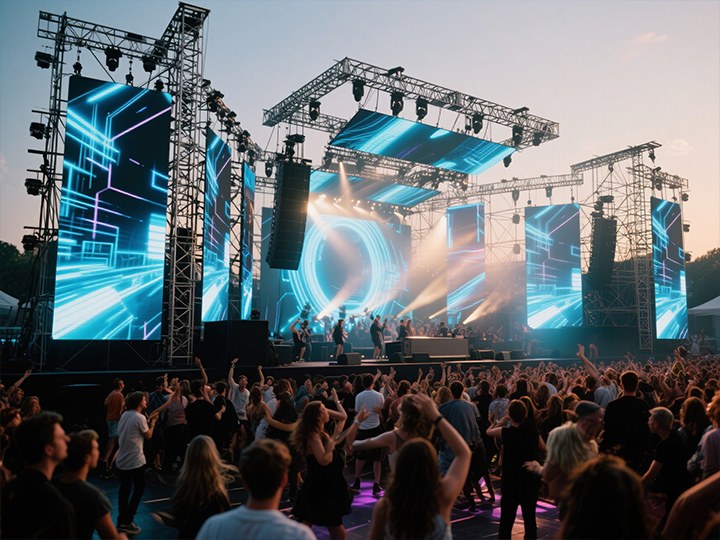
An LED screen is made up of modular panels that emit their own light. These panels are tiled together to create a seamless video wall that can display high-resolution images, videos, and graphics. LED walls are commonly used in concerts, conferences, and increasingly, modern churches.
A projector system, on the other hand, uses a light source to project an image onto a screen or wall. The quality of the image depends on factors like brightness (measured in lumens), ambient light, screen quality, and projection distance. It has been the traditional choice for churches for decades due to its affordability and simplicity.
While both systems achieve the same goal—displaying visual content—the way they perform in real-world church environments is quite different.
LED Screens: Pros and Cons
Advantages
1. Exceptional Brightness and Visibility
One of the most significant advantages of LED screens is their brightness. Because they are self-lit, they remain clearly visible regardless of lighting conditions. This is especially valuable in churches with windows, bright stage lighting, or a desire to maintain a well-lit atmosphere during worship.
Unlike projectors, which often require dimming the lights to achieve a clear image, LED screens allow full control over the environment without sacrificing visibility.
2. Superior Image Quality
LED displays offer outstanding image quality, with high contrast ratios, deep blacks, and vibrant colors. This makes a noticeable difference when displaying worship backgrounds, sermon slides, or video content.
For churches that incorporate live video feeds (IMAG), LED walls provide a crisp and professional look that enhances both the in-room and online viewing experience.
3. Long Lifespan and Reliability
LED screens are built for longevity. Many systems are rated for up to 100,000 hours of use, which can translate to over a decade of regular services and events.
In addition, they require minimal maintenance. There are no bulbs to replace, and individual panels can often be serviced without taking down the entire display. This reliability is a major advantage for churches that rely heavily on their AV systems each week.
4. No Shadow Interference
With projection systems, it’s common for shadows to appear when someone walks between the projector and the screen. This can be distracting during sermons or worship.
LED screens eliminate this issue entirely, as the image is generated directly from the display surface.
5. Flexible Design and Aesthetic Appeal
LED walls can be customized to fit virtually any stage design. Whether you want a large central screen, a wide panoramic backdrop, or creative shapes that enhance your stage aesthetics, LED technology offers unmatched flexibility.
This has made LED walls increasingly popular in churches aiming for a modern, immersive worship environment.
Disadvantages
1. High Upfront Cost
The biggest barrier to LED adoption is cost. LED walls require a significantly larger initial investment compared to projectors. The total price depends on factors such as pixel pitch (resolution), screen size, and installation complexity.
For smaller churches or those with limited budgets, this can be a major constraint.
2. Complex Installation
Installing an LED wall is not a simple plug-and-play process. It often requires professional design, structural considerations, and specialized video processing equipment.
This means higher installation costs and a longer setup timeline compared to projection systems.
3. Limited Portability
LED systems are typically designed for permanent installation. While portable LED options exist, they are still less convenient than projectors for mobile churches or temporary venues.

Projectors: Pros and Cons
Advantages
1. Lower Initial Cost
Projectors remain the most budget-friendly option for churches. A complete projection system—including projector, screen, and mounting—can be installed at a fraction of the cost of an LED wall.
This makes projectors especially attractive for church plants, small congregations, or ministries with limited funding.
2. Large Image at Lower Cost
Projectors can create very large images without requiring a massive investment. By adjusting the throw distance and lens, churches can scale their display size to fit their space.
This flexibility allows churches to achieve a “big screen” experience without the expense of LED panels.
3. Simpler Setup and Operation
Projection systems are generally easier to install and operate. Many churches can set up and manage projectors without needing specialized technical expertise.
This simplicity is especially beneficial for volunteer-driven AV teams.
4. Portability and Flexibility
Projectors are ideal for churches that meet in rented spaces such as schools, theaters, or community centers. They can be easily transported, set up, and taken down each week.
For mobile churches, this portability is a major advantage.
Disadvantages
1. Poor Performance in Bright Environments
The biggest weakness of projectors is their sensitivity to ambient light. In bright rooms, the image can become washed out, making text difficult to read and visuals less impactful.
To compensate, churches often dim the lights, which can affect the overall atmosphere and engagement.
2. Ongoing Maintenance Costs
Projectors require regular maintenance, including bulb replacements. Depending on usage, bulbs may need to be replaced every 6 to 12 months.
Over time, these maintenance costs can add up and reduce the initial savings.
3. Shorter Lifespan
Compared to LED screens, projectors have a shorter lifespan. Many systems need to be upgraded or replaced within 3 to 5 years, especially as newer, brighter technologies become available.
4. Shadow and Alignment Issues
Projection systems can be affected by shadows if someone walks in front of the beam. Additionally, maintaining proper alignment and focus can require ongoing adjustments.
5. Lower Image Quality
While modern projectors have improved significantly, they still cannot match the contrast, brightness, and color accuracy of LED displays—especially in challenging lighting conditions.
Key Factors to Consider
When deciding between LED and projection, it’s important to evaluate your specific context.
Budget is often the starting point. If your budget is limited, a projector may be the only viable option. However, if you can invest more upfront, an LED wall may offer better long-term value.
Lighting conditions are another critical factor. Churches with lots of natural light or bright stage lighting will benefit significantly from LED technology.
Church size and growth also matter. A growing church may find it more cost-effective to invest in LED early rather than upgrading from projection later.
Portability needs should not be overlooked. If your church meets in a temporary location, a projector is usually the more practical choice.
Real-World Trends in 2026
In recent years, there has been a clear shift toward LED technology in churches of all sizes. As costs gradually decrease and technology improves, more ministries are making the transition.
LED screens are the clear winner for most churches today, especially mid-sized to large congregations upgrading their tech. They deliver a more reliable, engaging, and future-proof worship experience with superior brightness, consistency, and lower long-term headaches. Also LED walls are especially popular in churches that prioritize live streaming, video production, and a modern worship experience. They provide a polished, professional look that translates well both in-person and online.
Many churches report LED walls paying for themselves quickly through reduced maintenance and better engagement. Trends show LED adoption growing rapidly in worship spaces as prices become more competitive and fine-pitch options improve clarity even for closer viewers.
That said, projectors remain a reliable and widely used solution, particularly for smaller churches and mobile setups. Some churches use projectors for creative ambiance (e.g., on side walls) while putting the main stage visuals on LED for reliability.
Final Verdict
There is no universal answer, but the direction is clear based on your needs.
If your church has the budget and is looking for a long-term, high-performance solution, an LED screen is the better investment. It delivers superior visibility, image quality, and reliability, making it ideal for modern worship environments.
If your priority is affordability, simplicity, or portability, a projector remains a practical and effective choice—especially in controlled lighting conditions.
Conclusion
Both LED screens and projectors have their place in today’s churches. The right choice depends on your ministry’s goals, resources, and environment.
In 2026, LED technology is becoming the preferred option for churches seeking to future-proof their AV systems and create a more engaging worship experience. However, projectors continue to serve as a valuable tool for churches that need flexibility and cost efficiency.
By carefully evaluating your needs and planning for the future, you can choose a display system that supports your mission and helps you communicate your message with clarity and impact for years to come.