A Comprehensive Guide to Advertising LED Displays
Advertising LED displays are transforming how businesses communicate with their audience. You may have seen them in shopping malls, stadiums, or along busy highways, but do you know how they work or why they are so effective?
Traditional advertising often struggles to grab attention in crowded environments. Businesses increasingly need dynamic, high-impact solutions that are flexible and measurable. LED displays offer a way to reach customers visually, in real time, and at scale, providing both clarity and engagement that static signs cannot match.
In this guide, we will explore what advertising LED displays are, how they work, the main types, and how businesses can choose the right solution. You’ll gain actionable insights to make informed decisions and maximize ROI in 2026 and beyond.

What Is an Advertising LED Display?
An advertising LED display is a digital screen made of light-emitting diodes (LEDs) that showcases dynamic content, including videos, graphics, text, and animations. With vibrant colors, high brightness, and wide viewing angles, it works effectively both indoors and outdoors. This technology combines hardware (LED panels and control systems) with software (content management systems) to deliver timely, attention-grabbing messages that are far more engaging and memorable than traditional static signs.
Advertising LED Display vs Traditional Advertising
| Feature / Aspect | Advertising LED Displays | Traditional Displays | Notes / Benefits |
| Brightness and Visibility | Very high brightness, suitable for outdoor use even in direct sunlight | Lower brightness, mostly suitable for indoor environments | LED displays maintain visibility in all lighting conditions |
| Scalability and Flexibility | Panels can be combined to create almost any size or shape | Limited in size and fixed form factor | Enables creative and large-format installations |
| Dynamic Content Control | Content can be scheduled, updated in real time, and integrated with sensors or data feeds | Mostly static or limited scheduling | Allows timely, targeted, and interactive messaging |
| Durability and Lifespan | High durability for outdoor and high-traffic use | Less durable, shorter lifespan | Reduces maintenance costs and increases ROI |
| Ideal Use Cases | High-traffic, high-impact environments like highways, stadiums, retail fronts, and public squares | Small-scale indoor applications | Best for maximum visibility and audience reach |
While digital signage works well for small indoor spaces, advertising LED displays are superior for high-traffic, high-impact locations, offering both durability and long-term operational value.
How Does an Advertising LED Display Work?
Core Components of an Advertising LED Display System
An advertising LED display system consists of four main components:
- LED Modules– Individual panels containing clusters of LEDs.
- Control System– Hardware and software managing content, synchronization, and brightness.
- Power Supply and Signal Infrastructure– Ensures reliable operation and connectivity.
- Cabinet and Support Structure– Houses the modules and protects them from environmental factors.
Each component works together to ensure consistent image quality, color accuracy, and reliability. For example, a high-quality control system allows for remote content updates, content scheduling, and real-time monitoring, which is essential for multi-location campaigns.
Each component must work seamlessly. For example, a reliable control system allows content scheduling, real-time updates, and remote monitoring—critical for campaigns across multiple locations.
Basic Working Principles of Advertising LED Displays
LED displays work by illuminating tiny LEDs in a grid, with each LED representing a pixel. The combination of red, green, and blue LEDs produces full-color images. Signals from the control system instruct LEDs on brightness and color values, creating the desired content.
Modern displays allow for dynamic refresh rates, brightness adjustments, and motion graphics, ensuring messages remain visible under varying lighting conditions. High-quality displays often include redundancy features to maintain operation even if a module fails, increasing reliability for critical advertising campaigns.
Main Types of Advertising LED Displays
| Type | Description | Typical Use Case | Notes |
| Indoor Displays | High-resolution LED panels for indoor spaces | Malls, offices, exhibitions | Clear images at close distance, moderate brightness |
| Outdoor Displays | High-brightness, weatherproof LED screens | Highways, stadiums, city squares | Must meet IP65+ standards, high durability |
| Fixed Installation | Permanently mounted on walls or facades | Retail fronts, corporate buildings | Stable, long-term investment |
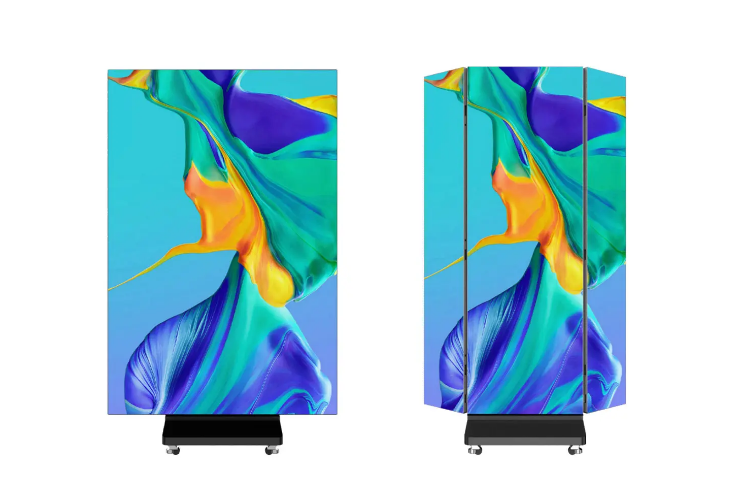
| Mobile/Freestanding Displays | Movable stands or vehicle-mounted screens | Events, temporary campaigns | Flexible placement, easy relocation |
| Large-Format Billboards | Giant roadside LED screens | Outdoor advertising campaigns | Maximum reach, high visibility |
| LED Posters | Vertical or smaller displays | Retail windows, indoor promotions | Space-efficient, easy to read |
| Transparent LED Displays | See-through panels that let light through | Storefronts, showrooms | Combines advertising with natural lighting |
| Curved / Creative Displays | Custom shapes or curved screens | High-impact branding | Unique visual experiences, enhances engagement |

Why Businesses Choose Advertising LED Displays
Advertising Visibility and Audience Impact
LED displays provide high visibility in any lighting condition, making them effective at grabbing attention. Studies show digital displays can increase message recall by up to 47% compared to static signs (source).
Content Flexibility and Real-Time Updates
Businesses can update content instantly, schedule promotions, and tailor messages to different audiences or times of day.
Operational Cost Efficiency
While upfront costs are higher, LED displays reduce recurring printing and installation costs for traditional ads, offering a lower total cost of ownership over time.
Key Technical Factors to Understand Before Choosing One
| Factor | Recommended Specification | Notes / Impact |
| Pixel Pitch | ≤2mm (indoor), ≥6mm (outdoor) | Smaller pitch = higher resolution, suitable for close viewing |
| Brightness | Indoor: 800–1,200 nits; Outdoor: 5,000–7,000 nits | Ensures content is visible under ambient light |
| Screen Size & Resolution | Based on viewing distance and content type | Prevents distortion and improves readability |
| Aspect Ratio | Standard 16:9 or custom | Affects video fit and aesthetics |
| Environmental Protection | Outdoor: IP65+ | Guarantees durability in harsh conditions |
| Lifespan | 50,000–100,000 hours | Reduces maintenance and replacement costs |
How to Choose the Right Advertising LED Display for the Project
-
Defining Advertising Objectives
Identify your primary goals: brand awareness, promotions, or informational content. Objectives determine display type, size, and resolution.
-
Evaluating the Installation Environment
Consider lighting, distance, mounting options, and foot traffic. Environmental factors dictate brightness and durability requirements.
-
Budget Planning and Total Cost of Ownership
Factor in installation, maintenance, electricity, and content management costs. Cheaper upfront options may cost more in the long term.
-
Customization and Future Scalability
Select displays that allow expansion, shape modification, or software integration for evolving marketing needs.

Common Mistakes to Avoid When Buying Advertising LED Displays
- Selecting Pixel Pitch Based Solely on Price
A low-cost display with poor resolution can damage brand image and reduce engagement.
- Ignoring Brightness and Environmental Conditions
Displays that fail to meet environmental needs become ineffective and unreadable.
- Overlooking Maintenance and After-Sales Support
Without proper service, downtime increases and reduces ROI. Ensure vendor support contracts are included.
- Inadequate Content Management Planning
Failing to plan content strategy leads to underutilized screens and wasted investment.
Advertising LED Display Trends to Watch in 2026
- Energy-Efficient and Eco-Friendly LED Technologies
Modern LEDs use up to 60% less power than older models, reducing operational costs and carbon footprint.
- Smart Control and Cloud-Based Management Systems
Cloud-based platforms allow remote control, analytics, and scheduling across multiple locations.
- Creative and Irregular-Shaped LED Displays
Brands are adopting curved, 3D, or transparent displays to create memorable experiences.
- Integration with AI and Smart City Infrastructure
AI enables dynamic content personalization, predictive analytics, and interactive campaigns in urban environments.

Conclusion
Investing in advertising LED displays allows businesses to communicate effectively, attract attention, and adapt messaging instantly. With careful planning, they deliver measurable ROI, long-term brand value, and stronger customer engagement, helping companies stay competitive in an increasingly digital-first world.
Ready to elevate your brand with high-impact LED displays? Contact us today to explore customized LED display solutions tailored to your business goals, application scenarios, and budget.