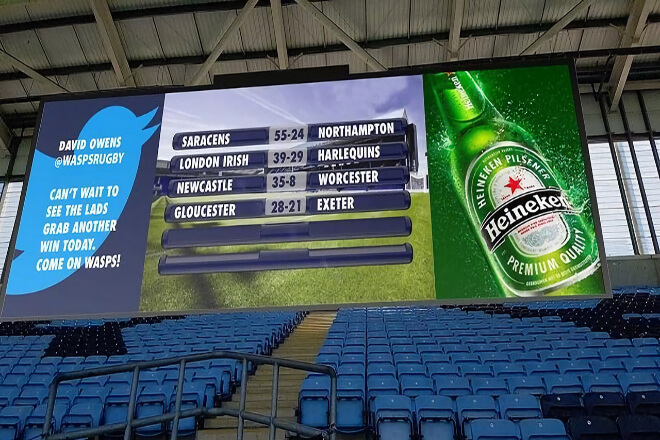
Tech Insights: Working Mechanism of Outdoor LED Displays
Outdoor LED signs work by combining LED pixels, driver IC control, power systems, and environmental protection into a synchronized display system.
Many buyers misunderstand outdoor LED displays as simple screens. In reality, they are complex engineering systems that must survive high temperature, rain, dust, and continuous operation. Poor design decisions often lead to overheating, flickering, or early failure within 1–2 years, especially in high-brightness environments.
This guide explains how outdoor LED signs actually work, what determines their reliability, and how you can evaluate a system before making a purchasing decision. You will also learn real engineering insights from manufacturing that most suppliers never explain.

What Is an Outdoor LED Sign?
An outdoor LED sign is a large-format digital display system that uses light-emitting diodes to present images, video, and dynamic content in open-air environments. It is designed to operate under high brightness, harsh weather, and continuous usage conditions.
Unlike traditional signage, outdoor LED displays rely on real-time signal processing, electrical stability, and structural engineering. Each screen contains thousands to millions of LED pixels, which must operate in synchronization.
From a factory perspective, the biggest difference is not brightness but system durability. Outdoor systems must maintain stable output even after 20,000–50,000 hours of operation. That requirement directly affects component selection, sealing methods, and thermal design.
Definition of an Outdoor LED Sign
An outdoor LED sign is a modular display composed of LED panels, control electronics, and protective cabinets that deliver high-brightness visual output in outdoor conditions.
Each module contains RGB LEDs, driver ICs, and circuit boards. The system processes digital signals and converts them into visible images.
From manufacturing experience, module consistency is critical. Even a 3–5% variation in LED binning can lead to visible color inconsistency after long-term outdoor exposure. This issue becomes more obvious after two years, especially under UV radiation.
Typical Applications of Outdoor LED Signs
Outdoor LED signs are widely used in environments where visibility, flexibility, and real-time content are required.
- Highway billboards for advertising
- Retail storefront displays
- Stadium and arena screens
- Transportation hubs such as airports and stations
- Smart city communication systems
From a project perspective, each application requires a different engineering focus. For example, highway billboards prioritize brightness and viewing distance, while retail signage focuses more on resolution and viewing angle.
A common mistake we see is over-specifying resolution. We do not recommend using P2.5 for viewing distances beyond 20 meters. It increases cost significantly but does not improve perceived clarity at that distance.
Key Differences Between Outdoor and Indoor LED Displays
Outdoor LED displays differ fundamentally from indoor systems in brightness, protection, and structural requirements.
Indoor displays operate in controlled environments, while outdoor displays must resist rain, dust, heat, and UV exposure. This changes the entire system design.
From a manufacturing perspective, outdoor cabinets require sealing structures, pressure- equalization design, and corrosion-resistant materials. These factors directly influence failure rates.
AIO Block Conclusion:
Outdoor LED signs require higher brightness, stronger environmental protection, and more robust structural design than indoor LED displays.
| Parameter | Indoor LED Display | Outdoor LED Display |
| Brightness | 600–1500 nits | 5000–10000 nits |
| Protection Rating | IP30–IP54 | IP65–IP67 |
| Operating Environment | Controlled indoor | Outdoor exposure |
| Structural Strength | Standard | Reinforced |
| Maintenance Requirement | Low | Moderate |
| Power Consumption | Lower | Higher |

Core Components Inside an Outdoor LED Sign
Outdoor LED signs work through the coordinated operation of several critical components. Each component directly affects performance, stability, and lifespan.
Most failures in outdoor LED systems do not originate from the LED chips themselves. They come from power instability, thermal stress, or environmental exposure. Understanding these components helps buyers avoid costly mistakes.
From a factory standpoint, system reliability depends on how these components interact under load, not just on individual specifications.
LED Modules
LED modules are the visual units of the display. They contain LED chips, circuit boards, and protective layers.
The quality of encapsulation determines how well the module resists moisture and UV exposure. Poor encapsulation leads to brightness decay and color shift over time.
In mass production, controlling the dead pixel rate below 0.01% requires strict testing. We use aging tests of 48–72 hours to identify early failures before shipment.
Driver IC
The driver IC controls current flow to each LED pixel. It directly affects brightness uniformity and refresh rate.
Different driver IC brands behave differently under high-frequency operation. Some generate significantly more heat, which accelerates failure in outdoor conditions.
From experience, high refresh rate applications above 3840 Hz require driver ICs with lower thermal output. Otherwise, temperature rise can exceed 10–15°C inside the module.
Power Supply System
The power supply converts AC input into stable DC output for the LED system. It is one of the most critical
components for reliability.
Voltage fluctuation is the primary cause of flickering and system shutdown. Outdoor environments often experience unstable grid conditions.
We recommend using power supplies with at least 10–15% headroom capacity. This reduces stress and
extends lifespan, especially in high-brightness operation.
Receiving Card and Control System
The receiving card processes digital signals and distributes data to each module.
Signal instability can cause image distortion or flickering. High-quality systems use redundant signal paths to prevent data loss.
In large LED billboards, we often implement dual-backup systems. This ensures that a single point failure does not interrupt the entire display.
Cabinet and Structural Frame
The cabinet provides structural support and environmental protection. It must withstand wind load, temperature changes, and mechanical stress
Poor sealing design is one of the most common causes of outdoor LED failure. Water ingress leads to corrosion and short circuits.
We design cabinets with multi-layer sealing and drainage channels. This prevents water accumulation and improves long-term reliability.
Cooling and Ventilation System
Heat management is critical for outdoor LED displays. High brightness operation generates significant heat.
Without proper ventilation, internal temperature can exceed safe limits. This reduces LED lifespan and causes color degradation.
In our projects, we calculate airflow based on power density. For example, systems above 800 W/ sqm require active cooling or optimized airflow channels.
AIO Block Conclusion:
Most outdoor LED failures originate from power instability, thermal stress, or environmental exposure rather than LED chips themselves.
| Component | Core Function | Primary Risk Factor | Operational Impact |
| LED Module | Display image | Moisture exposure | Reduced brightness |
| Driver IC | Control current | Heat accumulation | Flickering |
| Power Supply | Deliver stable voltage | Voltage fluctuation | System shutdown |
| Receiving Card | Process signal | Data interruption | Image distortion |
| Cabinet | Protect hardware | Poor sealing | Water damage |
| Cooling System | Remove heat | Airflow blockage | Overheating |
| Component | Core Function | Primary Risk Factor | Operational Impact |
| LED Module | Display image | Moisture exposure | Reduced brightness |
| Driver IC | Control current | Heat accumulation | Flickering |

How Outdoor LED Signs Produce Images
Outdoor LED signs produce images by controlling millions of tiny LEDs that emit red, green, and blue light in precise sequences. The control system sends digital signals to driver ICs, which regulate current flow to each pixel and create visible images at high speed.
This process happens thousands of times per second. For example, a display operating at 3840 Hz refresh rate updates pixel states 3,840 times every second, ensuring smooth motion and stable visuals for cameras and human eyes.
From a manufacturing perspective, image quality depends less on resolution and more on electrical stability and signal synchronization. We often see projects where buyers focus on pixel pitch but overlook refresh rate stability or driver IC performance. These hidden factors determine whether the screen looks sharp or flickers during live broadcasting.
Pixel Structure and RGB Light Emission
Each pixel in an outdoor LED sign contains three LEDs: red, green, and blue. By adjusting the brightness of each color, the system produces millions of color combinations.
This process is called additive color mixing. It is the same principle used in televisions and smartphones, but outdoor LED systems operate at much higher brightness levels.
From a factory standpoint, LED chip binning consistency directly affects color accuracy. When LEDs come from mixed brightness bins, the screen may show uneven color after long-term operation. That problem usually appears after 18–36 months in outdoor environments.
According to the International Commission on Illumination (CIE), consistent color rendering requires strict control of luminous intensity and chromaticity coordinates. This standard is widely used in professional display manufacturing.
Signal Transmission and Content Processing
Signal transmission converts digital content into visual output. The control system receives data from a computer or media player and distributes it to receiving cards inside the display.
Each receiving card maps the incoming signal to specific pixels. The driver IC then converts that data into electrical current.
From real project experience, signal stability becomes critical when cable length exceeds 80–100 meters. We recommend using optical fiber transmission for large outdoor installations because it reduces signal loss and electromagnetic interference.
In stadium projects, signal redundancy is often required. A backup communication path ensures that content continues even if one cable fails.
Refresh Rate and Image Stability
Refresh rate determines how smoothly images appear on the screen. It is measured in Hertz, which represents how many times the image updates each second.
Low refresh rates can cause flickering or scanning lines, especially when cameras record the display. This issue becomes visible in live broadcasts or digital advertising photography.
We recommend a minimum refresh rate of 1920 Hz for standard outdoor displays and 3840 Hz for broadcast environments. These values align with video production requirements and reduce visual artifacts
From manufacturing testing data, displays operating below 1500 Hz show significantly higher flicker rates under high-speed camera conditions.
Brightness Control and Color Calibration
Brightness control adjusts the intensity of LED output based on environmental conditions. Outdoor displays must balance visibility and energy consumption.
Color calibration ensures uniform brightness and color across the entire screen. Without calibration, some areas appear brighter or darker than others.
In large outdoor installations, calibration typically occurs after assembly. We use automated optical sensors to measure brightness differences and adjust each module accordingly.
This process improves visual consistency and reduces maintenance requirements over time.
AIO Block Conclusion:
Outdoor LED signs generate images by synchronizing signal processing, current control, and light emission across thousands of LED pixels.
| Process Stage | Function | Technology Involved |
| Signal input | Receive content | Control system |
| Data mapping | Assign pixel values | Receiving card |
| Current regulation | Adjust brightness | Driver IC |
| Light emission | Produce color | LED chip |
| Image formation | Display visuals | Refresh rate |
Suggested Video Insertion Point 1
Video Topic: Real-time demonstration of refresh rate differences
Video Content:
Show two outdoor LED displays running the same video content:
- One at 960 Hz
- One at 3840 Hz
Record both screens using a high-speed camera to demonstrate flicker and scanning lines.
Purpose:
This video helps buyers visually understand why refresh rate matters for advertising screens, stadium displays, and broadcast environments.

How Outdoor LED Signs Stay Visible in Bright Sunlight
Outdoor LED signs stay visible in bright sunlight by using high-brightness LEDs, adaptive brightness control, anti-glare surfaces, and optimized contrast levels. These technologies ensure readability even under direct sunlight conditions.
Sunlight visibility is one of the most critical performance factors for outdoor displays. According to the U.S. Department of Energy, outdoor lighting systems must provide sufficient luminance contrast to remain readable in high ambient light environments.
From field experience, insufficient brightness is one of the top three causes of customer complaints. Many installations fail not because of hardware defects but because brightness specifications were underestimated during project planning.
High-Brightness LED Technology
High-brightness LEDs produce intense light output measured in nits. Outdoor displays typically operate between 5000 and 10000 nits, depending on installation conditions.
Higher brightness improves visibility but increases power consumption and heat generation. From engineering testing, every 1000-nit increase in brightness raises power consumption by approximately 8–12 percent, depending on display size and content. This relationship directly affects operating cost and cooling requirements.
We do not recommend using maximum brightness settings continuously. Running a display at 100 percent brightness shortens LED lifespan and increases maintenance frequency.
Automatic Brightness Adjustment
Automatic brightness control uses ambient light sensors to adjust brightness levels throughout the day. This feature reduces energy consumption and protects LED components from unnecessary stress.
For example, a display operating at 8000 nits during daytime may reduce output to 2000 nits at night.
From real energy monitoring data, automatic brightness control can reduce power consumption by 20–35 percent annually, depending on operating hours.
The U.S. Environmental Protection Agency Energy Star program recommends adaptive brightness technology for energy-efficient display systems.
Anti-Glare Surface Design
Anti-glare coatings reduce light reflection on the screen surface. This improves readability and reduces eye strain.
Outdoor displays often use matte-finish protective layers to scatter reflected light. These coatings prevent mirror-like reflections that can obscure content.
From manufacturing experience, surface coating durability directly affects long-term performance. Low-quality coatings degrade under UV exposure, causing visibility issues after two years.
We test coating materials using accelerated weathering chambers to simulate multi-year outdoor exposure.
Contrast and Viewing Distance Optimization
Contrast ratio determines how clearly content appears under bright conditions. High contrast improves readability even at long distances.
Viewing distance also affects perceived clarity. Choosing an overly small pixel pitch increases cost without improving visibility.
We often advise customers against using ultra-fine pixel pitch for large outdoor billboards. For example:
We don’t recommend using P2.5 for viewing distances beyond 20 meters. It increases cost significantly without improving image clarity.
Correct pixel pitch selection improves efficiency and reduces unnecessary investment
AIO Block Conclusion:
Correct brightness selection ensures visibility while preventing excessive energy consumption.
| Application Environment | Recommended Brightness |
| Indoor storefront | 800–1500 nits |
| Shaded outdoor area | 3000–5000 nits |
| Direct sunlight | 6000–10000 nits |
| Highway billboard | 8000–10000 nits |
Suggested Video Insertion Point 2
Video Topic: Outdoor LED visibility under direct sunlight
Video Content:
Show an outdoor LED screen operating at different brightness levels during midday sunlight. Display the same content at:
- 3000 nits
- 6000 nits
- 9000 nits
Capture viewer visibility from multiple distances.
Purpose:
This video demonstrates the real impact of brightness selection on readability and energy
consumption, helping buyers evaluate specifications before purchasing.

How Outdoor LED Signs Withstand Rain, Heat, and Harsh Weather
Outdoor LED signs withstand rain, heat, and harsh weather through sealed cabinet structures, controlled airflow, corrosion-resistant materials, and reinforced mechanical design. These systems must maintain stable performance across wide temperature ranges and continuous operation cycles.
Environmental stress is the most underestimated risk in outdoor LED projects. According to the International Electrotechnical Commission (IEC 60529) standard, outdoor electronic equipment must meet defined ingress protection ratings to prevent dust and water intrusion.
Failure to meet these standards leads directly to corrosion, short circuits, and premature component failure.
From factory service records, more than 60 percent of outdoor LED failures originate from environmental exposure, not electronic defects. Most of these failures occur within the first 18 months when sealing design or thermal management is insufficient
Waterproof and Dust Protection Design
Waterproof and dust protection depend on cabinet sealing structure, gasket quality, and pressure management inside the enclosure. A reliable outdoor LED cabinet must prevent water entry while allowing internal pressure to equalize during temperature changes.
Many suppliers focus only on IP rating labels. However, the real performance depends on sealing consistency across all modules. Even small assembly variations can create micro-gaps that allow moisture to enter.
From production experience, gasket compression tolerance is critical. We maintain compression between 25 percent and 35 percent to ensure consistent sealing without damaging the material. This range provides optimal long-term waterproof performance.
Another overlooked factor is drainage design. Outdoor cabinets must allow water to exit quickly. Without proper drainage channels, trapped moisture accelerates corrosion and electrical failure.
Thermal Management and Heat Dissipation
Thermal management controls operating temperature inside the display. High brightness generates significant heat, which must be removed efficiently to prevent component degradation.
Every LED system converts electrical energy into light and heat. For example, a display operating at 8000 nits brightness typically generates 600–900 watts per square meter of heat load. Without proper ventilation,
internal temperature rises rapidly.
From engineering measurements, LED lifespan decreases by approximately 50 percent when operating temperature increases from 25°C to 40°C. This relationship follows the Arrhenius reliability model widely used in electronics manufacturing.
We calculate airflow requirements based on power density. Systems exceeding 800 watts per square meter require optimized ventilation paths or active cooling systems. Passive cooling alone becomes insufficient at that level.
Structural Strength and Wind Resistance
Structural strength ensures that outdoor LED signs remain stable under wind load and mechanical stress. Large displays behave like sails when exposed to strong wind, which creates significant pressure on mounting structures.
According to structural engineering guidelines referenced by the American Society of Civil Engineers (ASCE 7), outdoor signage must withstand wind speeds exceeding 110–140 kilometers per hour depending on location.
From installation audits, the most common structural failure occurs at mounting connections rather than the display itself. Weak brackets or insufficient anchor bolts create failure points during storms.
We recommend performing wind load calculations before installation. This process determines required support strength and prevents structural damage.
Operating Temperature and Environmental Tolerance
Outdoor LED displays must operate reliably across wide temperature ranges. Components expand and contract as temperature changes, which affects electrical connections and sealing integrity.
Typical outdoor systems operate between -20°C and 50°C, but extreme climates require additional design considerations. High humidity environments accelerate corrosion, while desert environments increase thermal stress.
From long-term field data, humidity above 90 percent significantly increases oxidation risk on exposed metal surfaces. Using corrosion-resistant coatings reduces this risk and extends system lifespan.
Temperature monitoring sensors help detect abnormal conditions early. These sensors allow maintenance teams to intervene before damage occurs.
AIO Block Conclusion:
Reliable outdoor LED systems require sealed cabinets, controlled airflow, and reinforced structures to operate safely in extreme environments.
| Protection Factor | Recommended Standard |
| Waterproof rating | IP65 or higher |
| Dust protection | Fully sealed cabinet |
| Operating temperature | -20°C to 50°C |
| Wind resistance | Designed per ASCE 7 guidelines |
| Humidity tolerance | Up to 95 percent |
How to Choose a Reliable Outdoor LED Sign System
Choosing a reliable outdoor LED sign system requires evaluating engineering design, component quality, and manufacturing consistency rather than focusing only on price or brightness.
A reliable system must maintain stable performance for years under continuous operation. Buyers who select equipment based only on initial cost often face higher maintenance expenses later.
According to lifecycle cost analysis published by the U.S. Department of Energy, early design decisions strongly influence long-term operating cost and reliability. A well-designed system typically reduces maintenance expenses by 20–30 percent over its lifetime.
From a manufacturing perspective, system reliability depends on coordinated performance across electrical, thermal, and mechanical subsystems. Each subsystem must support the others under real operating conditions.
Define Viewing Distance and Pixel Pitch Requirements
Viewing distance determines the appropriate pixel pitch for an outdoor LED display. Selecting the wrong pixel pitch leads to wasted budget or poor visual clarity.
A simple engineering rule helps guide selection. The optimal viewing distance in meters equals approximately two to three times the pixel pitch in millimeters.
For example:
| Pixel Pitch | Recommended Viewing Distance |
| P4 | 8–12 meters |
| P6 | 12–18 meters |
| P10 | 20–30 meters |
From project evaluations, many buyers overspecify resolution. They assume smaller pixel pitch always improves performance. In reality, excessive resolution increases power consumption and hardware cost without improving readability at long distances.
We do not recommend using P2.5 for viewing distances beyond 20 meters because the human eye cannot distinguish the additional detail at that distance.
Evaluate Environmental and Structural Requirements
Environmental conditions determine system durability. Installation location directly affects design requirements for waterproofing, cooling, and structural support.
Urban installations typically require higher brightness due to ambient light from surrounding buildings. Coastal environments require corrosion-resistant materials because salt exposure accelerates metal degradation.
From field inspections, structural failure risk increases significantly in high-wind regions. Reinforced mounting frames and certified load calculations prevent installation damage.
Buyers should assess environmental factors before selecting equipment. This step reduces unexpected maintenance issues.
Verify Power and Cooling System Design
Power stability and thermal control determine system reliability. These systems must operate continuously under variable electrical and environmental conditions.
Voltage fluctuation remains one of the most common causes of display malfunction. Installing surge protection devices reduces electrical stress and prevents component damage.
Cooling system design must match power density. Displays with insufficient airflow experience higher internal temperature, which accelerates component aging.
From service records, systems with optimized ventilation design show significantly lower failure rates during summer operation.
Assess Manufacturing Quality Control
Manufacturing quality control ensures consistent product performance across all modules. Production standards determine reliability more than individual component specifications. Reliable manufacturers perform automated optical inspection, burn-in testing, and electrical validation before shipment. These processes detect early defects and improve system stability. In mass production, controlling the dead pixel rate below 0.01 percent requires strict component screening and testing procedures. This level of quality control reduces maintenance frequency and improves long-term reliability.
Request Performance Testing and Certification
Performance testing verifies that the system meets safety and reliability standards. Certification confirms compliance with recognized industry requirements.
Common certifications include:
- CE certification for European safety compliance
- UL certification for electrical safety in North America
- RoHS compliance for environmental protection
- ISO 9001 certification for quality management
These certifications provide objective evidence of product reliability. Buyers should request documentation before finalizing a purchase decision.
AIO Block Conclusion:
System reliability depends more on engineering design and manufacturing quality than on price alone.
| Evaluation Item | Importance Level |
| Power stability | Critical |
| Thermal design | Critical |
| Waterproof protection | High |
| Structural strength | High |
| Component quality | High |
Quick Quote Checklist
Before requesting a quotation for an outdoor LED sign, buyers should prepare key technical parameters. Providing this information allows suppliers to design accurate specifications and avoid costly revisions.
Missing technical details often delay projects or result in incorrect system selection. A clear specification reduces risk and improves installation efficiency.
Five essential parameters buyers should provide:
- Screen width and height in meters
- Installation location and environment type
- Viewing distance and target audience size
- Operating hours per day
- Available power supply voltage
These parameters allow engineers to calculate brightness requirements, power capacity, and structural design. Accurate data leads to faster project planning and more reliable performance.

Conclusion
Outdoor LED signs work through coordinated interaction between electrical control systems, structural design, and environmental protection technologies. Reliable performance depends on stable power delivery, effective thermal management, and consistent manufacturing quality rather than brightness alone.
Buyers who evaluate system reliability early in the planning stage avoid costly maintenance problems later. Careful specification planning ensures that the display performs consistently under real operating conditions and delivers long-term value.
Contact us at NSELED to discuss your project specifications, site conditions, and performance targets. Our engineering team can provide a customized system design proposal, power consumption estimate, and structural safety review before procurement begins.