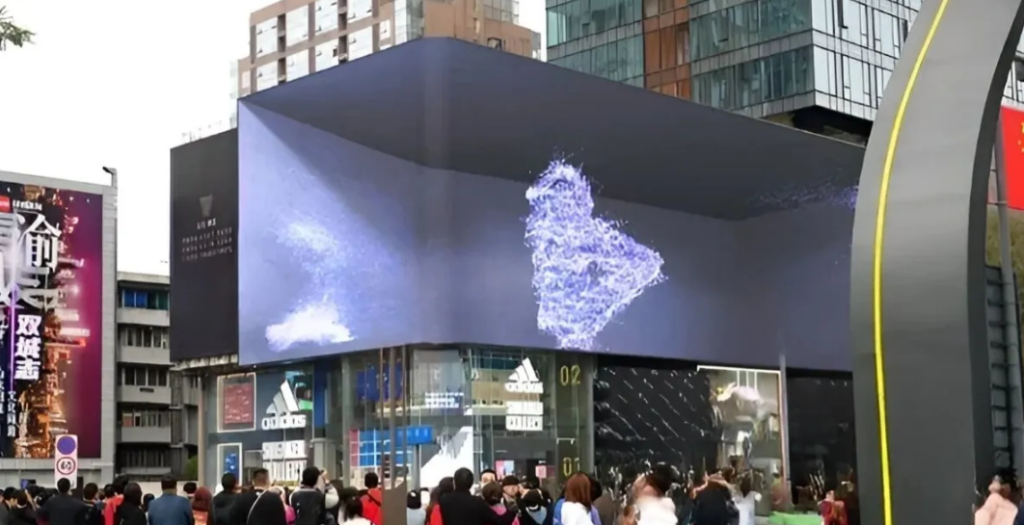
Naked Eye 3D LED Displays Explained: Types, Pricing & Real-World Applications
Are you curious about how modern LED displays create stunning 3D effects without glasses? Naked eye 3D LED displays are transforming the way businesses and public spaces engage audiences.
Traditional advertising and signage often struggle to capture attention in crowded environments. Companies are looking for innovative ways to stand out and deliver memorable visual experiences. Naked eye 3D technology solves this problem by providing eye-catching visuals that feel lifelike and immersive.
In this guide, we will explain what naked eye 3D LED displays are, how the technology works, the types available, practical applications, and cost considerations. You will gain actionable insights to help you choose the right solution for your project and maximize ROI.

What Is a Naked Eye 3D LED Display?
Definition and Core Concept
A naked eye 3D LED display is a digital screen that produces three-dimensional visual effects without requiring special glasses. Unlike traditional 2D screens, it creates the illusion of depth and volume, making images appear to float or move in space. This technology relies on advanced LED panel arrangements, precise pixel control, and content designed specifically for 3D visualization.
These displays deliver immersive experiences for viewers from multiple angles, enhancing engagement in advertising, events, retail, and public spaces. The core concept is to trick the human eye into perceiving depth, using a combination of perspective, motion parallax, and specialized screen structures.
Why It’s Different from Traditional LED Displays
Traditional LED displays are flat and show images in two dimensions. They rely on color, brightness, and resolution to convey messages, but they lack the perception of depth, which limits their ability to grab attention.
Naked eye 3D LED displays differ in several key ways:
- Immersive Visuals: Objects appear to float or move in space.
- Glasses-Free Experience: Viewers do not need any additional equipment.
- Dynamic Viewing Angles: Some designs allow multiple viewers to experience 3D simultaneously.
- Content Integration: 3D-specific content maximizes the sense of depth and realism.
These distinctions make naked eye 3D displays particularly effective in high-traffic areas where capturing attention is critical and traditional flat displays may go unnoticed.

How Naked Eye 3D LED Display Technology Works
Perspective and Visual Illusion Principles
Naked eye 3D LED displays create depth by using perspective and visual illusion techniques. They manipulate the way light and images reach your eyes, making flat images appear three-dimensional. By carefully controlling pixel brightness and positioning, these screens simulate motion and volume, giving viewers a sense that objects are floating or extending out of the screen.
The principle relies on the human brain interpreting slight differences in angle and light as depth. This technique, combined with content specifically designed for 3D perception, ensures that viewers perceive realistic three-dimensional visuals without any glasses.
The Role of Viewing Angle and Fixed Viewpoints
The viewing angle is critical for achieving a convincing 3D effect. Naked eye 3D displays often have optimized zones where the effect is most pronounced. These zones guide multiple viewers to experience the 3D illusion simultaneously while maintaining clarity.
Some advanced displays use multi-view technology, projecting slightly different images for different angles. This allows several people to enjoy the 3D effect from distinct positions, enhancing engagement in public and retail environments.
LED Screen Structure and Corner Design
The physical structure of the LED panels plays a vital role in 3D visualization. Many displays use angled or L-shaped corner designs to create a natural depth effect. This arrangement allows images to appear continuous across surfaces and enhances the perception of volume.
The pixel arrangement and screen curvature are carefully calculated to ensure that depth and perspective remain consistent. The combination of hardware and software ensures that 3D visuals maintain accuracy across different viewing distances.
Synchronization Between Screen and 3D Content
Effective 3D displays require precise synchronization between the hardware and the content. Timing, frame rate, and pixel-level control are essential to prevent ghosting or blurring effects.
3D content must be rendered to match the screen’s specifications, including resolution, pixel pitch, and refresh rate. This synchronization ensures that viewers experience smooth and lifelike 3D visuals from the moment the display is powered on.

What Types of Naked Eye 3D LED Displays Are Available?
Corner LED Displays (L-Shaped 3D Effect)
Corner LED displays, often L-shaped, create a striking 3D effect by extending visuals across two intersecting planes. This setup makes objects appear to float out from the corner, offering a dramatic and immersive experience.
These displays are ideal for retail spaces, showrooms, and exhibitions, where capturing attention from multiple directions is essential. They combine innovative panel alignment with 3D-specific content to deliver a convincing depth illusion.
Flat Large-Scale Billboards
Flat large-scale LED billboards provide massive visual impact in outdoor environments. By using specialized 3D content and perspective techniques, they make objects appear to rise or move within the billboard space.
These screens are commonly installed in urban centers, transportation hubs, and stadiums, leveraging their size and visibility to create memorable advertising experiences that grab attention from afar.
Curved LED Displays
Curved LED displays enhance the sense of depth by wrapping visuals around the viewer. The curvature allows for more natural motion parallax and a stronger perception of volume, making 3D effects more realistic.
Curved designs are popular in museums, interactive exhibits, and high-end retail, where immersive engagement is a priority. Proper content mapping ensures that images remain coherent across the curved surface.
Indoor vs Outdoor 3D LED Displays
Indoor displays focus on high resolution and detailed content for close-range viewing, while outdoor displays emphasize brightness, weatherproofing, and visibility under sunlight.
Selecting the right type requires evaluating the installation environment, intended audience distance, and content goals. Balancing these factors ensures that the 3D effect remains clear, engaging, and impactful in any setting.
Key Applications and Use Cases
Outdoor Advertising and DOOH Media Networks
Naked eye 3D LED displays are revolutionizing outdoor advertising by creating eye-catching visuals that grab attention instantly. Brands can use these displays in busy urban areas, transportation hubs, and high-traffic streets to increase engagement and recall.
Digital out-of-home (DOOH) media networks benefit from dynamic 3D content, which encourages social sharing and drives foot traffic. Studies show that immersive 3D visuals can increase viewer engagement by up to 30% compared to traditional 2D ads .
- Retail Flagship Stores and Brand Installations
- Commercial Real Estate and Landmarks
- Events, Exhibitions, and Public Art

How to Choose the Right Naked Eye 3D LED Display for Your Project
Define Application Scenario and Screen Structure
Choosing the right display starts with understanding your application scenario. Consider where the display will be installed, the size of the space, and how many viewers it should accommodate. This helps determine the screen structure, whether flat, curved, or corner-shaped.
A proper assessment ensures that the 3D effect is visible and immersive. For instance, retail environments may benefit from corner or curved installations, while outdoor advertising often requires large flat panels for maximum visibility.
Key Technical Considerations
Technical specifications significantly affect 3D visual quality. Pixel pitch determines clarity at different viewing distances, brightness ensures visibility in various lighting conditions, and viewing distance affects how well the 3D effect is perceived.
You should match pixel pitch to your audience’s distance:
- Short distances: 1.5–2.5 mm pitch
- Medium distances: 2.5–5 mm pitch
- Long distances: 5 mm or higher
Additionally, ensure high contrast and HDR capability to enhance depth perception and maintain color accuracy.
Budget Planning and Supplier Selection
Budget planning is critical for balancing quality and cost. Consider hardware, content creation, installation, and maintenance expenses. Allocating funds wisely ensures a high-quality 3D experience without overspending.
Selecting a reliable supplier is just as important as budgeting. Look for manufacturers with experience in naked eye 3D technology, strong after-sales support, and the ability to provide customized solutions. Verified references and case studies can help validate supplier credibility.
Naked Eye 3D LED Display Cost: What You Need to Know
The cost of a naked eye 3D LED display is not limited to the screen itself. Businesses should evaluate the full investment, including hardware, content production, installation, operation, and long-term return.
- Initial Investment
The upfront cost mainly depends on screen size, pixel pitch, brightness, and overall system complexity. Higher-resolution LED panels and premium configurations usually require a larger budget. - 3D Content Production
Creating effective naked eye 3D visuals often involves 3D modeling, animation, rendering, and creative design. High-quality content is essential because the visual effect directly impacts audience attention and advertising value. - Installation Costs
Installation expenses vary depending on the structure, location, and screen design. Corner screens, curved displays, and large-scale outdoor projects often require additional engineering and support systems. - Operation Costs
Ongoing costs may include electricity usage, content management, software operation, and staff training. These factors should be considered when planning long-term deployment. - Maintenance Costs
Regular maintenance is necessary to ensure stable performance. This may include panel cleaning, system inspections, software updates, and occasional module replacement. - ROI and Commercial Value
Although the initial investment can be high, naked eye 3D LED displays often generate strong returns through higher audience engagement, increased foot traffic, better brand recall, and stronger social media exposure.

Conclusion
Naked eye 3D LED displays offer a revolutionary way to engage audiences across advertising, retail, public spaces, and events. By combining advanced display technology with carefully crafted 3D content, businesses can deliver immersive visuals that capture attention, increase engagement, and enhance brand perception.
If you are considering a naked eye 3D LED display for your project, start by defining your application, evaluating technical requirements, and selecting a trusted manufacturer. Contact our team at MuenLED to explore customized solutions that maximize ROI and create unforgettable 3D experiences for your audience.