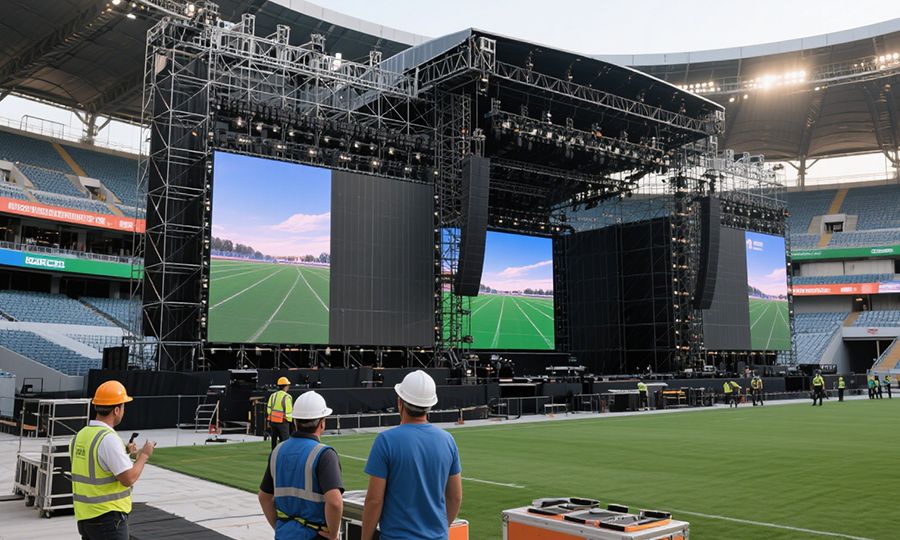
How outdoor LED screens define the scene of carnival and competition
Outdoor LED screens have evolved beyond basic displays. They now anchor immersive experiences in live entertainment and sports. With leaps in brightness, durability, and interactivity, these digital canvases redefine how audiences connect with events. Whether lighting up music festivals or transforming stadiums, their impact spans emotion, engagement, and commercial value. This article explores their diverse applications through iconic European and American cases, highlighting technological innovations that shape both sectors. The global outdoor LED display market is projected to reach approximately USD 23.4 billion by 2030, per Grand View Research, driven largely by concert tours, sports venue upgrades, and digital advertising.

Transforming Concerts: Immersion Beyond Music
In live music, outdoor LED screens are now essential. They match sound with stunning visuals. High brightness—typically 5,000 to 10,000 nits—cuts through harsh sunlight. IP65 weatherproofing handles rain, wind, and temperature swings reliably. Every fan sees clearly, whether up close or far away on distant hills.
Taylor Swift’s The Eras Tour raised the bar for LED use. It featured large, modular walls—often curved or wraparound—for total immersion. Fine pixel pitches (around P2.5 to P4) delivered sharp, blur-free images. These synced era-specific films, lyrics, and art with every song in real time. Massive logistics moved the setup across venues. Fans loved how the screens made distant seats feel intimate and connected.
U2’s The Joshua Tree Tours (2017 and 2019) used a huge LED wall. It stretched 200 feet wide by 45 feet high—one of the largest touring screens ever. High resolution showed detailed deserts, horizons, and starry skies. These blended perfectly with the music. The design kept clear views for all angles while handling outdoor demands well.
Coachella deploys curved, bright LED arrays across its vast grounds. They provide crisp close-ups of performers—even at midday—with strong nits levels. Recent festivals add sustainable power options, like battery and solar-hybrid setups, to lower impact and boost efficiency. Such visuals heighten sponsor visibility and spark huge social buzz.
Beyoncé’s Renaissance World Tour built deep immersion. Massive vertical LED screens showed synced 3D disco balls and futuristic scenes. They pulsed with bass drops for powerful effects. Innovative stage elements turned performances into dynamic, living experiences. Fans shared endless content online, amplifying the magic.
These spectacles reach beyond superstars now. Mid-tier artists rent modular LED systems affordably. They scale up production without heavy infrastructure. Technology keeps advancing. Concert experiences grow ever more multisensory and unforgettable.

Revolutionizing Sports Events: Data, Engagement, and Iconic Venues
While concerts emphasize artistic immersion, sports venues prioritize real-time data and fan participation. In sports, outdoor LED screens have outgrown their scoreboard roots. They are now central to fan interaction, venue branding, and revenue generation. European and American stadiums lead in innovation, setting global standards for scale and functionality. These installations bridge in-stadium and remote audiences, ensuring no one misses key moments.
AT&T Stadium, home of the NFL’s Dallas Cowboys, boasts one of the most famous LED setups. Built by Mitsubishi Electric, its center-hung video board includes massive sideline screens—each about 72 feet high by 160 feet wide. The entire system weighs around 1.2 million pounds. It offers high-definition visuals (originally 1080p, with upgrades over time) and smooth playback for fast action. Early on, some punts struck the structure—leading to height tweaks and added shock absorption. Today it supports Super Bowls, concerts, and esports. The iconic screens boost sponsorship value significantly. Nearby venues like SoFi Stadium feature the huge dual-sided Infinity Screen by Samsung—70,000 square feet with nearly 80 million LEDs—for immersive 360-degree views. Allegiant Stadium adds over 66,000 square feet of LED displays, including a striking 27,600-square-foot outdoor mesh facade.
Wembley Stadium in London excels at interactivity. Its perimeter ribbon screens show live stats, player info, and fan polls. Supporters vote for Man of the Match via apps—with instant updates during matches. The system syncs replays for both stadium and broadcast audiences. Such features spark real engagement and social sharing.
Germany’s Allianz Arena stands out with its outer facade. Over 300,000 LEDs cover 26,000 square meters of inflatable panels. They glow in millions of colors. For Bayern Munich games, it shines club red and white. National matches bring black, red, and gold—or multilingual welcomes. This turns the stadium into a glowing landmark that builds inclusivity.
FC Barcelona’s Spotify Camp Nou (under ongoing Espai Barça renovation) integrates advanced LED elements. Perimeter screens deliver vibrant, sunlight-readable visuals with fine pixel pitches and HDR tech. They show real-time player metrics—like speed and distance—plus synced replays. Low-latency alignment keeps in-stadium and TV views consistent. These upgrades enhance satisfaction and support major sponsors like Spotify.
In the U.S., Madison Square Garden uses a curved, high-definition center-hung LED system. It features multiple panels for broad visibility. During NBA games, fans send messages via apps. The screen displays them live—turning viewers into participants.
Across these venues, LED technology creates shared, immersive experiences. It boosts attendance appeal and commercial opportunities. As innovations continue, screens redefine how fans connect with sports.

Key Technological Trends Shaping the Industry
Beyond specific applications, three core trends drive outdoor LED innovation in concerts and sports. These advancements balance performance, practicality, and sustainability—ensuring the technology evolves with audience expectations.
Modular and Flexible Design
Lightweight, reconfigurable modules dominate the industry now. They ease transport and setup for touring shows and multi-use venues. Modular designs cut overall logistics efforts significantly. Outdoor LED solutions with lightweight cabinets—often around 8–14 kg each—connect easily. Coldplay’s Music of the Spheres Tour featured innovative spherical elements, including inflatable LED spheres and large circular screens. These broke down for quick transport and fast reassembly. Sports venues gain flexibility too. Wembley Stadium adapts its perimeter ribbons for football, rugby, and concerts. Shapes vary widely—curved, flat, or custom—while keeping high resolution intact. Manufacturers offer flexible mesh LED panels for outdoor use. They curve, fold, or roll to fit architectural needs and creative installations.
Enhanced Interactivity and Personalization
Today’s LED screens make spectators active participants. Features include social media feeds, app integrations, and gesture controls. Many tours display fan-submitted content or real-time posts on screens. Sports venues show live stats, polls, and personalized messages—like fan names during games. Some systems use AI for crowd analysis to adjust replays or content dynamically. Gesture-activated effects, such as virtual fireworks, appear in select setups. Interactive elements boost engagement noticeably. Industry reports indicate they increase dwell time and participation—driving stronger connections and social sharing.
Sustainability and Energy Efficiency
Green practices reshape LED development. Modern screens use far less power than older models—often 40–75% savings with efficient chips, drivers, and auto-brightness controls. They dim automatically in low light while staying visible. Coachella incorporated battery and solar-hybrid systems for stages and production. This reduced generator reliance and environmental impact. Manufacturers prioritize recyclable materials, like aluminum frames. Allianz Arena’s LED facade upgrade cut energy use dramatically and supports green electricity. Rental firms promote circular models: lease screens, then refurbish modules for reuse. This approach minimizes waste and lowers long-term costs for organizers.
These trends push outdoor LEDs forward. They deliver immersive, efficient, and eco-friendly experiences across entertainment and sports. Innovation keeps evolving to captivate audiences responsibly.
Conclusion
As outdoor LED screens continue to redefine live entertainment, their future looks brighter than ever. The global market continues strong growth through the 2030s, with projections exceeding USD 23 billion by 2030 and beyond. Innovations like MicroLED and MiniLED promise ultra-high resolution with pixel pitches as fine as 0.6mm or less. These deliver crystal-clear visuals even up close.
AR and VR integration stands out as a game-changer. LED walls serve as dynamic backdrops for hybrid experiences. They blend real and virtual worlds seamlessly. AI-powered features adapt content in real time—analyzing crowd moods, adjusting brightness automatically, or personalizing visuals based on fan data. Expect more gesture controls, biometric reactions, and immersive 3D overlays.
With the 2026 FIFA World Cup approaching, stadiums will showcase AI-powered features like Football AI Pro, real-time 3D player avatars for offside reviews, AR overlays on super screens, and ultra-high-resolution LEDs—elevating every match into a multisensory spectacle.
Sustainability remains central. Energy-efficient designs, recyclable materials, and solar-hybrid systems cut environmental impact further. Modular rentals promote circular economies—reusing panels across tours and venues.
From Taylor Swift’s wraparound spectacles to massive stadium canvases at SoFi or Allianz Arena, these screens have evolved into essential multisensory tools. They bridge performers and fans, amplify engagement, and unlock new revenue. As technology advances, outdoor LEDs will create even more unforgettable, inclusive, and responsible experiences. The stage is set. The show keeps getting bigger—and better.