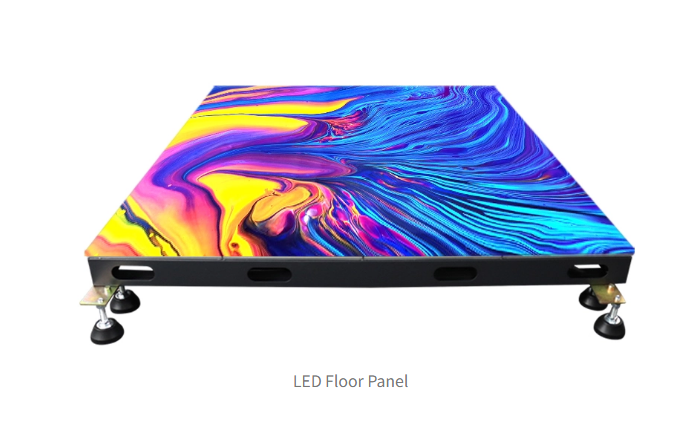
LED floor screens will reshape intelligent interactive spaces
Imagine stepping into a nightclub where the dance floor ripples like water beneath your feet, a shopping mall where the ground lights up with brand logos as you walk, or a children’s museum where kids hop on glowing patterns to solve educational games. These magical experiences are made possible by LED floor panels—also known as LED floor screens, interactive dance floors, or floor-mounted LED displays. This technology has changed how we interact with spaces. More than just a decorative element or a simple lighting solution, LED floor panels are a fusion of advanced engineering, digital display technology, and interactive design, turning ordinary floors into dynamic, responsive surfaces that bridge the gap between humans and technology.
In this article, we will delve into the world of LED floor panels, looking at how they work, what they are made of, their different types, where they can be used, their benefits, current challenges, and what the future might hold. Whether you’re a technology enthusiast, a business owner considering integrating them into your space, or simply curious about how this innovation works, this comprehensive guide will unravel the science and magic behind LED floor panels.
What Are LED Floor Panels? A Fundamental Definition
At its core, an LED floor panel (or LED floor screen) is a specialized type of LED display system designed explicitly for ground installation. Unlike traditional LED screens mounted on walls or ceilings, LED floor panels are engineered to withstand heavy loads, resist wear and tear, and operate safely in high-traffic environments—all while delivering vibrant visual effects and real-time interactivity. The term “LED” stands for Light-Emitting Diode, a semiconductor device that emits light when an electric current passes through it. When arranged in an array on a flat, durable panel, these diodes form a high-resolution display that can show colors, images, videos, and dynamic animations.
What sets LED floor panels apart from conventional floors or even standard LED displays is their dual functionality: display capability and interactive responsiveness. A traditional floor serves only a structural purpose—providing a stable surface to walk on—while a standard LED screen is a one-way communication tool (it shows content, but does not react to the viewer). LED floor panels, however, act as a two-way interface: they not only display visually engaging content but also detect human actions (such as stepping, walking, or dancing) and respond with instant visual feedback. This interactivity is what makes them a “smart” surface, transforming passive spaces into active, engaging environments.
Another key characteristic of LED floor panels is their modular design. Instead of being a single large screen, they consist of individual, standardized panels (typically 500x500mm, or 500x1000mm in size) that can be seamlessly connected like puzzle pieces. This modularity allows for unparalleled flexibility: panels can be combined to create floors of any shape or size, from small interactive zones in a café to massive dance floors in a stadium. Additionally, modularity simplifies installation, transportation, and maintenance—if one panel malfunctions, it can be easily replaced without disrupting the entire system.

500x1000mm LED Interactive Dance Floor Panel
How Do LED Floor Panels Work?
The operation of LED floor panels relies on three core technologies working in harmony: LED display technology, sensing technology, and control systems. Let’s break down each component and the step-by-step process that enables their interactive functionality.
2.1 Core Components: The Building Blocks of LED Floor Panels
To understand how LED floor panels work, it’s essential to first familiarize yourself with their key components, each of which plays a critical role in their performance:
LED Display Panel (The “Visual Engine”)
The heart of every LED floor panel is the LED display module, which is responsible for producing light and images. Each panel contains an array of RGB (Red, Green, Blue) LED diodes—these are the tiny lights that create the full spectrum of colors when combined. The number of LED diodes per panel determines its resolution, measured as pixels per square meter (or pixel pitch, discussed in detail later).
To withstand the rigors of ground use, the LED display module is protected by a durable surface layer—usually tempered glass or or transparent acrylic mask with a thickness of 8-12mm. Tempered glass is chosen for its exceptional strength: it can withstand heavy impacts, resist scratches, and support weights of up to 1000kg/㎡ or more (depending on the model). Additionally, the glass surface is often treated with an anti-slip coating to prevent accidents, even in wet environments. Beneath the glass or mask, the LED diodes are mounted on a circuit board, along with driver chips that control the brightness and color of each individual pixel.
Sensing System (The “Touch Detector”)
The sensing system is what makes LED floor panels interactive—it allows the panel to detect human presence and movement. There are several types of sensing technologies used in LED floor panels, each with its own advantages and applications:
- Pressure Sensors: The most common type, pressure sensors detect changes in pressure when someone steps on the panel. They are embedded within the panel (between the glass surface and the circuit board) and trigger a response when a certain weight threshold is met. Pressure sensors are reliable, cost-effective, and work well in high-traffic areas, but they may have a slight delay in response time (typically 10-50ms).
- Infrared (IR) Sensors: IR sensors use infrared light to detect objects above the panel. They emit infrared rays and measure the reflection—when a person steps on the panel, the reflection changes, and the sensor sends a signal to the control system. IR sensors offer faster response times (5-10ms) and can detect movement without direct pressure, making them ideal for interactive games or applications where precision is key.
- Capacitive Sensors: Similar to the touchscreens on smartphones, capacitive sensors detect changes in electrical capacitance when a human finger (or body part) comes into contact with the surface. They are highly sensitive and accurate but are less commonly used in LED floor panels due to their higher cost and susceptibility to interference from water or metal objects.
- Radar Sensors: A newer technology, radar sensors use radio waves to detect movement and distance. They can penetrate thin materials (like the glass surface) and are not affected by light or weather conditions, making them suitable for outdoor applications. However, they are more expensive than other sensing types and may have limited precision for small movements.
Control System (The “Brain”)
The control system is the central hub that processes signals from the sensing system and coordinates the LED display panels. It consists of two main parts: hardware controllers and software platforms.
- Hardware Controllers: These include DMX controllers (used for basic lighting effects), video processors (to handle high-resolution video content), and dedicated LED floor controllers (designed specifically for interactive applications). The controller receives signals from the sensors, processes them in real time, and sends commands to the LED panels to adjust their display (e.g., change color, activate an animation, or follow a movement trail).
- Software Platforms: The software is what allows users to customize the interactive effects and content. Most LED floor panels come with proprietary software that offers pre-programmed effects (e.g., water ripples, star trails, or music synchronization) and the ability to upload custom images, videos, or interactive games. Advanced software may also include AI algorithms for recognizing complex movements (e.g., dance steps or gestures) or supporting multi-user interactions.

LED Video Controller
Power Supply System (The “Energy Source”)
LED floor panels require a stable power supply to operate efficiently and safely. Most systems use low-voltage power (12V or 24V DC) to minimize the risk of electric shock, even if the surface is damaged. The power supply is usually integrated into the panels or provided as a separate unit with multiple outputs to power multiple panels simultaneously. Additionally, many LED floor panels feature energy-saving technologies, such as automatic dimming when no one is present or low-power LED diodes, which reduce energy consumption and extend the lifespan of the system.
Working Principles
- AC Input: Power is drawn from the main electrical grid (usually 110V or 220V AC depending on region).
- Conversion: Power supply units (PSUs) convert AC into low-voltage DC (commonly 5V, 12V, or 24V) required by LED modules and sensors.
- Distribution: DC power is distributed across panels through wiring and connectors.
- Regulation: Voltage regulators and controllers ensure stable current flow to prevent flickering or damage.
- Protection: Circuit breakers, fuses, and surge protectors safeguard against overloads or short circuits.
Connection System (The “Communication Network”)
To ensure seamless operation across multiple panels, LED floor panels use a connection system for both power and data transmission. Common connection methods include:
- Wired Connections: Using cables (such as Cat5e/Cat6 Ethernet cables for data and power cables for electricity) to connect panels in a daisy-chain or matrix configuration. Wired connections are reliable and offer fast data transfer, making them ideal for large-scale installations.
- Wireless Connections: Some modern LED floor panels support Wi-Fi or Bluetooth for wireless data transmission, which simplifies installation and reduces cable clutter. However, wireless connections may be less stable in high-traffic areas or environments with strong electromagnetic interference.
2.2 The Working Process: From Action to Response
Now that we’ve covered the core components, let’s walk through the step-by-step process of how an LED floor panel responds to human interaction:
- Action Detection: A user steps, walks, or dances on the LED floor panel. The sensing system (e.g., pressure sensors or IR sensors) detects the movement and sends an electrical signal to the control system.
- Signal Processing: The control system receives the signal and processes it using pre-programmed software or real-time algorithms. For example, if the user steps on a specific area, the software identifies the location, duration, and intensity of the action.
- Content Generation: Based on the processed signal, the control system generates a corresponding visual output. This could be a ripple effect spreading from the point of contact, a trail of light following the user’s movement, or a color change synchronized with the action.
- Display Execution: The control system sends commands to the LED display panels, instructing individual LED diodes to adjust their brightness and color to create the desired visual effect. This happens in real time—usually within 5-50ms—so the user perceives an immediate response to their action.
- Continuous Interaction: As the user continues to move, the sensing system and control system repeat this process, updating the visual display to match their movements. If multiple users are interacting with the floor, the system can process multiple signals simultaneously, creating complex, multi-user effects (e.g., collision of light trails or collaborative pattern creation).
In addition to responding to human action, LED floor panels can also be synchronized with other media, such as music, sound effects, or video projections. For example, in a nightclub, the floor’s visual effects can be linked to the beat of the music, creating a immersive audio-visual experience that enhances the atmosphere.
Key Technical Specifications: What to Look for in LED Floor Panels
When choosing or evaluating LED floor panels, several technical specifications are critical to their performance, durability, and suitability for specific applications. Understanding these parameters will help you make an informed decision and ensure that the panels meet your needs.
Pixel Pitch: The Measure of Resolution
Pixel pitch refers to the distance (in millimeters) between the centers of two adjacent LED pixels. It is one of the most important specifications for LED displays, as it directly affects the clarity and sharpness of the image. A smaller pixel pitch means more pixels per square meter, resulting in higher resolution and smoother images.
Common pixel pitches for LED floor panels range from P1.8 (1.8mm between pixels) to P10 (10mm between pixels). Here’s how to choose the right pixel pitch for your application:
- Small Pixel Pitch (P1.8-P2.5): Ideal for indoor spaces where viewers are close to the floor (e.g., museums, retail stores, or small event venues). These panels offer high resolution, making them suitable for displaying detailed images, videos, or text.
- Medium Pixel Pitch (P3-P4): Versatile and widely used in applications like nightclubs, bars, and corporate events. They balance resolution and cost, providing clear visuals for both close-up and medium-distance viewing.
- Large Pixel Pitch (P5-P10): Designed for outdoor spaces or large-scale installations (e.g., stadiums, concert venues, or public plazas) where viewers are farther away. These panels are more cost-effective and durable, but they have lower resolution and are not suitable for detailed content.
What is the best view distance for LED
Pixel Pitch for LED Screens: Why It Matters and How to Choose

Load Capacity: Durability for High-Traffic Areas
Since LED floor panels are installed on the ground, they must be able to withstand heavy loads without damage. Load capacity is measured in kilograms per square meter (kg/m²) and indicates the maximum weight the panel can support.
- Indoor Applications: For spaces like nightclubs, retail stores, or museums, a load capacity of 500-1000kg/m² is typically sufficient. This can support the weight of multiple people, furniture, or equipment.
- Outdoor or Industrial Applications: For stadiums, concert venues, or areas with heavy equipment (e.g., forklifts), a load capacity of 1000-2000kg/m² or higher is required. These panels are built with thicker tempered glass and reinforced structures to handle extreme loads.
Protective Rating: Resistance to Environmental Factors
The protective rating (also known as IP rating, short for Ingress Protection) indicates the panel’s resistance to dust and water. It is represented by two digits: the first digit (1-6) indicates dust resistance, and the second digit (1-8) indicates water resistance.
- Indoor Use: Panels with an IP rating of IP54 or higher are suitable for indoor spaces. IP54 means the panel is protected against dust and splashing water, which is sufficient for most indoor environments (e.g., nightclubs, malls, or museums).
- Outdoor Use: For outdoor applications (e.g., festivals, public plazas, or outdoor stages), panels with an IP rating of IP65 or higher are required. IP65 means the panel is completely dust-tight and protected against low-pressure water jets (e.g., rain or sprinklers). Some high-end outdoor panels have an IP67 rating, which allows them to be submerged in up to 1 meter of water for 30 minutes.
Refresh Rate: Avoiding Flicker for a Smooth Experience
Refresh rate refers to the number of times the LED panel updates its image per second, measured in hertz (Hz). A higher refresh rate results in smoother visuals and reduces eye strain, which is especially important for interactive applications where the image changes rapidly.
- Minimum Refresh Rate: For most applications, a refresh rate of 300Hz or higher is recommended. This ensures that the image is smooth and free of flicker, even when displaying fast-moving animations or videos.
- High-End Applications: For broadcast events, concerts, or professional performances, a refresh rate of 600Hz or higher is preferred. This provides ultra-smooth visuals that are suitable for camera recording (flicker-free footage is essential for TV broadcasts).
Response Time: Instant Interaction
Response time is the time it takes for the LED panel to respond to a signal from the sensing system, measured in milliseconds (ms). A faster response time ensures that the visual feedback is immediate, creating a more natural and engaging interactive experience.
- Typical Response Time: Most LED floor panels have a response time of 5-50ms. For casual applications like nightclubs or malls, 20-50ms is sufficient.
- High-Precision Applications: For interactive games, dance performances, or professional installations, a response time of 5-20ms is ideal. This allows for precise tracking of fast movements (e.g., dance steps or hand gestures).
Lifespan: Long-Term Reliability
The lifespan of LED floor panels is measured in hours of operation and indicates how long the panels will maintain their brightness and performance before needing replacement. LED diodes have a long lifespan compared to other lighting technologies, such as incandescent or fluorescent bulbs.
- Average Lifespan: Most LED floor panels have a lifespan of 50,000-100,000 hours. This translates to approximately 5-10 years of continuous use (assuming 12 hours of operation per day).
- Factors Affecting Lifespan: The lifespan can be influenced by factors such as operating temperature (LEDs perform better in cool environments), voltage stability, and maintenance. Regular cleaning and proper ventilation can extend the lifespan of the panels.
LED Lifespan for Indoor and Outdoor Screens: Tips to Extend Display Life

Daily cleaning and maintenance of LED panel
Types of LED Floor Panels: Tailored to Different Needs
LED floor panels come in a variety of types, each designed to meet specific requirements for interactivity, environment, and functionality. Here are the most common types:
By Interactivity Level
Static LED Floor Panels
Static LED floor panels are the simplest type—they do not have interactive sensing capabilities. Instead, they display pre-programmed static images, colors, or looping animations. They are ideal for applications where interactivity is not required, such as decorative flooring in restaurants, hotels, or retail stores. Static panels are more cost-effective than interactive ones and are easier to install and maintain.
Interactive LED Floor Panels
Interactive LED floor panels are the most popular type—they are equipped with sensing systems (pressure, IR, or capacitive sensors) that allow them to respond to human movement. As discussed earlier, they can create real-time effects like ripples, trails, or color changes based on user actions. Interactive panels are widely used in nightclubs, bars, event venues, and museums, where engagement is a key priority.
Smart LED Floor Panels
Smart LED floor panels represent the next generation of LED floor technology—they integrate advanced features like AI (Artificial Intelligence), IoT (Internet of Things), and cloud connectivity. These panels can do more than just respond to basic movements: they can recognize complex gestures, track multiple users simultaneously, and even collect data on user behavior (e.g., foot traffic patterns in a mall). Some smart panels can be controlled remotely via a smartphone app or connected to other smart devices (e.g., speakers, projectors, or lighting systems) to create a fully integrated smart space.
By Environment of Use
Indoor LED Floor Panels
Indoor LED floor panels are designed for use in enclosed spaces like nightclubs, malls, museums, and corporate offices. They typically have a lower IP rating (IP54 or higher), a smaller pixel pitch (for close-up viewing), and a load capacity of 500-1000kg/㎡. Indoor panels are often thinner and lighter than outdoor ones, making them easier to install and transport.
Outdoor LED Floor Panels
Outdoor LED floor panels are built to withstand harsh weather conditions like rain, snow, dust, and extreme temperatures. They have a higher IP rating (IP65 or higher), a larger pixel pitch (for long-distance viewing), and a higher load capacity (1000kg/㎡ or more). Outdoor panels are used in festivals, concerts, public plazas, and sports stadiums. They may also feature anti-glare glass to ensure visibility in direct sunlight.
By Special Functionality
LED Abyss Floor Panels
LED abyss floor panels (also known as “infinite depth” floor panels) use a special optical design to create the illusion of infinite depth. They feature a black background with LED diodes that emit light from the bottom of the panel, making the floor appear like a deep hole or a starry sky. Abyss panels are popular in nightclubs, bars, and art installations, as they create a dramatic and immersive visual effect.
Anti-Slip LED Floor Panels
Anti-slip LED floor panels are designed for environments where safety is a top priority, such as swimming pools, saunas, or outdoor event venues. The glass surface is treated with a special anti-slip coating that increases friction, even when wet. These panels have a high IP rating (IP67 or higher) and are resistant to water and chemicals.
Transparent LED Floor Panels
Transparent LED floor panels are a innovative type that combines transparency with LED display technology. They use transparent OLED (Organic LED) or micro-LED diodes mounted on a glass substrate, allowing light to pass through the panel while still displaying images. Transparent panels are used in high-end retail stores, museums, and architectural installations, where they can be integrated into glass floors or walls to create stunning visual effects without blocking natural light.

Applications of LED Floor Panels: From Entertainment to Education
LED floor panels have a wide range of applications across multiple industries, thanks to their versatility, interactivity, and visual appeal. Here are some of the most common use cases:
Entertainment and Nightlife
The entertainment industry was one of the first to adopt LED floor panels, and they remain a staple in nightclubs, bars, discotheques, and lounges. In these venues, LED floor panels are used to create dynamic dance floors that respond to music and movement, enhancing the atmosphere and keeping patrons engaged. For example:
- A nightclub might use interactive panels that create ripples of color synced to the beat of the music, or trails of light that follow dancers’ movements.
- A lounge might use static LED floor panels with subtle animations to create a sophisticated and immersive environment.
LED floor panels also add a wow factor to live performances, such as concerts, DJ sets, and dance shows, where they can be synchronized with the performers’ movements to create a cohesive audio-visual experience.
Events and Celebrations
LED floor panels are increasingly popular for events like weddings, corporate parties, product launches, and festivals. They help create memorable experiences for guests and make events more engaging and interactive. For example:
- At a wedding, a couple might dance on an LED floor panel that displays their names, wedding date, or romantic animations (e.g., hearts, flowers, or stars).
- At a corporate product launch, a brand might use LED floor panels to display product images, logos, or interactive games that allow guests to learn more about the product.
- At a festival, LED floor panels can be used to create interactive zones where attendees can play games, take photos, or simply enjoy the visual effects.
Retail and Commercial Spaces
Retailers are using LED floor panels to attract customers, increase foot traffic, and enhance the shopping experience. In malls, department stores, and boutique shops, LED floor panels can be used in the following ways:
- Displaying brand logos, promotions, or product information on the floor to guide customers to specific areas (e.g., a sale section or a new product display).
- Creating interactive zones where customers can engage with the brand—for example, a shoe store might have an LED floor panel that allows customers to “test” shoes by walking on different simulated surfaces (e.g., grass, sand, or concrete).
- Enhancing the aesthetic appeal of the store with dynamic lighting effects that match the brand’s image (e.g., a high-end fashion store might use subtle, elegant animations, while a youth-oriented brand might use bold, colorful effects).
Education and Children’s Spaces
LED floor panels are also finding applications in education and children’s environments, such as schools, museums, and children’s playground (indoor playgrounds). They provide a fun and interactive way for kids to learn and play:
- In a museum, an LED floor panel might be used to create an interactive exhibit about nature—kids can walk on a “river” of light that flows beneath their feet, or hop on “flowers” that bloom when touched.
- In a school, an LED floor panel could be used for physical education classes or interactive learning activities—for example, a math game where kids solve problems by stepping on the correct answers displayed on the floor.
- In a children’s playground,LED floor panels can be used to create interactive games like “follow the trail” or “avoid the obstacles,” keeping kids entertained while promoting physical activity.
Performing Arts and Theater
In the performing arts, LED floor panels are transforming the way shows are staged. They provide a dynamic, flexible backdrop that can be changed instantly to match the mood and setting of the performance. For example:
- In a ballet or modern dance performance, an LED floor panel can display scenic backgrounds (e.g., a forest, a cityscape, or a starry night) that change with the dance, enhancing the storytelling.
- In a musical or theater production, LED floor panels can be used to create illusions of movement (e.g., a train moving along a track or a boat sailing on water) or to highlight key moments in the show.
LED floor panels also allow performers to interact with the stage itself—dancers can trigger lighting effects with their movements, creating a more immersive and engaging performance.
Public Art and Architectural Installations
Artists and architects are using LED floor panels to create innovative public art installations and architectural features. These installations can be found in parks, plazas, airports, and other public spaces, adding beauty and interactivity to the environment:
- An artist might create an interactive art piece where visitors’ movements trigger colorful patterns or sounds, turning the floor into a collaborative canvas.
- An architect might integrate LED floor panels into the design of a building’s lobby or entrance, using dynamic lighting effects to welcome visitors and make a bold statement.
These installations not only enhance the aesthetic appeal of public spaces but also encourage community engagement and interaction.

Advantages of LED Floor Panels: Why They’re a Smart Investment
LED floor panels offer numerous advantages over traditional flooring and other display technologies, making them a smart investment for businesses, event organizers, and institutions. Here are some of their key benefits:
Durability and Longevity
LED floor panels are built to withstand heavy use and harsh environments. The tempered glass surface is scratch-resistant, impact-resistant, and easy to clean, while the LED diodes have a long lifespan (50,000-100,000 hours). This means that LED floor panels require minimal maintenance and can last for years, making them a cost-effective long-term solution.
Safety
Safety is a top priority for LED floor panels. They use low-voltage power (12V or 24V DC), which reduces the risk of electric shock, even if the surface is damaged. The anti-slip glass surface prevents accidents in wet or high-traffic areas, and the modular design ensures that if one panel malfunctions, it can be easily replaced without disrupting the entire system. Additionally, most LED floor panels meet international safety standards (e.g., CE, UL, or FCC) for electrical safety and fire resistance.
Energy Efficiency
LED technology is highly energy-efficient compared to other lighting and display technologies. LED diodes consume less power than incandescent bulbs, fluorescent tubes, or LCD screens, which reduces energy costs and environmental impact. Many LED floor panels also feature energy-saving modes, such as automatic dimming when no one is present, further reducing energy consumption.
Flexibility and Customization
The modular design of LED floor panels allows for unlimited customization. They can be arranged in any shape or size to fit the needs of the space, from small interactive zones to large dance floors. Additionally, the software platform allows users to customize the visual effects, content, and interactivity—whether you want to display a logo, a video, or a custom game, the possibilities are endless. This flexibility makes LED floor panels suitable for a wide range of applications and allows businesses to adapt the system to their changing needs.
Enhanced Engagement and User Experience
Perhaps the biggest advantage of LED floor panels is their ability to enhance engagement and create memorable user experiences. Unlike traditional flooring or static displays, LED floor panels are interactive—they encourage users to participate, explore, and have fun. This increased engagement can lead to higher customer satisfaction, longer stays in a space, and increased brand loyalty. For example, a retail store with an interactive LED floor panel is more likely to attract and retain customers than one with traditional flooring.
Challenges and Future Trends of LED Floor Panels
While LED floor panels offer numerous advantages, they also face some challenges that need to be addressed to drive further adoption. Additionally, several emerging trends are shaping the future of this technology, promising even more innovative and versatile applications.
Current Challenges
High Cost
One of the main barriers to widespread adoption of LED floor panels is their high cost. Compared to traditional flooring materials (e.g., tile, wood, or carpet), LED floor panels are significantly more expensive, especially for high-resolution or interactive models. This makes them less accessible for small businesses or budget-constrained projects. However, as technology advances and production scales up, the cost of LED floor panels is expected to decrease in the coming years.
Installation and Maintenance Complexity
LED floor panels require professional installation to ensure proper alignment, connection, and safety. This can add to the overall cost and time of a project, especially for large-scale installations. Additionally, while LED floor panels are durable, they still require regular maintenance (e.g., cleaning, software updates, or panel replacements) to ensure optimal performance. For businesses without dedicated technical staff, this can be a challenge.
Limited Outdoor Performance in Extreme Conditions
While outdoor LED floor panels are designed to withstand harsh weather, they may still face performance issues in extreme conditions (e.g., extreme heat, cold, or heavy rain). For example, in very hot weather, the LED diodes may overheat, leading to reduced brightness or lifespan. In very cold weather, the glass surface may become slippery, even with an anti-slip coating. Manufacturers are working to improve the temperature resistance and durability of outdoor LED floor panels to address these issues.
Interactivity Limitations
While current interactive LED floor panels can respond to basic movements (e.g., stepping, walking), they have limited ability to recognize complex gestures or emotions. For example, a panel may not be able to distinguish between a dance step and a casual walk, or detect if a user is happy or frustrated. This limits the potential for more advanced applications, such as personalized user experiences or emotional feedback.
Future Trends
Integration with AI and Machine Learning
The integration of AI and machine learning is expected to revolutionize LED floor panels, enabling more advanced interactivity and personalization. AI-powered panels will be able to recognize complex gestures, track user behavior, and even predict user preferences. For example, a smart LED floor panel in a mall could analyze foot traffic patterns to identify popular areas and adjust content accordingly, or recognize a returning customer and display personalized promotions. AI could also enable more immersive gaming experiences, where the panel adapts to the user’s skill level or playing style.
IoT Connectivity and Smart Space Integration
LED floor panels will increasingly be integrated into IoT (Internet of Things) ecosystems, allowing them to connect with other smart devices (e.g., speakers, projectors, lighting systems, or security cameras) to create fully integrated smart spaces. For example, in a smart home, the LED floor panel could be connected to the lighting system to adjust the brightness based on natural light, or to the security system to alert homeowners if an unauthorized person enters the house. In a commercial space, IoT-connected LED floor panels could be used to monitor energy consumption, track inventory, or manage foot traffic.
Improved Energy Efficiency and Sustainability
As environmental concerns become more pressing, manufacturers are focusing on improving the energy efficiency and sustainability of LED floor panels. Future panels may use even more energy-efficient LED diodes, solar power, or kinetic energy (generated by user movement) to reduce energy consumption. Additionally, manufacturers are exploring the use of recycled materials in the production of LED floor panels, making them more environmentally friendly.
Higher Resolution and Transparency
Advancements in LED technology will lead to higher resolution and more transparent LED floor panels. Micro-LED and mini-LED technologies are already being used to create panels with smaller pixel pitches (less than 1mm), resulting in ultra-high resolution and smoother images. Transparent LED floor panels will become more affordable and widely available, allowing for innovative architectural designs where the floor is both functional and transparent.
Augmented Reality (AR) and Virtual Reality (VR) Integration
The integration of AR and VR technology with LED floor panels will create even more immersive experiences. For example, a user wearing a VR headset could walk on an LED floor panel that displays a virtual world, with the panel’s visual effects synced to the VR environment. AR integration could allow users to see virtual objects or information overlaid on the real floor, enhancing the interactive experience. This trend has applications in gaming, education, training, and entertainment.
Conclusion: The Future of Floors Is Smart and Interactive
LED floor panels are more than just a passing trend—they are a transformative technology that is redefining how we interact with physical spaces. From nightclubs and retail stores to museums and theaters, LED floor panels are enhancing engagement, creating memorable experiences, and adding value to a wide range of applications. Their unique combination of durability, safety, energy efficiency, and interactivity makes them a smart investment for businesses and institutions looking to stand out in a competitive market.
While there are still challenges to overcome—such as high cost and installation complexity—the future of LED floor panels is bright. Advancements in AI, IoT, AR/VR, and LED technology will drive innovation, making LED floor panels more accessible, versatile, and powerful than ever before. In the coming years, we can expect to see LED floor panels integrated into more spaces, from smart homes and offices to public plazas and transportation hubs, creating a world where floors are no longer just surfaces to walk on, but dynamic, interactive interfaces that connect people, technology, and the environment.