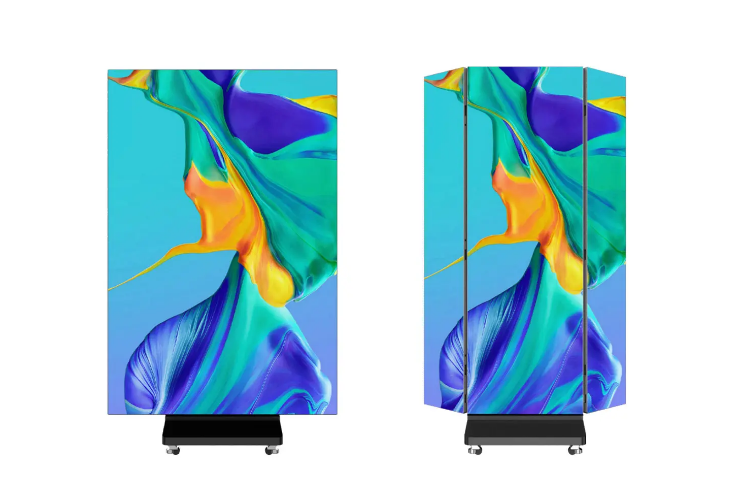
Unlock new interactive poses: 5 creative scenarios for triple fold LED posters
Tri-fold LED posters can anchor a full content strategy: think of them as flexible, mobile “digital stages” that you reshape for events, retail, wayfinding, and immersive experiences rather than just as bright digital posters.
What Is a Tri-Fold LED Poster?
Tri-fold LED posters are foldable, high‑brightness digital displays that switch between a single large screen and a compact, dual‑sided tower. Panels are hinged, usually mounted on wheels, and managed via USB, Wi‑Fi, or apps so content can be updated instantly without reprinting. Because they are slim, bright, and reconfigurable, they fit especially well into changing environments like trade shows, malls, hotels, and pop‑ups.
Event & Stage Experiences
At events and stages, a tri‑fold LED poster acts as a portable backdrop, welcome screen, or mini video wall that one person can roll into place and unfold. Unfolded, it becomes a tall LED wall for speaker titles, live social feeds, countdown timers, or atmospheric visuals behind a DJ or presenter. Folded into dual‑sided mode, it can greet guests at the entrance with welcome messages on one side and program schedules or sponsor loops on the other.
For creative impact, multiple units can be spliced into a continuous backdrop or staggered in a zig‑zag to create dimensional “light columns” that react to music or key moments in the show. Weddings and banquets use them as dynamic seating‑chart boards, ceremony backdrops, or rotating photo slideshows that later switch into dance‑floor visualizers without changing hardware. Conference organizers can redeploy the same posters across rooms through the day—keynote backdrops in the morning, sponsor walls at coffee points in the afternoon, then wayfinding at the exits in the evening.

Retail & Hospitality Storytelling
In retail, LED posters replace static print with motion, letting stores highlight flash sales, new arrivals, and bundles that can change several times a day. A tri‑fold version makes this even richer: one panel can frame the brand story, another can run short product demo videos, and a third can push loyalty programs or QR‑based coupons. Because content is digital, campaigns can be scheduled by hour or season, so windows and aisles stay visually fresh without physical re‑merchandising.
Hotels and restaurants can use tri‑fold LED posters as elegant information hubs that combine branding with service details. In hotel lobbies, one face can show welcome messages and wayfinding, another displays event agendas, and the third cycles upsell content such as spa offers or late‑checkout promotions. Bars and cafés can treat them as tall, animated menu totems that highlight daily specials, time‑based happy hours, and social media handles, effectively turning a “menu board” into a dynamic marketing.

Trade Shows & Pop‑Up Booths
For exhibitions and trade shows, foldable LED posters solve two problems at once: they stand out visually and are easy to transport and set up. Exhibitors can roll them into small booths as the main backdrop, then unfold into a large screen for pitch loops or product demos that run all day. When traffic patterns change, staff can fold and move the unit to an aisle edge or corner to act as a “digital magnet” pulling visitors toward the booth.
Tri‑fold designs excel at storytelling layouts, such as “Problem – Solution – Proof” across the three panels. One side can outline customer pain points, the center panel shows your solution in motion, and the third displays testimonials or case‑study highlights. Several posters can also be spliced into a larger video wall or arranged at right angles to frame a demo area or selfie spot branded with your logo.
Wayfinding & Public Information
In public spaces—airports, campuses, malls, hospitals—tri‑fold LED posters work as flexible wayfinding and announcement towers. Operators can dedicate one panel to maps, another to real‑time schedules or queue information, and a third to alerts or advertising, updating everything centrally as conditions change. The dual‑sided configuration helps in corridors or open halls because people approaching from either direction see clear directions and not just the back of a sign.
Because these displays are bright and easily repositioned, they are effective for temporary reroutes, event‑day changes, or emergency notifications. A mall, for example, can turn them into seasonal “info‑kiosks” that highlight new store openings, promotions on different floors, and live event times, then roll them into storage between campaigns. Universities and hospitals can schedule different content by time of day—class timetables or clinic hours during peak times, then general campaigns or public‑service messages off‑peak.

Artistic & Experiential Installations
Beyond functional signage, tri‑fold LED posters open up playful, artistic possibilities for museums, galleries, and brand activations. By folding panels at angles and combining multiple units, designers can build digital “sculptures” that form tunnels, arches, or clustered columns synchronized with audio or interactive triggers. Content can range from generative art and slow ambient visuals to reactive patterns driven by sound or motion sensors, turning a commercial display tool into an experiential medium.
Brands can also transform these posters into interactive photo backdrops by framing motion graphics around visitors and adding scannable codes to retrieve photos or join mailing lists. At cultural events or festivals, curators might use them to show rotating works from digital artists, changing themes across panels to guide visitors through a story as they walk around the structure. Because the hardware is portable, the same installation can “tour” different venues with only content changes, reducing build costs while keeping experiences fresh.
Conclusion
When you need a display that does more than just look good, these foldable LED panels deliver. They’re portable, versatile, and bright enough to grab attention anywhere — from trade shows to restaurants, concerts, or even art installations.
Think of them as digital storytellers: easy to move, quick to update, and powerful enough to transform any space. Whether you’re guiding guests, promoting products, or creating immersive experiences, they adapt to your vision.