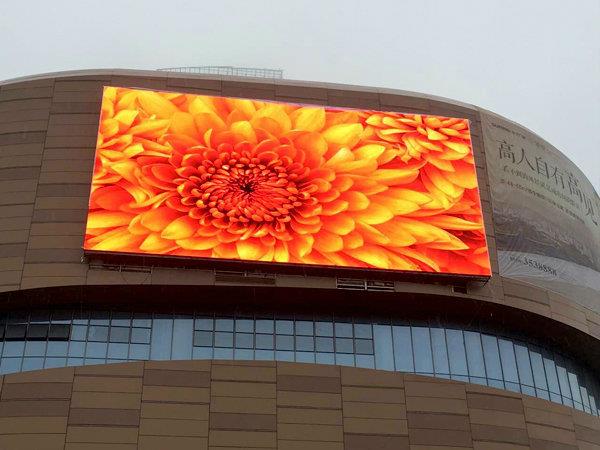
Detailed Explanation of P5 LED screen: Definition, Advantages, and Application Scenarios
Choosing the right digital display can be overwhelming and technical. Making the wrong choice is a costly mistake that fails to capture your audience’s attention.The P5 LED screen is a versatile and cost-effective solution, but it must fit your specific needs. Understanding it is a game-changer for making a smart investment.
This guide uses my experience to explain everything you need to know. We’ll determine if a P5 pixel display screen is the perfect solution for your project’s success.
What Exactly is a P5 LED Screen?
The “P5” designation is a simple code that tells you the screen’s fundamental resolution characteristic. Understanding this is the first step to making an informed decision.
Decoding “P5”: What 5mm Pixel Pitch Means
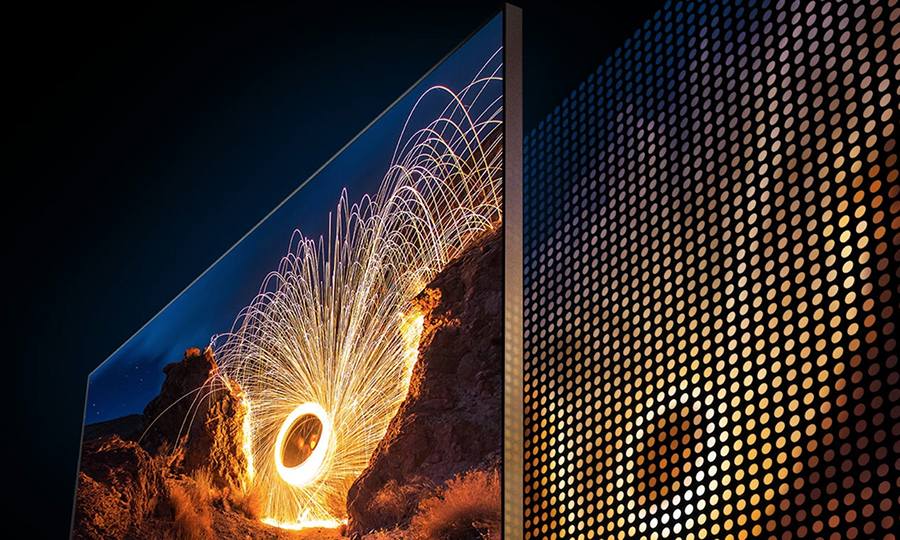
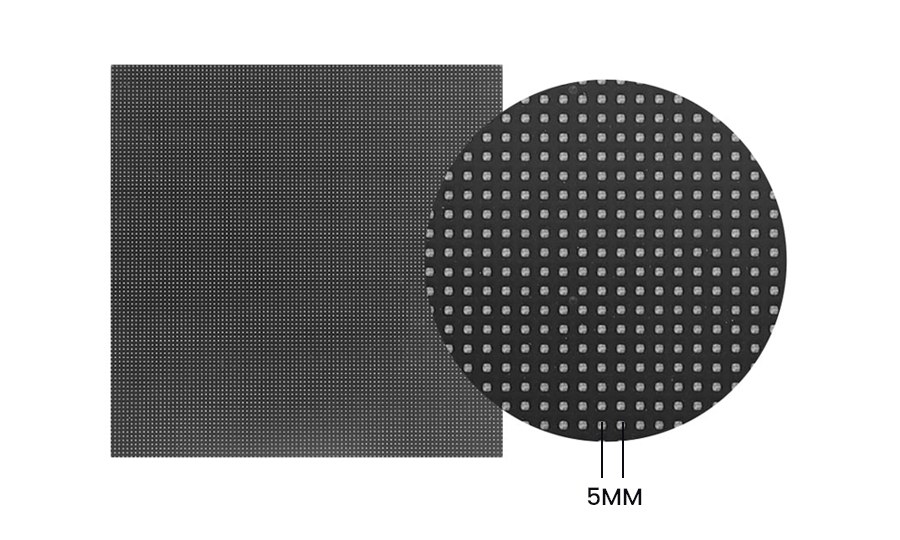
The “P” in P5 stands for pixel pitch, which is 5mm. To define pixel pitch, it’s the distance between the center of each tiny LED; a smaller distance results in a smoother, more detailed image.
This 5mm spacing creates a display by pixel density of 40,000 pixels per square meter. This high concentration of pixels is what creates the sharp, clear visuals of a P5 LED screen.
Optimal Viewing Distance for P5 Screens
So, what is a good pixel pitch? The answer is always relative to viewing distance. There’s a trusted rule of thumb in the AV industry: the pixel pitch in millimeters is roughly equal to the minimum recommended viewing distance in meters.
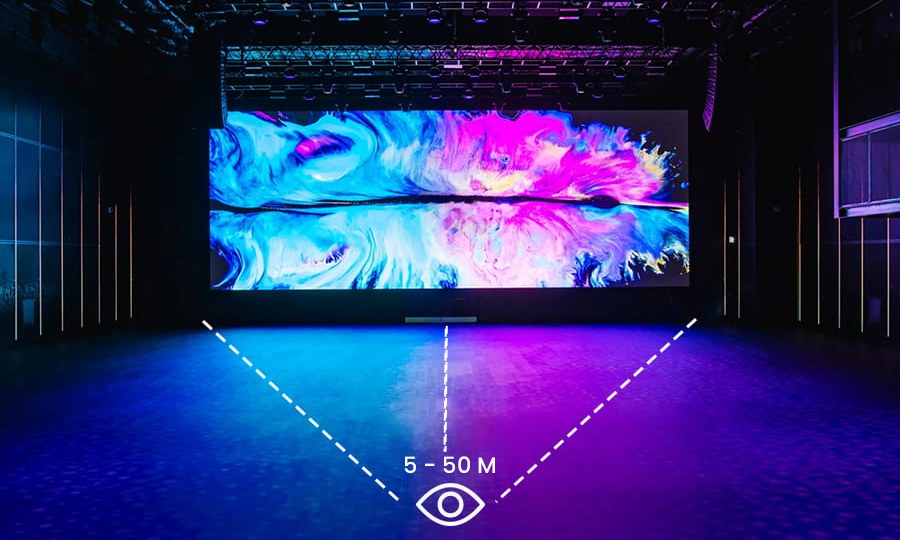
The ideal minimum viewing distance for a P5 LED screen is 5 meters (about 16 feet). From this distance or further, the image appears perfectly solid. I consider the optimal viewing range for a P5 to be between 5 and 50 meters, making it incredibly versatile for a huge number of commercial and event applications.
Why P5 Hits the Most Applications
The P5 LED screen offers the best balance of cost and performance. You get crisp, clear visuals that are more than sufficient for most audiences without paying the significant premium for ultra-fine pitch screens (like P2 or P3), whose superior resolution would be completely lost on viewers standing 15, 30, or 100 feet away. It’s a smart, pragmatic choice.
Indoor vs. Outdoor P5 LED Screens: Key Differences
While the core pixel pitch is the same, an indoor and a P5 outdoor LED screen are fundamentally different beasts, engineered for vastly different environments. Choosing the wrong one is a recipe for a failed investment.
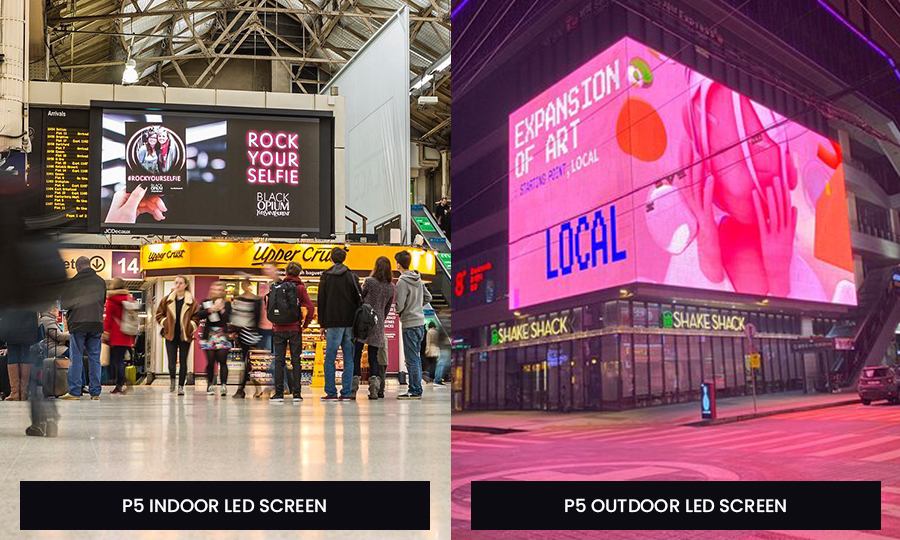
The Brightness Battle
The single biggest differentiator is brightness, measured in nits (candela per square meter).
An indoor P5 LED screen is designed for controlled lighting and typically requires a brightness of around 1,200 to 2,000 nits. This is more than bright enough to look vibrant without overwhelming the space.
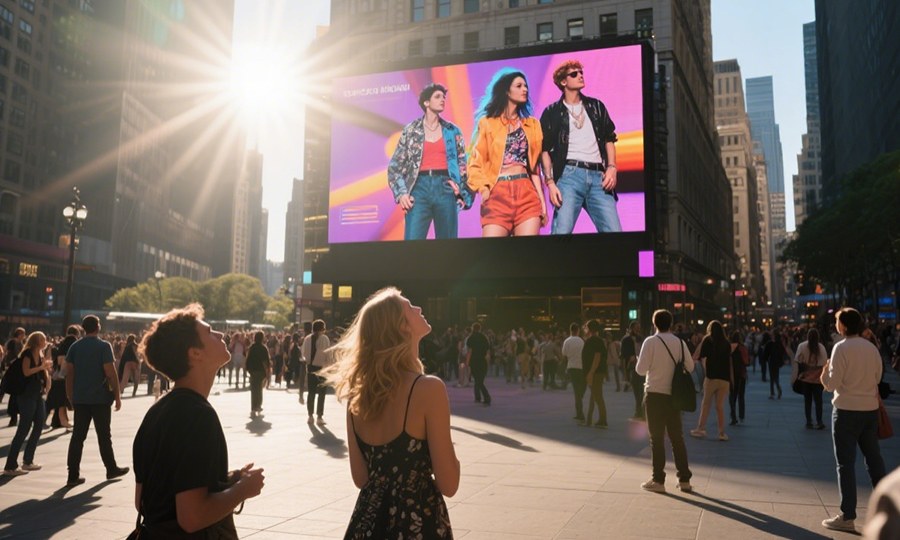
However, take that screen outside and it will be completely washed out by the sun. An LED screen p5 outdoor model needs to boasting brightness levels of 5,000 to 7,000 nits or more to remain vivid and readable in direct sunlight.
Weatherproofing and the IP Rating
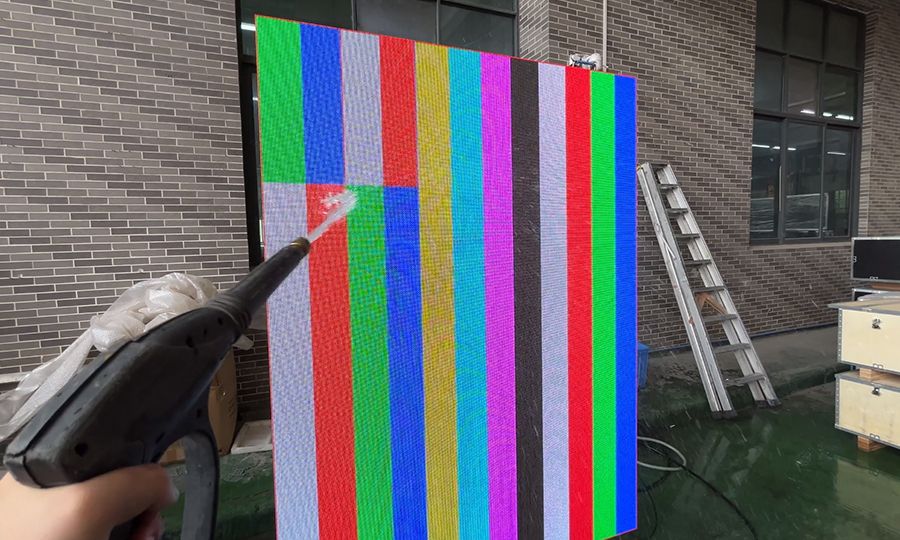
An outdoor screen is exposed to the elements 24/7. That’s why it requires robust weatherproofing, indicated by its Ingress Protection (IP) rating.
An outdoor P5 display must have a rating of at least IP65. The “6” means it’s completely sealed against dust, and the “5” means it can withstand jets of water from any direction.
An indoor screen, by contrast, might have an IP43 rating, offering protection from tools and spraying water, but it’s not designed to survive a rainstorm.
How Your Choice Impacts Durability and Lifespan
This need for resilience means that every component of a p5 outdoor LED screen is built tougher. The modules use more durable plastics with UV-protective coatings to prevent fading and cracking, the power supplies are sealed, and the cabinet construction is heavier.
This enhanced durability is a key part of the p5 LED module specification for outdoor use and directly impacts its long-term reliability and cost.
Top Application of P5 LED Screens
The versatility of the P5 makes it a go-to choice for a wide array of applications, especially for creating a high-impact LED video wall p5.
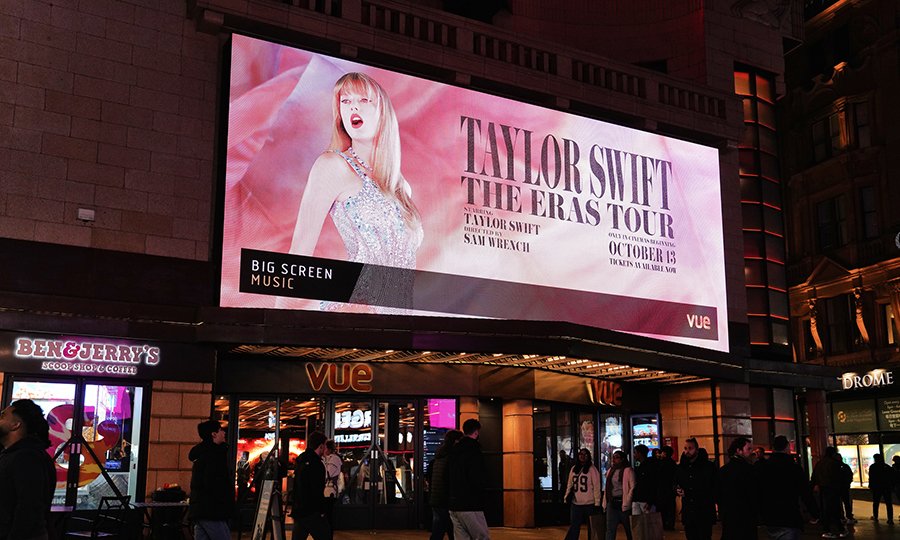
Dynamic Advertising: Retail Displays, Digital Billboards
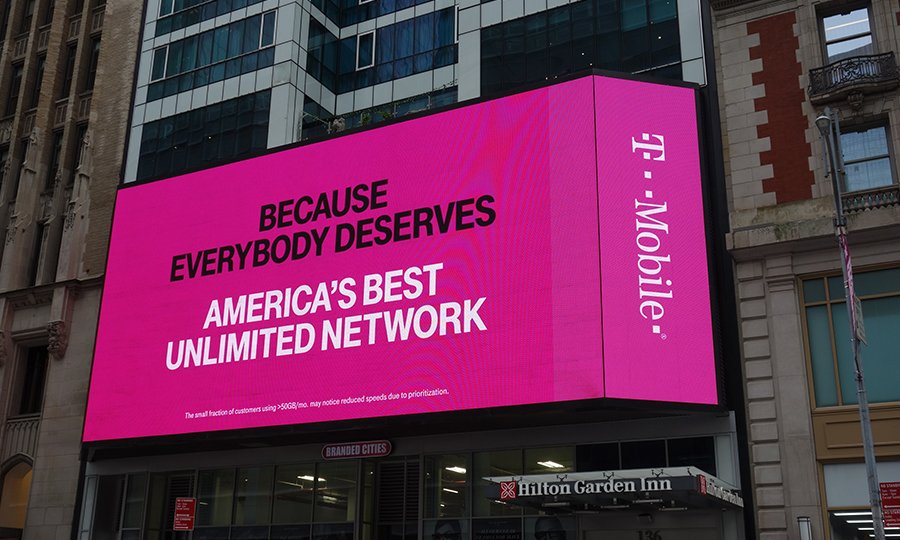
In shopping malls, airports, and retail storefronts, P5 screens are perfect for grabbing attention with dynamic advertisements.
They are also an excellent, budget-conscious choice for digital billboards where the viewing distance is typically medium to long-range.
Creating Live Events: Concerts, Stages
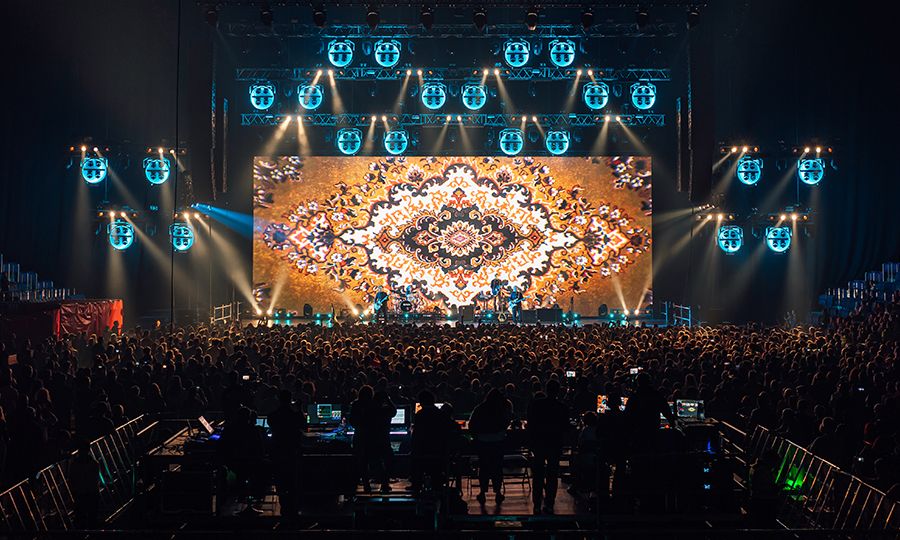
For my clients in the event rental, wedding, and nightlife industries, the P5 LED video wall is a transformative tool.
It serves as a dynamic stage backdrop for concerts, a vibrant display for sponsor loops at corporate events, an IMAG screen for large congregations, or a stunning visual element for a wedding reception. Its balance of clarity and cost makes it accessible for event budgets while delivering a premium feel.
The Competition of P5: Other Pixel Pitches
Understanding how the P5 stacks up against other common options is key to confirming it’s the right choice for you.
P5 vs. Finer Pitches (P3, P4)
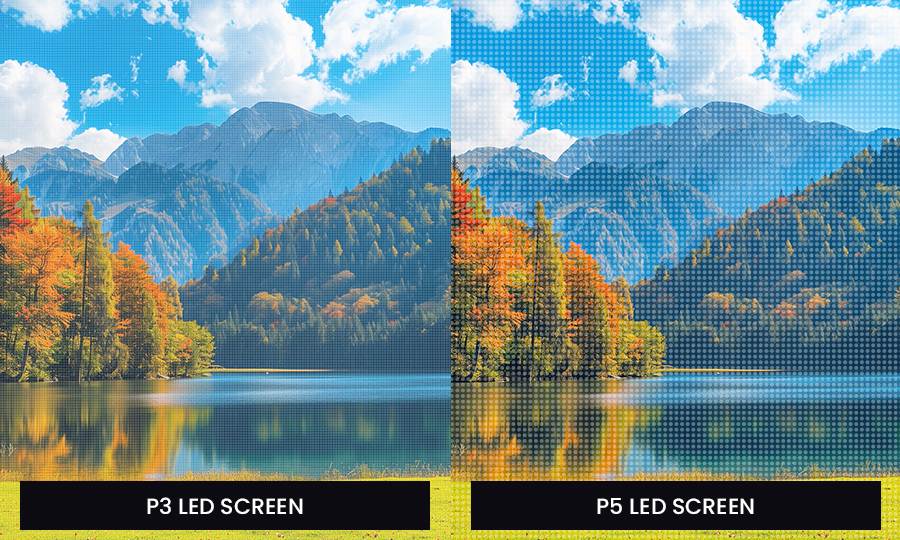
When clients ask about the P3 vs P5 LED screen, the conversation always comes down to viewing distance and budget. P3 and P4 screens have a higher pixel density, making them sharper up close. They are ideal for applications like broadcast studios or high-end boardrooms where the audience is very near the screen.
However, that higher resolution comes at a significantly higher cost. From 20 feet away, the difference in clarity is often negligible, making the P5 a much more cost-effective choice. This addresses the common question, “is higher pixel pitch better?”—the answer is no, not if your audience can’t perceive the added resolution.
P5 vs. Coarser Pitches (P6, P10)
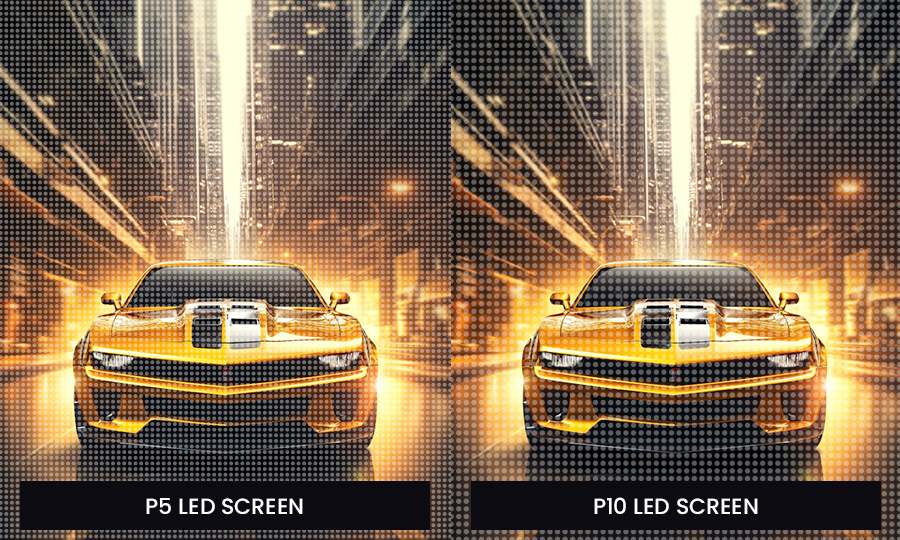
On the other side of the spectrum is the difference between P5 and P10 LED display. A P10 screen has a 10mm pixel pitch, making it best suited for very long viewing distances, like a stadium scoreboard or a large highway billboard.
It’s more budget-friendly than a P5, but it will look pixelated and coarse if viewed from a closer distance. The P5 fills the gap perfectly for those mid-range applications.
Quick-Reference Comparison Chart
| Feature | P3 LED Screen | P5 LED Screen | P10 LED Screen |
| Pixel Density | ~111,111 pixels/m² | 40,000 pixels/m² | 10,000 pixels/m² |
| Optimal Viewing | 3+ meters (~10+ ft) | 5+ meters (~16+ ft) | 10+ meters (~33+ ft) |
| Common Use Case | High-end indoor, broadcast | Events, retail, advertising | Stadiums, billboards |
Investing in a P5 LED Screen: Understanding the Real Cost
The price of a P5 LED screen isn’t just a single number; it’s influenced by several critical factors.
Key Factors Driving the Price Tag
- Screen Size:The most obvious driver. A larger screen requires more modules.
- Indoor vs. Outdoor:As discussed, outdoor models are more expensive due to higher brightness and weatherproofing requirements.
- Cabinet Material: Die-cast aluminum cabinets are lighter, more precise, and better for rental/staging, but cost more than fixed-installation steel cabinets.
- Component Quality:The choice of LED lamps, power supplies, and especially the Driver IC (which affects refresh rate and color processing) significantly impacts both cost and performance. A quality P5 led module specification is crucial.
How to Choose the Right P5 LED Screen
With over 11 years of manufacturing experience and 20 dedicated production lines, we at Muenled have a deep, hands-on understanding of what makes a P5 LED screen project successful.
Here’s what we tell our clients to consider
Confirm Your Audience Distance: This is the most critical factor for choosing the right pixel pitch. Be realistic about how close or far your audience will be.
Analyze Your Content: Fast-motion video needs a higher refresh rate than static images. This ensures a smooth, clear picture without motion blur.
Plan for Installation: Consider maintenance access and structural support. This ensures easy servicing and a safe installation.
What You Need to Know about Installation & Durability
Common Installation Structures
P5 LED video wall are incredibly adaptable. They can be wall-mounted directly onto a building’s facade, embedded for a flush finish, mounted on a single pole for signage, or built into a ground-based truss system for temporary events.
GOB and Enhanced Durability
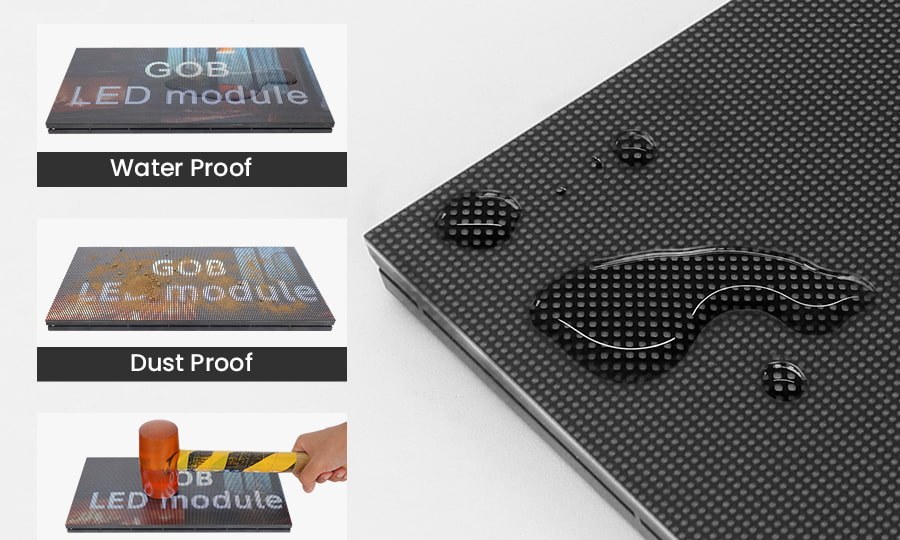
GOB (Glue-on-Board) technology. This process applies a thin, transparent, and hardened layer of glue over the face of the LED modules.
It provides a remarkable level of protection against impact, dust, and moisture, dramatically increasing the durability of an in door screen and making it resistant to the bumps and knocks common in rental and high-traffic environments.
Conclusion
After breaking down the technology, applications, and costs, it should be clear that the P5 LED screen is a versatile for an enormous range of medium-distance applications.
It masterfully balances cost, clarity, and performance, making it the ideal choice for businesses, event producers, and organizations that need to make a powerful visual statement without over-investing in resolution their audience will never see.