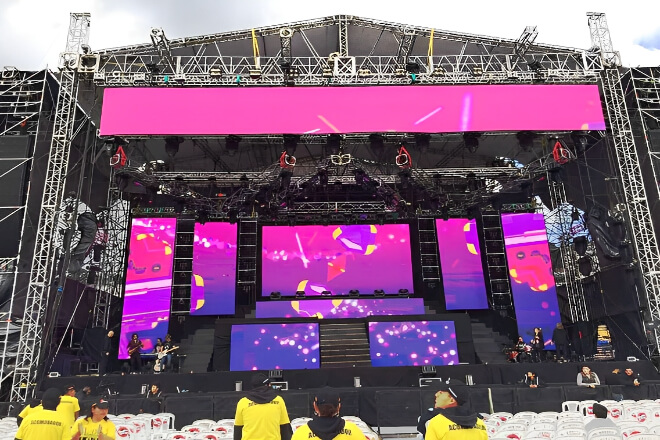
Day and Night: How Outdoor LED Screens Stay Readable in Any Light
An LED screen that looks perfect at noon and terrible at nine at night — or the reverse — has failed at the single hardest problem in outdoor display: light. Brightness is not a single number but a moving target that shifts with the sky, the stage and the cameras. This article explains how modern panels handle the full day, using the ARC3.91 outdoor rental LED display as the reference.
The Daylight Problem: Out-Emitting the Sky
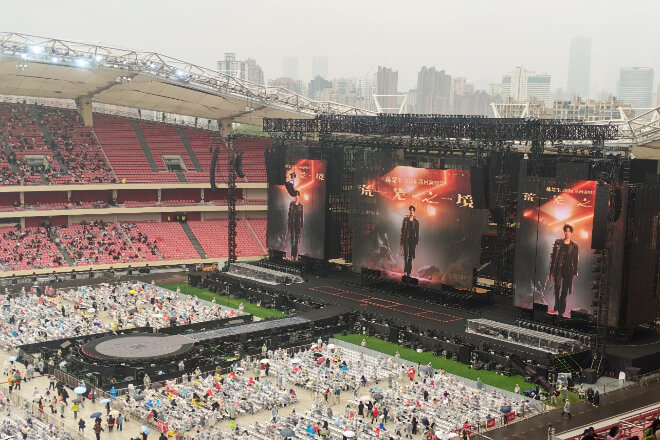
Ambient light at noon can hit 100,000 lux — thousands of times brighter than a comfortable indoor room. For a screen to stay readable, it must hold contrast against the light reflecting off its own surface.
The ARC3.91 is rated >4000 nits, the recognized threshold for outdoor readability in open shade and overcast skies. In direct, blazing sun, no LED wall truly “wins” — but at 4000+ nits the image remains crisp and colorful, while weaker panels collapse into washed-out gray.
The Night Problem: Dim Without Degrading
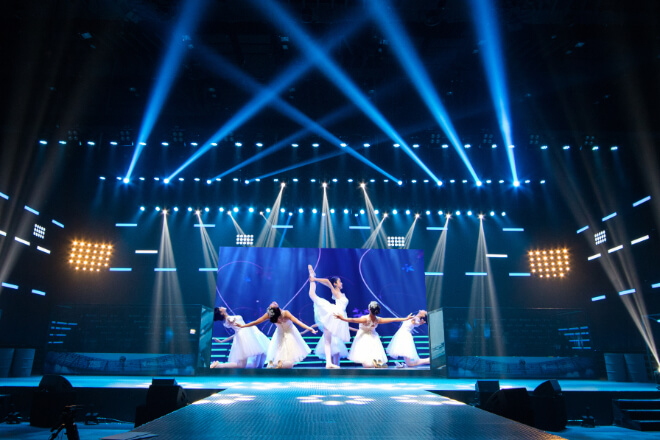
After dark, the same screen must come down to a few hundred nits, or it blinds the audience and bleaches the stage lighting. Dimming sounds trivial; doing it well is not. Cheap drive schemes introduce color shift and flicker as brightness drops — precisely when cameras are rolling.
This is where the pairing of 7680Hz refresh and a quality driver IC matters: the ARC3.91 keeps grayscale stable and flicker-free as it fades, so a dimmed evening scene still photographs cleanly.
Auto-Dimming: Set It and Forget It
Through the Novastar control system, the wall reads ambient light from a sensor and adjusts continuously across the day:
- Morning: ramping up as the site fills
- Midday: full power against the sun
- Golden hour: smooth transition without a visible “step”
- Night: comfortable low output that keeps the venue’s lighting design intact
Event crews configure this once at load-in; the wall then follows the sky for the rest of the show.
The Content Layer Works With the Hardware
Hardware brightness buys headroom; good content spends it wisely:
- High-contrast palettes survive daylight best — deep backgrounds, saturated accents
- Avoid large pure-white areas at full brightness in the sun; they burn the most current and draw the eye to any unevenness
- For evening scenes, design deliberately dim content rather than letting auto-dim do all the work
The complete brightness, refresh and drive specifications are published on the ARC3.91 product page.
What Audiences Actually Notice
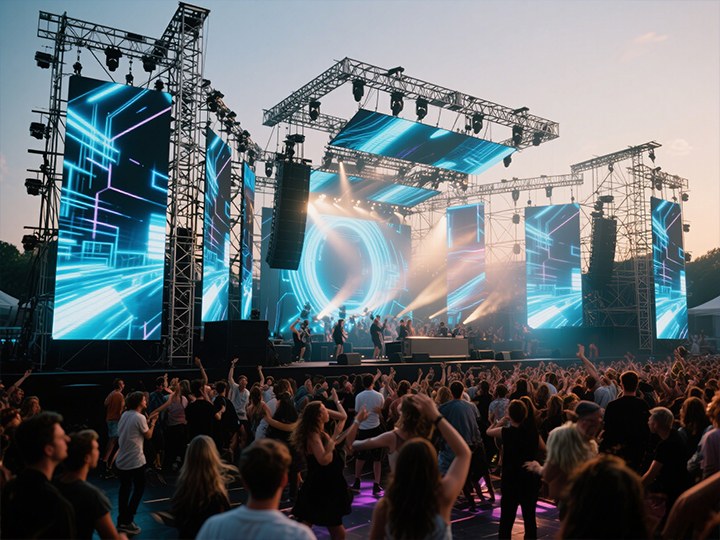
Nobody remembers “4200 nits.” They remember that the lyrics were readable from the back of the garden, and that the photos from the evening look professional. Both come from the same engineering chain: adequate brightness headroom, a clean dimming curve, a refresh rate cameras respect — and content designed to use all three.