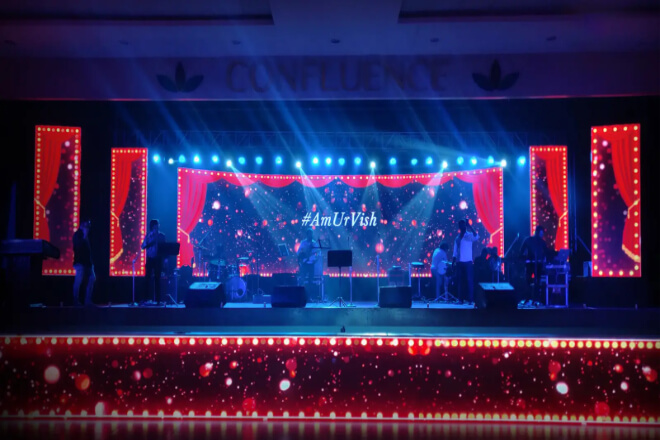
5 Key Considerations When Choosing a Rental LED Display for Events
Introduction
Choosing a rental LED display is not just about picking a screen and setting a budget.
If you choose the wrong setup, the problems show up immediately.
The image may look unclear. The screen might feel too small for the audience. Or you may end up paying more for performance that no one can actually see.
That’s why it’s important to understand how to choose the right rental LED display before making a decision.
In this guide, we’ll walk through the key factors step by step—so you can make a clear and confident choice.
If you’re new to this technology, you may want to start by understanding what a rental LED display is before choosing the right one.
Why Choosing the Right Rental LED Display Matters
At first glance, most LED screens look similar.
But in real applications, small differences can have a big impact.

For example:
- A screen with the wrong pixel pitch may look blurry at close distance
- A low-brightness screen may become invisible in daylight
- An undersized screen can reduce audience engagement
In most cases, these issues are not caused by poor products.
They come from choosing the wrong configuration.
A well-matched LED display doesn’t just “work.”
It improves the entire visual experience and makes your event more professional.
Step 1: Understand Your Event Type
Before looking at specifications, start with one simple question:
What kind of event are you planning?
Different events have very different requirements.
Concerts and Stage Events
These usually need large LED walls with strong visual impact.
Creative shapes, curved screens, or side screens are often used to enhance the stage design.
Corporate Events
Clarity is the priority.
Text, presentations, and videos must be easy to read from all angles.
Exhibitions and Trade Shows
Space is limited, but competition for attention is high.
A compact but high-resolution screen often works best.
Outdoor Events and Festivals
Brightness and durability are critical.
The screen must remain visible under direct sunlight and handle outdoor conditions.
In simple terms:
Indoor-focused events require better resolution.
Outdoor setups require higher brightness and stronger protection.
Step 2: Choose the Right Pixel Pitch
Pixel pitch is one of the most important factors when choosing a rental LED display.
It simply refers to the distance between the LEDs.
A smaller number means the pixels are closer together, which creates a sharper image.
But here’s the key point many people overlook:
Smaller is not always better.
Pixel pitch is also one of the biggest factors affecting rental LED display cost. A smaller pixel pitch significantly increases cost. If your audience is far away, they may not even notice the difference.
So the goal is not to choose the smallest pixel pitch, but the most appropriate one.
The right balance can deliver a clear viewing experience while avoiding unnecessary cost.
A practical way to make this decision is to look at viewing distance.
The farther the audience is from the screen, the less noticeable fine pixel details become.
Recommended Pixel Pitch by Viewing Distance
Here is a simple guideline used in many rental LED projects:
- 2–4 meters: P1.95 / P2.6
- 4–8 meters: P2.97 / P3.91
- 8 meters and above: P4.81 or larger
How to Think About It
Instead of asking “what is the best pixel pitch,” ask:
How far is my audience from the screen?
For example:
- A trade show booth → viewers are close → 6 makes sense
- A large outdoor stage → viewers are far → 91 is usually enough
In many real projects, choosing a slightly larger pixel pitch can reduce cost without affecting visual quality.
That’s where smart decisions make a difference.
Step 3: Indoor vs Outdoor Rental LED Displays
Another key decision is whether you need an indoor or outdoor rental LED display.
They are designed for completely different environments.
To make the decision easier, it helps to understand the main differences between indoor and outdoor rental LED displays.

Main Differences-Brightness
Indoor rental LED displays usually operate at lower brightness levels because they are used in controlled lighting environments such as conference halls or exhibition centers.
Outdoor rental LED displays, on the other hand, must remain visible even under strong sunlight.
That’s why they are designed with much higher brightness levels.
Protection
Outdoor rental LED displays are built to handle weather conditions.
They typically feature waterproof and dustproof designs to protect internal components.
Indoor LED displays do not include this level of protection, since they are meant for controlled environments.

Pixel Pitch
Indoor events often involve shorter viewing distances.
Because of this, indoor rental LED displays usually use finer pixel pitch to provide clearer images at close range.
Outdoor displays generally use slightly larger pixel pitch, since viewers are typically farther away.
A Simple Rule
If your event takes place outdoors, always choose an outdoor LED display designed for that environment.
Even if an indoor screen appears to work during testing, it usually cannot handle long exposure to sunlight or weather.
This is one of the most common mistakes—and one of the easiest to avoid.
Step 4: Screen Size and Viewing Distance
Screen size has a major impact on how well your audience can see and engage with the content.
However, bigger is not always better. The right size depends on three main factors:
- Audience size
- Viewing distance
- Type of content shown
For example, if the screen is used mainly for speaker close-ups or live video, a larger display helps people at the back stay engaged.
If it is mainly used for logos, simple backgrounds, or short text, the size requirement may be more flexible.
Practical Size Guidelines
As a general rule, screen width should increase with audience size and venue depth:
| Event Size | Recommended Screen Width | Typical Use Cases |
| Small | 3–5 m | Meeting rooms, weddings, small conferences |
| Medium | 5–10 m | Corporate events, launches, fashion shows |
| Large | 10 m+ | Concerts, festivals, sports events |
These are not fixed rules, but practical starting points.
The reason is simple: the farther the audience is from the screen, the larger the display needs to be for clear visibility.
Real-World Examples
Imagine two different event scenarios:
- A meeting room with 200 attendees
In most cases, a screen around 4–6 meters wide is enough, depending on the room depth and whether the content includes text, presentations, or IMAG video.
- A live concert with 5,000 attendees
A much larger screen is usually needed—often 10–15 meters wide or more—especially if the audience is spread across a large open area and people far from the stage need a clear view.
This is why audience size alone is not the only factor.
You also need to think about how far the last row is from the stage.
A simple rule to remember:
If people at the back cannot comfortably recognize faces, key visuals, or important text, the screen is too small—no matter how high the resolution is.
Step 5: Installation and Setup Requirements
Rental LED displays are designed for fast installation, but the setup method still matters.
Different venues and event types may require different installation solutions.
Common Installation Types
- Hanging (Truss System)
Common for stage backdrops, concerts, and indoor productions where the screen is suspended from a truss structure.
- Ground Stacking
Used when hanging is not possible, especially for outdoor events or venues with limited rigging support.
- Creative Installations
Curved screens, columns, and custom-shaped LED displays are often used for exhibitions, brand activations, and immersive visual designs.
Why Installation Speed Matters
In many event projects, setup time is extremely limited.
That is why cabinet structure matters just as much as display performance.
A rental LED system with:
- quick-lock design
- lightweight panels
- tool-free assembly
can often reduce installation time by around 15%–25% compared with more conventional cabinet designs, depending on the screen size, installation method, and crew experience.
For example, if a conventional LED wall takes about 4 hours to install, a more rental-friendly system may complete the same job in roughly 3 to 3.5 hours under similar conditions.
This may not be the most obvious item on a specification sheet, but on-site, it can make a real difference in labor cost, scheduling flexibility, and overall project efficiency.
Step 6: Budget Planning for Rental LED Displays
Budget decisions should always be based on value—not just price.
The total cost depends on:
- Pixel pitch
- Screen size
- Installation method
- Project duration
Smart Budget Strategy
Instead of asking “what is the cheapest option,” ask:
What level of quality do I actually need?
For example:
- Using P2.6 for a large outdoor event may increase cost significantly
- But the visual improvement may be minimal at long viewing distances
If you want a deeper breakdown, you can explore a detailed rental LED display cost guide.
The goal is to find the right balance—not the lowest price.
Real Example: Choosing a Rental LED Display for a Music Festival
Let’s put everything together with a real event scenario.
Event Overview
A large outdoor music festival with several thousand attendees.
The audience is spread across a wide open area, and the screen needs to deliver strong visual impact while remaining clearly visible from different distances.

Step 1: Event Type
- Outdoor event
- Large audience
- Strong visual impact required
Decision: Choose an outdoor rental LED display with high brightness and weather-resistant performance.
Step 2: Pixel Pitch
- Main viewing distance: about 6–15 meters
Recommended pixel pitch: P3.91 or P4.81
For this type of event, both options are commonly used.
However, P3.91 is often the more balanced choice because it provides better image detail at medium viewing distances while still remaining cost-effective for large outdoor stages.
Why not P2.6?
At this viewing distance, the improvement in image clarity is usually not obvious to most viewers, but the cost increases significantly.
Step 3: Screen Size
- Recommended main stage screen: about 10m × 6m or larger
- Optional side screens can be added for wider audience coverage
This size is a practical starting point for a festival with several thousand attendees because it creates enough visual presence on the main stage and allows viewers at mid-to-long distances to see live video and stage content more clearly.
If the venue is wider or the audience area is deeper, the main screen may need to be increased to 12m × 7m, 14m × 8m, or even larger.
Step 4: Installation
- Hanging LED wall with truss system
- Strong structural support required
- Fast assembly design is important for efficient setup and teardown
For large music festivals, hanging installation is common because it keeps the screen elevated, improves sightlines, and integrates well with stage truss structures.
Step 5: Budget Consideration
For this project, P3.91 is usually the most balanced option.
It offers a good combination of image quality, outdoor brightness, and cost efficiency.
Choosing P2.6 would raise the budget considerably, but for a viewing distance of 6–15 meters, most of the audience would not notice enough improvement to justify the extra cost.
In this case, P3.91 delivers the best balance between performance and budget.
Final Recommended Setup
For this outdoor music festival, a practical rental LED solution would be:
- Display type: Outdoor rental LED display
- Pixel pitch: P3.91
- Main screen size: 10m × 6m
- Optional addition: Side screens for wider audience visibility
- Installation method: Hanging with truss system
Final Result
With this setup, the event can achieve:
- Clear visibility for the main audience area
- Strong visual impact on the festival stage
- Efficient use of budget
- Reliable and practical installation for a large outdoor event
For this type of application, an outdoor P3.91 rental LED display is often one of the most practical choices, as it balances image quality, brightness, durability, and installation efficiency for large-scale event use.
Conclusion
Choosing the right rental LED display is not about selecting the highest specification.
It is about choosing the solution that best fits your event type, viewing distance, installation environment, and budget.
When comparing different options, focus on these key factors:
- Indoor or outdoor use
- Pixel pitch
- Screen size
- Viewing distance
- Installation method
- Cost efficiency
A properly selected rental LED display can improve audience visibility, create stronger visual impact, and help you use your budget more effectively.
There is no universal best option—only the best option for your specific application.
If you are planning an upcoming event, you can also explore our rental LED display solutions to compare indoor and outdoor options for different event needs.